• Home
  • Articles
    • Front Page
    • General Interest
    • Snippets
    • Letters to the Editor
    • Council Comments
  • Special Interests
  • Our Community
    • Our People
    • Question of the Week
    • Jobs in the Central West
    • Be Seen
    • What’s On
    • What’s Hot
  • Features
    • Women in Business
    • Rural Round Up
    • My Place
    • Loving Local Living
    • Wellness Wise
    • Just a Short Drive
    • Real Estate
  • Sports
    • Bowls
    • Cricket
    • Equestrian
    • Footy Tips
    • Golf
    • Netball
    • Rugby League
    • Rugby Union
    • Soccer
    • Touch Football
  • Classifieds
  • Competitions
  • Contact Us
    • Contact Page
    • Advertise with us
    • Testimonials
    • Submit an Article
    • Subscribe to the Forbes Phoenix

Forbes Phoenix

Grain Fed Beef Definition Expanded

December 13, 2018 by Maggi Barnard


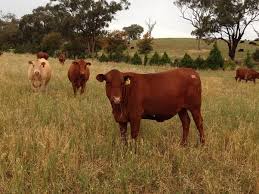
Beef farmers will now be able to market their cattle as ‘Grain Fed Finished’ after feeding them grain for 35 days before sale or export and will be able to ask a premium for these animals.

Previously, only two standards existed: ‘Grain Fed’ and ‘Grain Fed Young Beef’. ‘Grain fed’ required the cattle to be fed on grain for 80 of the past 100 days while ‘Grain Fed Young Beef’ required grain to be fed 50 of the past 60 days for females and 70 days for males.

“This new ‘Grain Fed Finished’ standard means farmers can feed the cattle grain for 35 days and reap the benefits of selling as ‘Grain Fed Finished’,” said Minister for Agriculture and Water Resources, David Littleproud.

“The science says 35 days on grain produces the fat colour attribute associated with grain-fed beef. Thirty-five days on one property means cattle are Meat Standards Australia accredited, too.

“The standard requires the cattle be fed on a specified high energy grain diet. As Australians, we refuse to compromise on quality,” said David. The standard is operational now, having been signed into regulation.

Fast facts:

• The new ‘Grain Fed Finished’ standard, or trade description, will apply both domestically and overseas.

• Grain Fed (GF) cattle must have been in a feedlot for not less than 100 days and for not less than 80 days of that, on a nutritionally balance ration of a recognised high energy feed of which grain is the highest single component.

• Grain Fed Young Beef (GFYB) cattle must have been in a feedlot for not less than 70 days (females for not less than 60 days) and for not less than 50 days of that, on a nutritionally balance ration of a recognised high energy feed of which grain is the highest single component.


Jemalong Wool Weekly Market Update

December 13, 2018 by Maggi Barnard

The quantity of wool on offer increased slightly this week, however despite the increase, the total volume of wool sold (season to date) is still 18% less than it was this time last season.

The merino sector performed solidly, recording gains across most microns, only a lack of interest in some inferior types and reduced buyer demand on wool with poor additional measurements, prevented the MPG’s from posting larger gains.

Despite the merino fleece sector recording overall gains, the NRI lost 8 cents for the week, to close at 1,897. This movement was mainly due to large losses experienced in the crossbred sector, which saw prices quickly revers after recording large gains at the previous sale.

Wools 30 micron and finer lost 70-130 cents, however the sharp reduction in price was met with firm seller resistance, with approximately 20% of the crossbred offering passed in.

After three weeks of sustained price rises the oddment market lost ground with locks, stains and crutchings generally.

Source: AWEX

Jemalong Wool Weekly Market Update

November 8, 2018 by Maggi Barnard

The lack of buyer confidence combined with an ever-increasing quantity of lower spec wools, has resulted in losses across the board. Reductions of 15-40 were common this week, leaving the NRI 23 cents lower. The NRI has now fallen 272 cents (13%) from its mid-September peak. The fall in prices was again met with firm seller resistance, with a weekly clearance rate of only 74.7%.

The skirtings were the best performing sector this week, managing to record modest gains for the week of 5-10 cents, wool carrying less than 2% VM attracted the most competition and the largest gains. The crossbreds had a week of mixed results, prices rose slightly in the South and fell slightly in North, while the oddments continued their steep downward path. Locks, stains and crutchings generally fell by a further 40 to 100 cents, pushing the three carding indicators down by an average 71 cents.

Quantities remain similar next week, currently there are 35,696 bales on offer Nationally.

Source: AWEX

Extension Of The CWLE Clouded By Chain Of Responsibility Notice

November 8, 2018 by Maggi Barnard

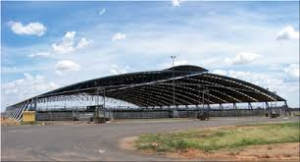
Work has begun at the Forbes Central West Livestock Exchange (CWLE) to expand on the existing cattle selling complex.

The estimated $3.4m expansion consists of improvements to truck parking areas, electrical works to increase lighting and security CCTV, expansion of the current covered yard area and installation of additional state of the art cattle yards. This will lift yarding from 1,800 to 2,600 head of cattle per week, an increase of 41,600 per annum to a total of 105,000 head of cattle per year.

“The added advantage of the additional delivery pens will facilitate more efficient turnaround time for cattle, spending less time in the selling centre. This will have a positive impact on animal welfare and transport operations,” said Forbes Mayor Phyllis Miller.

“The project will drive economic growth and productivity into the local community, creating jobs and new opportunities for Forbes,” she explained.

This expansion phase will greatly enhance the efficiency of operations and animal welfare standards to industry best practice levels. The high profile facility has however been the subject of recent controversy with Forbes Shire Council being served with an improvement notice this year by the RMS.

This is as a result of 57 breaches of Chain of Responsibility legislation by livestock transport operators leaving the saleyards.

Forbes Shire Council General Manager, Steve Loane states that Council is not the loading manager and merely provides the facility.

“It’s just callous to whack the livestock industry with this now,” he said. “The weighbridge would need to be remotely operated because trucks come and go at all hours.

The weighbridge would have to be capable of taking photos of the back, front and sides of a truck and identifying the truck driver. If  a truck is overloaded, there would need to be extra yards to hold offloaded animals, another expense the Council doesn’t have reserves for,” he said.

To further press Council’s case, the CWLE hosted on Tuesday executives from the National Heavy Vehicle Regulator and administrators of the Chain of Responsibility legislation, including CEO, Sal Petroccitto.

The hosting was done during an active sale at the CWLE to better develop their understanding of the complexity of the issue faced by saleyard owners.

Australia’s Oldest Annual Agricultural Exhibition

October 18, 2018 by Maggi Barnard

The Australian National Field Days (ANFD) is the oldest annual agricultural exhibition in the country established in 1952.

According to ANFD Manager Jayne West more than 600 exhibitors now travel to the Borenore site (15km west of Orange) from all over Australia and internationally to display their products and services during the three-day event.

The early days saw the Orange Branch of the Graziers’ Association get together to provide comparative demonstrations so that farmers could see machines designed for a specific purpose working side-by-side.

The very first Orange Field Day was staged at Kyala Park featuring displays and demonstrations by 40 exhibitors and attracted an estimated crowd of 5,000. It was declared a resounding success and became an annual event held at various properties until the permanent 75-hectare site was purchased at Borenore in 1972.

Since 1952, the field days have been organised by a voluntary committee, and in 1966 the Orange Field Days Co-op Limited was formed and registered as a Community Advancement Society to administer the Australian National Field Days.

This year there will be activity centres, sheepdog trials, demonstrations, live music, racing pigs, petting zoo and a fashion parade.

Australian Breed Record For Senepol Sale

October 11, 2018 by Maggi Barnard

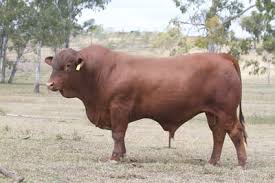
Australian breed records tumbled at the annual 5 Star Senepol Sale held two weeks ago at CQLX Gracemere, Queensland.

For vendors, Geoff and Alison Maynard and family, the 5 Star Senepol Sale saw a new breed record established at $27,000 and bulls sold to all parts of Queensland and also to Western Australia.

Sarah and Clayton Maynard of Southern Star Rural (Canowindra) sold eight bulls through the 5 Star Sale this year. Southern Star Rural managed the top price for a Senelais (Senepol/Charolais) bull at $8,000 and also the top priced Senegus (Senepol/Angus) bull at $7,000.

Earlier this year, Senepol Stud Southern Star Rural recorded the highest midterm weight gain during the prestigious Callide Dawson Beef Carcase Competition in Queensland, with a Senepol/Angus steer gaining a whopping 4.6kg per day. This is the highest mid-term weight gain recorded in the 30 year history of the competition.

On the day, 65 bulls were sold with an average of $6,677 a top of $27,000 and a 93 percent clearance rate.

Buyers who were focused on Senepols, provided the vendors with a bottom line average of $7,425 for the 40 pure bred Senepol entries on offer.

Seven three quarter Senepol/one quarter Shorthorn bulls topped out at $6,500, while six Senegus bulls hit $7,000 and six Senelais entries peaked at $8,000.

Topping proceedings and new breed record holder was the $27,000 5 Star M71013, a 22-month, 772kg, 12/9mm, 133EMA son of Antigua Dalgada (CBN Alcoota) selling in a three quarter share full possession arrangement to Chris Simpson, CAP Genomics, Brisbane.

CAP Genomics took three to average $13,167. Regular supporters, Alistair and Jo McClymont, Burleigh Station, Richmond acting again through Ken Roche, Marlborough, took four Senepols for an average $10,125. These included the $13,000 5 Star M70782 a 17-month-old, 678kg delivering a rib eye measurement of 110sq cm.

M70782 was the first sale progeny of one of the studs leading sires, 5 Star Hefner 140634.

For more information on pure bred Senepol and Senegus or Senelais Bulls on offer in Canowindra please contact Clayton Maynard on 0439 029 204.

Jemalong Wool Weekly Market Update

October 11, 2018 by Maggi Barnard

Following the losses experienced the previous week, sentiment remained cautious in the final sale before the recess.

A softer tone was evident from the outset, with most types and descriptions across the merino spectrum generally discounted by 10-30 cents.

Lots possessing favourable additional measurement results (and in particular those with a CVH of less than 42), did however manage to attract excellent support, leaving them generally unchanged for the series.

The NRI lost 13 cents, to close the week at 2013c/kg, however towards the end of the sale positive sentiment returned giving the NRI a 3-cent boost on the final selling day.

The skirtings generally dropped by 10-20 cents, with higher VM types most affected, while the limited offering of fine/low VM skirtings managed small increases for the week.

The cross bred sector performed with mixed results. 28 microns fell by 20-40 cents, while 30 microns rose by 10-20 cents and all other microns were firm. The limited offering of cardings also eased, with general reductions of 20-30 cents.

Focusing On Farming Women

September 20, 2018 by Maggi Barnard

In response to the ongoing drought conditions and the effects on farming families, Central West Local Land Services and Landcare have teamed up to host a free drought support workshop, this time with an emphasis on the health and wellbeing of our farming women.

Taking a day off from farming life to prioritise wellbeing may seem frivolous in the current climate; however the knock-on benefits to the health of individuals, their families and by default that of the broader community have been proven time and time again.

The sessions themselves will focus on creating ways to recharge, manage stress and looking after yourself to be better placed physically and mentally to look after others in these stressful times.

A workshop has been organised for Bedgerabong on Wednesday, 26th September from 9:30am to 3pm at the Bedgerabong Hall, with experienced presenters Rachel Kerin and Narelle Hunter.

Rachel is the founder of Kerin Physio Co. and is a dedicated physiotherapist passionate about inspiring and empowering people to self-manage their bodies through quality education via guided consults and specific classes through a mobile business covering large areas of the Central West.

Narelle is a Mindfulness Coach and founder of Blissfullly Present. As a mother of four daughters and a farmer’s wife of 26 years, Narelle understands how challenging and rewarding the rural environment can be and is passionate about helping others find effective ways to cope during trying times.

Come along and share a cuppa and a chat with other women from the land and enjoy sessions focusing on your health, wellbeing and mindfulness.

To attend the workshops please RSVP by calling Marg Applebee on 02 6862 4914 or by emailing cwllpo@hotmail.com.

Jemalong Wool Weekly Market Update

September 13, 2018 by Maggi Barnard

This week saw 38,549 bales put before the trade, and while it was an increase on last weeks volume, the season-to-date cumulative total remains much less, with 12.5% less wool offered for the same period.

The exchange rate gave overseas processors some assistance, as the local currency continued to trend lower against the US dollar. Midway through the week the AUD hit 71.5 US cents, a two-year low, before staging a recovery to finish at 71.68 cents late on Thursday. Price wise in local terms, the market opened on a strong note and resumed its upward trajectory from last week. The first day recorded widespread increases but the momentum could not be maintained, with prices easing slightly on Thursday.

Merino Skirtings found good support and were mostly firm on the previous sale. Merino Cardings were also reasonably limited, and the Merino Carding Indicators closed with only minor movements.

The smallest national Crossbred offering in three years had mixed results; firming in some areas and losing ground in others.

Source AWEX

RURAL ROUNDUP

September 13, 2018 by Maggi Barnard

It’s All About ME, Grain Crops For Livestock

As the big dry continues, NSW Department of Primary Industries (DPI) scientists have some tips for producers to explore how to best maximise opportunities from moisturestressed wheat and canola crops.

NSW DPI researcher, John Piltz said producers know that by making early decisions to graze or conserve crops, they can maximise the nutritional value of cereal crops that may not be harvestable for animal production.

“It’s worth remembering that dietary metabolisable energy (ME) is the key to animal production gains, but ME declines in the post-vegative growth stage,” said John.

“We advise producers to accurately evaluate all their on-farm and sale options for potential grain production, grazing, hay and silage or agistment opportunities.

“If crop yield is low, less than two tonnes of dry matter per hectare, hay and silage making losses will be high and grazing would be recommended.

“If you’re going to graze the crop it is better to act sooner than later, delaying cutting from early October to early November on the chance of rain would reduce ME levels with a negative impact on feed quality and potential animal production.”

To better inform management decisions John and NSW DPI analytical chemist, Richard Meyer, have predicted steer live weight change using Grazfeed and compared with data from wheat and canola samples tested by NSW DPI’s Feed Quality Service (FQS).

Samples from 2008-09 and 2017-18 had an average ME of 9.0 megajoules (MJ) per kilogram of dry matter, which would deliver a predicted daily live weight gain of 0.37 kilograms per day for a nine-month old, 280 kilogram British breed steer.

The more ME animals eat, the quicker they grow, as long as crude protein, vitamins and minerals are kept in balance. Increasing ME from 8.5 to 10.5 MJ for the same steer is predicted to increase live weight gain from 0.15 to 0.92 kilograms per day.

In the post-vegative stage, crop ME declines an average 0.05 MJ per day as plants mature.

Results of the study are available through the Graham Centre for Agricultural Innovation, an alliance between NSW DPI and Charles Sturt University.

For the crop salvage calculator visit: https://www.dpi.nsw.gov.au/agriculture/ broadacre-crops/crop-salvage-calculator.


Farmer of the Year Nominations

NSW Minister for Primary Industries and outgoing NSW Farmers President, Derek Schoen announced the opening of applications for the prestigious NSW Farmer of the Year award for 2018. Speaking at the NSW Farmers Annual Conference recently, NSW Minister for Primary Industries, Niall Blair said the award is both a celebration and recognition of farming excellence through the diverse range of enterprises across NSW. “Our farmers represent some of the most innovative, industrious primary producers in the country and produce some of the highest quality food and fibre to be found anywhere in the world,” said Niall.

“The state’s $15 billion primary industries sector is going from strength to strength under the stewardship of our farmers, who demonstrate drive and determination to run efficient, profitable and sustainable businesses.”

Derek has served as a judge of the award throughout his presidency and said that the 2017 finalists represented the breadth of NSW’s farming sector. “From biodynamic, organic egg farming to a commercial cropping enterprise gaining efficiencies through environmental practices, from young guns through to farmers who have had a life-long commitment to farming excellence, the calibre of applications to the NSW Farmer of the Year award continues to be hugely impressive,” he said.

“The award helps identify outstanding farmers who are pushing the boundaries within their industry and in farming generally, and recognises people with outstanding management skills who demonstrate a combination of innovation, profitability, sustainability and community involvement.”

The successful 2018 Farmer of the Year will be awarded $10,000 and finalists will receive $2,000. The award is an initiative of the NSW Department of Primary Industries and NSW Farmers. You can both apply and nominate a farmer online at www.nswfarmeroftheyear.com.au with entries closing 26th September 2018.


  • « Previous Page
  • 1
  • …
  • 15
  • 16
  • 17
  • 18
  • 19
  • …
  • 28
  • Next Page »

Click here to download the recent issue (186) of The Forbes & Parkes Phoenix (2.1MB PDF) – 24th April 2026

SEARCH THE PHOENIX

STAY CONNECTED

The Forbes Phoenix would like to thank you, our Facebook friends, for your continued support and readership!

Recent Articles

  • Snippets… April 23, 2026
  • Mayoral Notes April 23, 2026
  • Four Days Of Double Demerits This Anzac Day Long Weekend April 23, 2026
  • Forbes Marks Anzac Day With Services And Special Town Hall Tribute April 23, 2026
  • Celebrating Our Stories, Places And People April 23, 2026

Phoenix Office 7/113-127 Rankin Street, Forbes NSW 2871

Editor 0432 337 278
editor@forbesphoenix.com.au

Sales 0432 337 278
sales@forbesphoenix.com.au

View our Privacy Policy. View our Conflict Resolution Process. View our Ethics and Complaints Policy. Want to advertise with us? Information on our Community Promotions.

We are always looking for new articles of interest to the local community.

Please feel free to submit an article for possible inclusion in a future issue.

To submit an article, click here to use our online article submission form.

Subscribe

* indicates required

Copyright © 2026 · Magazine Pro Theme On Genesis Framework · WordPress · Log in