• Home
  • Articles
    • Front Page
    • General Interest
    • Snippets
    • Letters to the Editor
    • Council Comments
  • Special Interests
  • Our Community
    • Our People
    • Question of the Week
    • Jobs in the Central West
    • Be Seen
    • What’s On
    • What’s Hot
  • Features
    • Women in Business
    • Rural Round Up
    • My Place
    • Loving Local Living
    • Wellness Wise
    • Just a Short Drive
    • Real Estate
  • Sports
    • Bowls
    • Cricket
    • Equestrian
    • Footy Tips
    • Golf
    • Netball
    • Rugby League
    • Rugby Union
    • Soccer
    • Touch Football
  • Classifieds
  • Competitions
  • Contact Us
    • Contact Page
    • Advertise with us
    • Testimonials
    • Submit an Article
    • Subscribe to the Forbes Phoenix

Forbes Phoenix

Jemalong Wool Weekly Market Update

September 13, 2018 by Maggi Barnard

This week saw 38,549 bales put before the trade, and while it was an increase on last weeks volume, the season-to-date cumulative total remains much less, with 12.5% less wool offered for the same period.

The exchange rate gave overseas processors some assistance, as the local currency continued to trend lower against the US dollar. Midway through the week the AUD hit 71.5 US cents, a two-year low, before staging a recovery to finish at 71.68 cents late on Thursday. Price wise in local terms, the market opened on a strong note and resumed its upward trajectory from last week. The first day recorded widespread increases but the momentum could not be maintained, with prices easing slightly on Thursday.

Merino Skirtings found good support and were mostly firm on the previous sale. Merino Cardings were also reasonably limited, and the Merino Carding Indicators closed with only minor movements.

The smallest national Crossbred offering in three years had mixed results; firming in some areas and losing ground in others.

Source AWEX

RURAL ROUNDUP

September 13, 2018 by Maggi Barnard

It’s All About ME, Grain Crops For Livestock

As the big dry continues, NSW Department of Primary Industries (DPI) scientists have some tips for producers to explore how to best maximise opportunities from moisturestressed wheat and canola crops.

NSW DPI researcher, John Piltz said producers know that by making early decisions to graze or conserve crops, they can maximise the nutritional value of cereal crops that may not be harvestable for animal production.

“It’s worth remembering that dietary metabolisable energy (ME) is the key to animal production gains, but ME declines in the post-vegative growth stage,” said John.

“We advise producers to accurately evaluate all their on-farm and sale options for potential grain production, grazing, hay and silage or agistment opportunities.

“If crop yield is low, less than two tonnes of dry matter per hectare, hay and silage making losses will be high and grazing would be recommended.

“If you’re going to graze the crop it is better to act sooner than later, delaying cutting from early October to early November on the chance of rain would reduce ME levels with a negative impact on feed quality and potential animal production.”

To better inform management decisions John and NSW DPI analytical chemist, Richard Meyer, have predicted steer live weight change using Grazfeed and compared with data from wheat and canola samples tested by NSW DPI’s Feed Quality Service (FQS).

Samples from 2008-09 and 2017-18 had an average ME of 9.0 megajoules (MJ) per kilogram of dry matter, which would deliver a predicted daily live weight gain of 0.37 kilograms per day for a nine-month old, 280 kilogram British breed steer.

The more ME animals eat, the quicker they grow, as long as crude protein, vitamins and minerals are kept in balance. Increasing ME from 8.5 to 10.5 MJ for the same steer is predicted to increase live weight gain from 0.15 to 0.92 kilograms per day.

In the post-vegative stage, crop ME declines an average 0.05 MJ per day as plants mature.

Results of the study are available through the Graham Centre for Agricultural Innovation, an alliance between NSW DPI and Charles Sturt University.

For the crop salvage calculator visit: https://www.dpi.nsw.gov.au/agriculture/ broadacre-crops/crop-salvage-calculator.


Farmer of the Year Nominations

NSW Minister for Primary Industries and outgoing NSW Farmers President, Derek Schoen announced the opening of applications for the prestigious NSW Farmer of the Year award for 2018. Speaking at the NSW Farmers Annual Conference recently, NSW Minister for Primary Industries, Niall Blair said the award is both a celebration and recognition of farming excellence through the diverse range of enterprises across NSW. “Our farmers represent some of the most innovative, industrious primary producers in the country and produce some of the highest quality food and fibre to be found anywhere in the world,” said Niall.

“The state’s $15 billion primary industries sector is going from strength to strength under the stewardship of our farmers, who demonstrate drive and determination to run efficient, profitable and sustainable businesses.”

Derek has served as a judge of the award throughout his presidency and said that the 2017 finalists represented the breadth of NSW’s farming sector. “From biodynamic, organic egg farming to a commercial cropping enterprise gaining efficiencies through environmental practices, from young guns through to farmers who have had a life-long commitment to farming excellence, the calibre of applications to the NSW Farmer of the Year award continues to be hugely impressive,” he said.

“The award helps identify outstanding farmers who are pushing the boundaries within their industry and in farming generally, and recognises people with outstanding management skills who demonstrate a combination of innovation, profitability, sustainability and community involvement.”

The successful 2018 Farmer of the Year will be awarded $10,000 and finalists will receive $2,000. The award is an initiative of the NSW Department of Primary Industries and NSW Farmers. You can both apply and nominate a farmer online at www.nswfarmeroftheyear.com.au with entries closing 26th September 2018.


Central West Stud Sales

August 30, 2018 by Maggi Barnard


SWS Stud Merino Breeders Annual Field Day

The South West Slopes (SWS) Stud Merino Breeders Field Day will take place on Tuesday, 4th September commencing at 10am at the Harden Showgrounds. The annual field day provides a day full of interest and enjoyment for sheep breeders and visitors alike with a wide range of Merino sheep genetics on show. The stud displays are undercover of marquees in an ideal venue for this time of year. The Field Day program includes Merino studs on display, wool fashions and products on display sheep handling equipment and sheep dog display, farm machinery on display, industry specialists on hand providing up to date information and much more.

Red Hill On Property Sale

Red Hill Australian White Stud are pleased to conduct their fourth on property sale, on the 14th of September in conjunction with Ardess Australian White Stud. Red Hill and Ardess continue to be impressed by this resilient breed and the past eighteen months of extended dry periods have certainly proven this. The principals of Red Hill are passionate about promoting the Australian White Breed. At Red Hill, Robert and Leanne Endacott are committed to breeding Australian White sheep that produce a very marketable lamb with excellent growth rates, stud rams and ewes with strong conformation, hair pattern, black points and good temperament while always maintaining that “quality matters”.

Ridgehaven Annual Ram Sale

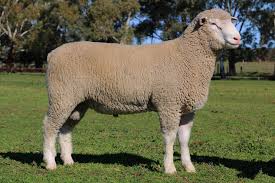
Ridgehaven Poll Dorsets is a family run stud operation based at Cudal. We aim to produce rams with genetics that assist lamb producers to be more efficient and profitable. With a balanced approach to the breeding program, they use visual assessment and performance data to deliver consistent high quality rams. The sale is on Thursday 13th September, with a delicious barbeque lunch provided.

On Property Ram Sale For Marocara

Marocara Poll Dorsets breed high performance rams to meet the requirements of commercial and stud producers. The 18th annual ram sale of Marocara Poll Dorsets will take place on property Hillview at Wongarbon, 132R Wellington Road on 4th September at 2pm with 180 rams on offer. Wongarbon is about 18 km east of Dubbo on the Mitchell Highway between Dubbo and Wellington. Enquiries are always welcome. Contact Gus on 0428 878 221 or Alistair 0427 878 221.

Rams on Private Sale At Lachlan Valley

Lachlan Valley Rams is offering White Suffolks and Poll Dorsets for private sale at Forbes. All rams have a good lambplan performance, are Gudair vaccinated and Brucellosis accredited. Contact Alan Sharrock on 0427 511 397 with your enquiries.

Central West Stud Sales

August 23, 2018 by Maggi Barnard


Some Of The Best In Central West

Goonigal Poll Dorsets have been operating for 12 years and will hold their 3rd annual sale on Tuesday, 28th August at 11.30am at the Canowindra Showground. Rams will be penned by 10am for inspection prior to sale. All rams are Brucellosis accredited free and vaccinated for OJD and footrot free. All rams will be stock scanned with figures available on the Facebook page.

Goonigal Poll Dorsets welcome all lamb producers in the market for rams to come and have a look on sale day. Whether you are after suckers or export lambs Goonigal Rams will produce. Allan Gray & Co will be conducting the sale and Bill Brien can be contacted on 0428 281 024.

For more than 21 years Felix Rams has had a singular focus on producing efficient and profitable prime lambs by breeding high performance, structurally sound meat sheep rams.

Felix Rams’ commitment to collecting good accurate performance data is second to none. Since first starting weighing lambs at birth in 1996, they have weighed more than 24,000 lambs within 12 hours of birth. Birthweight records go into Sheep Genetics – Lambplan.

Felix Rams will offer around 140 Poll Dorset and 45 White Suffolk rams at their annual on-property sale at Greenethorpe on 4th September. Catalogues are available at www.felixrams.com.au, or call Rodney 0417 499 204 or Allan Gray and Co Cowra on 02 6342 2377.

Marocara Poll Dorsets breed high performance rams to meet the requirements of commercial and stud producers.

The 18th annual ram sale of Marocara Poll Dorsets will take place on property Hillview at Wongarbon, 132R Wellington Road on 4th September at 2pm with 180 rams on offer. Wongarbon is about 18 km east of Dubbo on the Mitchell Highway between Dubbo and Wellington. Enquiries are always welcome. Contact Gus on 0428 878 221 or Alistair 0427 878 221.

Lachlan Valley Rams is offering White Suffolks and Poll Dorsets for private sale at Forbes. All rams have a good lambplan performance, are Gudair vaccinated and Brucellosis accredited. Contact Alan Sharrock on 0427 511 397 with your enquiries.


Freight Changes To Support Farmers

August 16, 2018 by Maggi Barnard

The NSW Government’s new improved access for heavy vehicles carrying supplies and stock to drought-affected areas was welcomed by Parliamentary Secretary for Western NSW, Rick Colless.

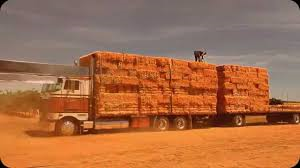
The new NSW Class 3 Drought Assistance Dimension Exemption Notice, which came into effect this week, will allow more hay to be transported per truckload, reducing costs for farmers.

Rick said with 100 percent of NSW in drought there has been a greater demand to transport hay. “We know freight is a huge cost so the more hay we can get on one load the cheaper it is for our farmers.”

“The NSW Liberals and Nationals have committed more than $1 billion in drought assistance to date. This is another step designed to help assist farmers at this difficult time,” said Rick.

Drought applications are being prioritised through the National Heavy Vehicle Regulator (NHVR) portal, by including the word DROUGHT in the reference section of the application.

For any questions transport operators or farmers may have contact the dedicated hotline 1800 952 292 or visit www.rms.nsw. gov.au/drought-freight.

Making Informed Livestock Decisions

August 16, 2018 by Maggi Barnard

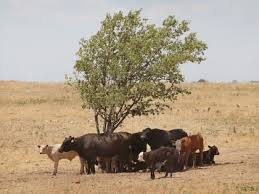
Conditions across the Central West continue to deteriorate with below average rainfall forecast for the next three months.

With many producers now hand feeding their remaining livestock, Central West Local Land Services staff are urging them to ensure they are constantly looking at the current and future cost of inputs to ensure they can make informed decisions around livestock management.

“Things are tight for producers. It’s important that they have a clear understanding of the cost of feeding stock so they can make an informed decision about if or when to sell,” said Central West Local Land Services Condobolin based district vet, Hanna Thomas.

To support landholders in the decision making process, Central West Local Land Services have partnered with RaynerAg and Landcare to roll out a series of workshops.

The workshops will allow producers to look at planning a cash flow budget to readjust strategies based on feeding or selling for the remainder of 2018, resource budget of feed and water based on requirements for stock and resetting key trigger points for livestock.

“Producers are under pressure at the moment and many are time poor due to their feeding schedule. These workshops are a great opportunity for them to stop and evaluate the financial impacts of feeding livestock and help them allocate limited resources effectively,” said Mel Kiel, Project Officer with Little River Landcare.

The free workshops will be held across the region throughout August. The Forbes workshop will take place on Tuesday, 21st August at the Forbes Inn Hotel from 12pm to 4pm. To attend, please contact Mel on 6846 4569 or projects@littleriverlandcare.com.au.

To find out more about these workshops or other Central West Local Land Services events, visit centralwestlls.nsw.gov.au

Why Did The Cattle Cross The Road?

August 9, 2018 by Maggi Barnard

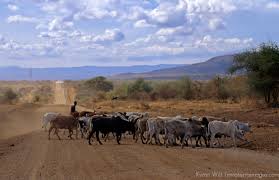
Farmers across NSW are set to receive government grants towards building cattle underpasses, to ensure livestock can safely move between paddocks separated by a state road.

The NSW Government has committed up to $3 million in grants for farmers, to build cattle underpasses and install warning signs and flashing lights, to help ensure safety for producers and motorists.

Minister for Primary Industries, Niall Blair said the investment delivers on a commitment between the NSW Liberals and Nationals as part of a Memorandum of Understanding (MoU) with the NSW Farmers’ Association to develop an underpass scheme to improve farm and road safety.

“Underpasses will remove the need for cattle to cross country roads, improving safety for livestock owners, their employees and motorists,” said Niall.

“This initiative, funded by the Department of Primary Industries (DPI), would be particularly beneficial to dairy producers who need to move stock across roads to milking facilities every day.

“In the last financial year, NSW milk production was worth $559 million to the state’s economy, reflecting the strength and resilience of the industry which is still managing the challenges of low prices for dairy products as well as facing the current drought conditions.”

Minister for Roads, Maritime and Freight, Melinda Pavey said the NSW Government will offer grants for 50 percent of the cost of installing an underpass, up to $70,000.

“Farmers can also access optional grants of up to $10,000 to help cover the cost of installing warning signs and flashing lights,” said Melinda.

Member for Lismore, Thomas George said along with the productivity boost for producers, the scheme would reduce hazards for motorists. “Underpasses will reduce the risk of road collisions, traffic delays and road surface damage,” said Thomas.

“Each underpass will be built primarily for the movement of livestock with permission from Roads and Maritime Services.”

CEO of NSW Farmers, Matt Brand said the association has advocated for an underpass scheme for NSW for a number of years and is very pleased to see this come to fruition. “We have seen a similar successful scheme run in Victoria and are delighted that NSW has followed suit,” said Matt.

“The underpass scheme acknowledges the importance of improved farm productivity, increased animal welfare and better safety for motorists.

“We encourage all cattle farmers to utilise this scheme to help improve the productivity of their business and animal welfare.”

Applications for grants close on 31st October 2018 and will be considered in the order in which they are received. Every application received will be assessed against eligibility criteria listed in the Cattle Underpass Scheme guidelines. More information about eligibility and application requirements is available from https://www.dpi.nsw.gov.au/cups.

Rabobank Offers Farm Management Deposit Offsets

August 9, 2018 by Maggi Barnard

Minister for Agriculture, David Littleproud has congratulated Rabobank for offering a Farm Management Deposit (FMD) offset to their customers.

This means farmers who bank with Rabobank, which has the second biggest slice of the farm lending market after NAB, will now be able to use the money in their FMD to offset interest on their loans. Farmers can put pre-tax income into the FMD during good years and pull it out during bad years, choosing to pay tax on it then.

Farmers are allowed to have up to $800,000 in an FMD. This means they could potentially save up to $24,000 a year if their bank offers an FMD offset (3 percent interest multiplied by $800,000).

David pushed the issue of FMD offsets during his drought round table in July. NAB and CBA have since announced they’ll give farmers FMD offsets. Rabobank had initially ruled out the idea of offering farmers an FMD offset product but last weekend announced it would give farmers that option. Only Westpac and ANZ have failed to come to the party.

“I congratulate Rabobank for doing the right thing,” said David.

“I’m glad the bank was big enough to change their mind. Australia’s farmers will be better off for it.”

“Rabobank is a foreign-owned bank showing the way for Westpac and ANZ. I hope Westpac and ANZ show they care for Australian farmers very soon, because their donations to drought causes are too small to be calculated as a percentage of their multi-billion dollar profit. What would really make a difference to our farmers is an FMD offset product.”

Australian farmers have more than $6 billion in FMD’s, so if all banks offer FMD offsets on farm loans, this could save farmers $240 million a year.

Chain Of Responsibility Threat

July 19, 2018 by Maggi Barnard

Forbes Shire Council is taking a bold step in speaking out against what it feels is unfair treatment of local government under the new Chain of Responsibility legislation.

Under the legislation, Council as the loading manager of the Central West Livestock Exchange (CWLE) is responsible for any breaches that may occur at the facility, including overloading, driver safety and fatigue.

General Manager, Steve Loane said that council has just been served an improvement notice addressing some 57 breaches by transport operators leaving the CWLE.

“We have been working hard to educate transport operators to ensure the breaches do not occur by ongoing site inductions covering the requirements of Chain of Responsibility, extensive signage around the site and direct letters to all operators,” said Steve.

“The improvement notice issued would require funding in excess of $2 million worth of additional infrastructure just to comply.”

“We are concerned that Council is being made an example of despite doing our best to address the requirements of the legislation. We are determined to take our case to as many political influencers as we are able, to bring about some fairness to Chain of Responsibility laws.”

Considerations For Late Sown Barley Crops

July 12, 2018 by Maggi Barnard

NSW producers considering late sowing barley in consideration of the dry start to winter have been advised to take paddock selection and seed quality into account.

With the lack of substantial winter rainfall, many growers have dry sown a proportion of their winter cereal crop and are now waiting on rain before committing to further plantings.

As the sowing window becomes later, growers are increasingly looking to barley as a late sowing option. In some cases this might also be to increase the level of stubble cover to reduce the risk of erosion and runoff in bare paddocks.

NSW Department of Primary Industries (DPI) Research Agronomist, Rick Graham said barley is considered a lower fertiliser input crop, which is seen as more adaptable and tolerant of short seasons, in comparison to spring wheat varieties.

“When deciding to late sow, growers need to take into account paddock selection and history as the impact of potential weed problems and any sub-soil constraints are likely to be amplified in a dry season.

“Growers will need to consider seed quality, particularly seed size and germination percentages, when looking at late sowing options and adjust seeding rates accordingly,” said Rick.

Growers currently have access to a number of late sowing/early maturing barley variety options, which are photoperiod sensitive, enabling them to speed up development when sown later.

To read the full article visit https://www.dpi.nsw.gov.au/about-us/media-centre/releases/2018/considerations-for-late-sown-barley-crops.

  • « Previous Page
  • 1
  • …
  • 16
  • 17
  • 18
  • 19
  • 20
  • …
  • 28
  • Next Page »

Click here to download the recent issue (202) of The Forbes & Parkes Phoenix (1.9MB PDF) – 14th August 2026

SEARCH THE PHOENIX

STAY CONNECTED

The Forbes Phoenix would like to thank you, our Facebook friends, for your continued support and readership!

Recent Articles

  • Disability Inclusion Matters In Central West NSW August 20, 2026
  • Mayoral Notes August 20, 2026
  • Snippets… August 20, 2026
  • Forbes Garden Club Report August 20, 2026
  • Protecting Our Environment And Agriculture August 20, 2026

Phoenix Office 7/113-127 Rankin Street, Forbes NSW 2871

Editor 0432 337 278
editor@forbesphoenix.com.au

Sales 0432 337 278
sales@forbesphoenix.com.au

View our Privacy Policy. View our Conflict Resolution Process. View our Ethics and Complaints Policy. Want to advertise with us? Information on our Community Promotions.

We are always looking for new articles of interest to the local community.

Please feel free to submit an article for possible inclusion in a future issue.

To submit an article, click here to use our online article submission form.

Subscribe

* indicates required

Copyright © 2026 · Magazine Pro Theme On Genesis Framework · WordPress · Log in

nsw government logo

The Forbes Phoenix's Digital Diversification of Free Regional Media project is proudly funded by the NSW Government Regional Media Fund