• Home
  • Articles
    • Front Page
    • General Interest
    • Snippets
    • Letters to the Editor
    • Council Comments
  • Special Interests
  • Our Community
    • Our People
    • Question of the Week
    • Jobs in the Central West
    • Be Seen
    • What’s On
    • What’s Hot
  • Features
    • Women in Business
    • Rural Round Up
    • My Place
    • Loving Local Living
    • Wellness Wise
    • Just a Short Drive
    • Real Estate
  • Sports
    • Bowls
    • Cricket
    • Equestrian
    • Footy Tips
    • Golf
    • Netball
    • Rugby League
    • Rugby Union
    • Soccer
    • Touch Football
  • Classifieds
  • Competitions
  • Contact Us
    • Contact Page
    • Advertise with us
    • Testimonials
    • Submit an Article
    • Subscribe to the Forbes Phoenix

Forbes Phoenix

The Future Of The Wool Industry

February 7, 2019 by Maggi Barnard

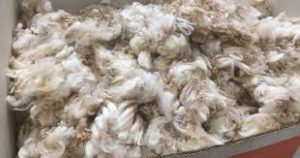
The Australian Wool Institute’s (AWI) $10 million project, in partnership with Ranken Research and Robo Shear, aims to develop a prototype machine for fully automated end to end wool harvesting. The project was established because there is a national shortage in shearers, despite the rising global demand for wool and record high prices per kilogram.

According to a 2016 report from the Australian Bureau of Statistics, there are about 2,800 shearers and 73 million sheep in the country.

Despite historic peaks in wool prices last year, shearers are leaving the industry to pursue generally, less labour intensive, opportunities.

The machine uses jointed mechanical arms driven by electric motors and computer programs have been built to reach the back and sides of the sheep – the most important parts of the fleece.

The process works with a camera capturing 3D imagery of sheep during the various stages of the shearing process. That data is then used to reconstruct what the sheep would look like without wool, which is fed into the robot when it begins shearing.

According to AWI, the machine is not intended to replace shearers but to be used in conjunction with traditional shearing methods.

“I think Australia’s wool industry is ready for innovation,” said National Farmers Federation (NFF) President, Fiona Simson, who is excited by the prospect of change in the wool industry.

“The romanticism of the old outback that people knew and the old farms that people knew are being replaced by lots of technology.

“I’m really confident we can embrace that in wool as well… while protecting the welfare of both animals and workers,” said Fiona.

(Source: https://farmers.org.au website).

Jemalong Wool Weekly Market Update

February 7, 2019 by Maggi Barnard

The merino fleece sector performed with mixed results this week. Better style wools, with favourable additional measurement results continue to attract excellent buyer support, resulting in very little change for these types, while off style types, carrying higher VM and those with high mid-breaks lacked the same support.

Overall the NRI added 8 cents for the series, making it the fifth consecutive week of positive movement.

In the skirtings, long low VM types continue to outperform the rest of the market and these wools recorded very little change, while the increasing supply of higher VM types eased, with lots carrying fault such as cott and colour most affected.

The crossbreds were by far the best performing sector this week, with 26 to 28 microns gaining 80-100 cents, while all other microns were generally 25-45 cents dearer, once again it was the better prepared lines that attracted the strongest competition, and posted the largest gains.

Currently, there are 40,426 bales rostered for sale next week.

Source: AWEX

Jemalong Wool Weekly Market Update

January 24, 2019 by Maggi Barnard

51,703 bales were offered this week, making it the largest national offering since April last year. However despite the larger offering, the overall quantity is still well down on the previous season, with a reduction of 175,524 bales offered (-16.8%).

The merino fleece market was mixed in its performance. The three centres behaved slightly differently, with varied positive and negative movements recorded across the board.

Although there was an inconsistent pattern, the overall trend was upward. By the close of trade the NRI had gained 12 cents, closing the week at 1,960c/kg.

Skirtings managed to record upward movements, generally by 2-40 cents, wools coarser than 19 micron attracted the most attention and as a result enjoyed the largest gains. The oddments varied between centres, the North and West recorded 20-30 cent rises, whilst the South posted a small reduction.

The crossbred sector performed the best, with large gains of 50-80 cents experienced in the 26 to 28 micron range.

Currently, there are 41,503 bales rostered for sale next week.

Source: AWEX

Making Smart Farming Ideas A Reality

December 13, 2018 by Maggi Barnard

More than $9 million is available under Round two of Smart Farms Small Grants.

Grants of between $5,000 and $200,000 to assist farmers and groups to adapt to change, innovate and become more sustainable.

Part of the National Landcare Program’s $134 million Smart Farms Program. Landholders and community groups can now apply for up to $200,000 under Round two of Smart Farms Small Grants.

Landcare groups, NRM bodies, Indigenous organisations and community groups are encouraged to throw their hat in the ring.

“The future of Aussie agriculture relies on sustainable farming and land management practices,” said Minister for Agriculture and Water Resources, David Littleproud.

“Our farmers are looking for new practices and tools to stay sustainable and profitable.

These grants support new projects to improve Aussie soil, biodiversity and vegetation.

“They will also help support water security and promote climate-smart farming. Ultimately, this leads to more profitable agriculture, fishing and forestry industries. I know there are exceptional ideas out there and these grants can make them a reality.

“The first round of funding was highly competitive, attracting over 800 applications. I strongly encourage those who missed out in Round one to apply again,” said David.

More information is available online. Visit the Community Grants Hub to apply.

Grain Fed Beef Definition Expanded

December 13, 2018 by Maggi Barnard


Beef farmers will now be able to market their cattle as ‘Grain Fed Finished’ after feeding them grain for 35 days before sale or export and will be able to ask a premium for these animals.

Previously, only two standards existed: ‘Grain Fed’ and ‘Grain Fed Young Beef’. ‘Grain fed’ required the cattle to be fed on grain for 80 of the past 100 days while ‘Grain Fed Young Beef’ required grain to be fed 50 of the past 60 days for females and 70 days for males.

“This new ‘Grain Fed Finished’ standard means farmers can feed the cattle grain for 35 days and reap the benefits of selling as ‘Grain Fed Finished’,” said Minister for Agriculture and Water Resources, David Littleproud.

“The science says 35 days on grain produces the fat colour attribute associated with grain-fed beef. Thirty-five days on one property means cattle are Meat Standards Australia accredited, too.

“The standard requires the cattle be fed on a specified high energy grain diet. As Australians, we refuse to compromise on quality,” said David. The standard is operational now, having been signed into regulation.

Fast facts:

• The new ‘Grain Fed Finished’ standard, or trade description, will apply both domestically and overseas.

• Grain Fed (GF) cattle must have been in a feedlot for not less than 100 days and for not less than 80 days of that, on a nutritionally balance ration of a recognised high energy feed of which grain is the highest single component.

• Grain Fed Young Beef (GFYB) cattle must have been in a feedlot for not less than 70 days (females for not less than 60 days) and for not less than 50 days of that, on a nutritionally balance ration of a recognised high energy feed of which grain is the highest single component.


Jemalong Wool Weekly Market Update

December 13, 2018 by Maggi Barnard

The quantity of wool on offer increased slightly this week, however despite the increase, the total volume of wool sold (season to date) is still 18% less than it was this time last season.

The merino sector performed solidly, recording gains across most microns, only a lack of interest in some inferior types and reduced buyer demand on wool with poor additional measurements, prevented the MPG’s from posting larger gains.

Despite the merino fleece sector recording overall gains, the NRI lost 8 cents for the week, to close at 1,897. This movement was mainly due to large losses experienced in the crossbred sector, which saw prices quickly revers after recording large gains at the previous sale.

Wools 30 micron and finer lost 70-130 cents, however the sharp reduction in price was met with firm seller resistance, with approximately 20% of the crossbred offering passed in.

After three weeks of sustained price rises the oddment market lost ground with locks, stains and crutchings generally.

Source: AWEX

Jemalong Wool Weekly Market Update

November 8, 2018 by Maggi Barnard

The lack of buyer confidence combined with an ever-increasing quantity of lower spec wools, has resulted in losses across the board. Reductions of 15-40 were common this week, leaving the NRI 23 cents lower. The NRI has now fallen 272 cents (13%) from its mid-September peak. The fall in prices was again met with firm seller resistance, with a weekly clearance rate of only 74.7%.

The skirtings were the best performing sector this week, managing to record modest gains for the week of 5-10 cents, wool carrying less than 2% VM attracted the most competition and the largest gains. The crossbreds had a week of mixed results, prices rose slightly in the South and fell slightly in North, while the oddments continued their steep downward path. Locks, stains and crutchings generally fell by a further 40 to 100 cents, pushing the three carding indicators down by an average 71 cents.

Quantities remain similar next week, currently there are 35,696 bales on offer Nationally.

Source: AWEX

Extension Of The CWLE Clouded By Chain Of Responsibility Notice

November 8, 2018 by Maggi Barnard

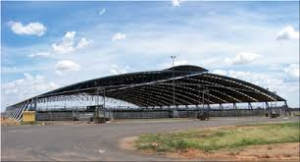
Work has begun at the Forbes Central West Livestock Exchange (CWLE) to expand on the existing cattle selling complex.

The estimated $3.4m expansion consists of improvements to truck parking areas, electrical works to increase lighting and security CCTV, expansion of the current covered yard area and installation of additional state of the art cattle yards. This will lift yarding from 1,800 to 2,600 head of cattle per week, an increase of 41,600 per annum to a total of 105,000 head of cattle per year.

“The added advantage of the additional delivery pens will facilitate more efficient turnaround time for cattle, spending less time in the selling centre. This will have a positive impact on animal welfare and transport operations,” said Forbes Mayor Phyllis Miller.

“The project will drive economic growth and productivity into the local community, creating jobs and new opportunities for Forbes,” she explained.

This expansion phase will greatly enhance the efficiency of operations and animal welfare standards to industry best practice levels. The high profile facility has however been the subject of recent controversy with Forbes Shire Council being served with an improvement notice this year by the RMS.

This is as a result of 57 breaches of Chain of Responsibility legislation by livestock transport operators leaving the saleyards.

Forbes Shire Council General Manager, Steve Loane states that Council is not the loading manager and merely provides the facility.

“It’s just callous to whack the livestock industry with this now,” he said. “The weighbridge would need to be remotely operated because trucks come and go at all hours.

The weighbridge would have to be capable of taking photos of the back, front and sides of a truck and identifying the truck driver. If  a truck is overloaded, there would need to be extra yards to hold offloaded animals, another expense the Council doesn’t have reserves for,” he said.

To further press Council’s case, the CWLE hosted on Tuesday executives from the National Heavy Vehicle Regulator and administrators of the Chain of Responsibility legislation, including CEO, Sal Petroccitto.

The hosting was done during an active sale at the CWLE to better develop their understanding of the complexity of the issue faced by saleyard owners.

Australia’s Oldest Annual Agricultural Exhibition

October 18, 2018 by Maggi Barnard

The Australian National Field Days (ANFD) is the oldest annual agricultural exhibition in the country established in 1952.

According to ANFD Manager Jayne West more than 600 exhibitors now travel to the Borenore site (15km west of Orange) from all over Australia and internationally to display their products and services during the three-day event.

The early days saw the Orange Branch of the Graziers’ Association get together to provide comparative demonstrations so that farmers could see machines designed for a specific purpose working side-by-side.

The very first Orange Field Day was staged at Kyala Park featuring displays and demonstrations by 40 exhibitors and attracted an estimated crowd of 5,000. It was declared a resounding success and became an annual event held at various properties until the permanent 75-hectare site was purchased at Borenore in 1972.

Since 1952, the field days have been organised by a voluntary committee, and in 1966 the Orange Field Days Co-op Limited was formed and registered as a Community Advancement Society to administer the Australian National Field Days.

This year there will be activity centres, sheepdog trials, demonstrations, live music, racing pigs, petting zoo and a fashion parade.

Australian Breed Record For Senepol Sale

October 11, 2018 by Maggi Barnard

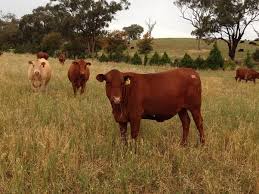
Australian breed records tumbled at the annual 5 Star Senepol Sale held two weeks ago at CQLX Gracemere, Queensland.

For vendors, Geoff and Alison Maynard and family, the 5 Star Senepol Sale saw a new breed record established at $27,000 and bulls sold to all parts of Queensland and also to Western Australia.

Sarah and Clayton Maynard of Southern Star Rural (Canowindra) sold eight bulls through the 5 Star Sale this year. Southern Star Rural managed the top price for a Senelais (Senepol/Charolais) bull at $8,000 and also the top priced Senegus (Senepol/Angus) bull at $7,000.

Earlier this year, Senepol Stud Southern Star Rural recorded the highest midterm weight gain during the prestigious Callide Dawson Beef Carcase Competition in Queensland, with a Senepol/Angus steer gaining a whopping 4.6kg per day. This is the highest mid-term weight gain recorded in the 30 year history of the competition.

On the day, 65 bulls were sold with an average of $6,677 a top of $27,000 and a 93 percent clearance rate.

Buyers who were focused on Senepols, provided the vendors with a bottom line average of $7,425 for the 40 pure bred Senepol entries on offer.

Seven three quarter Senepol/one quarter Shorthorn bulls topped out at $6,500, while six Senegus bulls hit $7,000 and six Senelais entries peaked at $8,000.

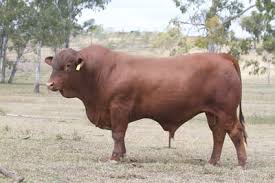
Topping proceedings and new breed record holder was the $27,000 5 Star M71013, a 22-month, 772kg, 12/9mm, 133EMA son of Antigua Dalgada (CBN Alcoota) selling in a three quarter share full possession arrangement to Chris Simpson, CAP Genomics, Brisbane.

CAP Genomics took three to average $13,167. Regular supporters, Alistair and Jo McClymont, Burleigh Station, Richmond acting again through Ken Roche, Marlborough, took four Senepols for an average $10,125. These included the $13,000 5 Star M70782 a 17-month-old, 678kg delivering a rib eye measurement of 110sq cm.

M70782 was the first sale progeny of one of the studs leading sires, 5 Star Hefner 140634.

For more information on pure bred Senepol and Senegus or Senelais Bulls on offer in Canowindra please contact Clayton Maynard on 0439 029 204.

  • « Previous Page
  • 1
  • …
  • 14
  • 15
  • 16
  • 17
  • 18
  • …
  • 27
  • Next Page »

Click here to download the recent issue (176) of The Forbes & Parkes Phoenix (1.6MB PDF) – 13th February 2026

SEARCH THE PHOENIX

STAY CONNECTED

The Forbes Phoenix would like to thank you, our Facebook friends, for your continued support and readership!

Recent Articles

  • A $7.6 Million Boost For Forbes Future Water Security February 12, 2026
  • Mayoral Notes February 12, 2026
  • Snippets… February 12, 2026
  • Indigenous Storytellers Scholarship Returns February 12, 2026
  • Meet Indigenous Chef Mindy Woods At Forbes Crop Swap February 12, 2026

Phoenix Office 7/113-127 Rankin Street, Forbes NSW 2871

Editor 0432 337 278
editor@forbesphoenix.com.au

Sales 0432 337 278
sales@forbesphoenix.com.au

View our Privacy Policy. View our Conflict Resolution Process. View our Ethics and Complaints Policy. Want to advertise with us? Information on our Community Promotions.

We are always looking for new articles of interest to the local community.

Please feel free to submit an article for possible inclusion in a future issue.

To submit an article, click here to use our online article submission form.

Subscribe

* indicates required

Copyright © 2026 · Magazine Pro Theme On Genesis Framework · WordPress · Log in