• Home
  • Articles
    • Front Page
    • General Interest
    • Snippets
    • Letters to the Editor
    • Council Comments
  • Special Interests
  • Our Community
    • Our People
    • Question of the Week
    • Jobs in the Central West
    • Be Seen
    • What’s On
    • What’s Hot
  • Features
    • Women in Business
    • Rural Round Up
    • My Place
    • Loving Local Living
    • Wellness Wise
    • Just a Short Drive
    • Real Estate
  • Sports
    • Bowls
    • Cricket
    • Equestrian
    • Footy Tips
    • Golf
    • Netball
    • Rugby League
    • Rugby Union
    • Soccer
    • Touch Football
  • Classifieds
  • Competitions
  • Contact Us
    • Contact Page
    • Advertise with us
    • Testimonials
    • Submit an Article
    • Subscribe to the Forbes Phoenix

Forbes Phoenix

Eyewear Specs Welcomes New Employees

January 24, 2018 by Maggi Barnard

Eyewear Specs has welcomed two new staff members to their team. Lauren Hutcherson has been appointed as the new optometrist and Brodie Dukes will be undergoing her traineeship at the business.

“I am delighted that Eyewear Specs has grown enough to expand the business,” said Fiona Hayward, Owner and Manager of Eyewear Specs. “I am so happy to be working with Brodie and Lauren and look forward to the future of Eyewear Specs.”

Eyewear Specs opened its doors at 95 Rankin Street in Forbes in February 2016 and has been growing from strength to strength. The business has been so successful that they have had to expand by

employing more staff.

“I grew up in Molong and went to Queensland for six years to study. After graduating last year, I decided to come back to the country to work,” said newly appointed optometrist Lauren.

“I was born and bred in Forbes and have just recently finished school,” said Brodie. “Fiona offered me this amazing opportunity for a traineeship here. I’ve really enjoyed it so far!” Brodie’s studies will commence once schools reopen.

To have your eyes tested or to find a pair of glasses to suit your individual financial budget visit Eyewear Specs today!

You Have To Move It, Move It

December 14, 2017 by Maggi Barnard

There is an old saying amongst physios that says: ‘The best exercise is the one that gets done.’

A recent study published in the September issue of the New England Journal of Medicine has put this theory to the test. The authors studied the effect early versus delayed exercise, after an acute muscle strain, has on recovery time for recreational athletes.

Most people by now are aware that early mobilisation/walking within pain limits, after an ankle sprain reduces disability and recovery time. But is this also true for muscle tears?

This study took 50 recreational athletes with an acute injury of the thigh or calf muscles. Participants were divided into two groups. Each group performed the same four-stage exercise programme over a 12-week period. One group started this programme two days after injury and the second group started nine days post injury.

The exercise programme consisted initially of stretches then progressive isometric and dynamic loading followed by functional exercises combined with heavy strength training.

The primary outcome measure was return to full asymptomatic participation in sport after successful completion of a functional screening test.

The interval between severe muscle injury and return to sport was shorter in the early exercise group than in the delayed exercise group. The authors concluded that starting rehabilitation two days after injury rather than waiting for nine days shortened the time from injury to pain-free return to sport by three weeks without any significant increase in the risk of re-injury.

The take home message: Get to your sports physio early after a muscle injury in order to minimise recovery time. For the fitness of you,

Linda Reily

Walking To A Healthier Heart

December 14, 2017 by Maggi Barnard

Nine in 10 Australians could reduce their risk of heart disease simply by walking as little as 15 minutes more each day, the Heart Foundation said following a new report from the Australian Institute of Health and Welfare (AIHW).

The report looks at the health impact – or ‘burden’ – of a lack of physical activity in terms of years of healthy life lost through living with an illness or injury, or through dying prematurely.

Being inactive has a strong link with heart disease. One-third of the total burden due to physical inactivity in Australia was caused by heart disease.

This figure demonstrates the significance of being active and having a healthy heart.

It is estimated that if the 89 per cent of Australians who fall in the ‘at risk’ (sedentary, low and moderate activity) category did an extra 15 minutes of moderate activity such as brisk walking five days per week, 13 per cent of the potential disease burden due to physical inactivity could be avoided. And by adding 30 minutes of walking or other moderate activity, five days per week, 26 per cent of future disease burden could be avoided, the report stated.

In May, the Federal Government announced that $10 million in funding over two years would be allocated to the Heart Foundation for an initiative to support up to 300,000 Australians to adopt the easy way to better health – regular walking – by 2019.

Swimmer’s Shoulder Part 2

November 30, 2017 by Maggi Barnard

Shoulder impingement during swimming is largely due to dynamic muscle imbalance and biomechanical faults.

Dynamic muscle imbalances can be addressed by strengthening exercises for the rotator cuff and scapular stabilisers together with stretches for the muscles at the back of the shoulder. One good exercise is to stand facing a wall with your arm raised to shoulder height and elbow straight. Hold a tennis ball to the wall by leaning through your shoulder and pinch your shoulder blades together. Roll the ball in small circles for 15 seconds first clockwise then counter clockwise until you become fatigued or for two minutes.

Biomechanical faults can be addressed by correcting your swim technique. Achieving good symmetrical body rotation through an efficient bilateral breathing pattern helps to avoid shoulder impingement during the catch and pull through phase of the freestyle stroke.

Instead of entering thumb first change your technique to enter with a flat hand or fingertip first. This is made easier by avoiding reaching across your midline. A thumb first entry works the shoulder internal rotators excessively and when multiplied by approximately 3,200 strokes per hour contributes heavily to the muscle imbalance of strong internal rotators and weak external rotators causing shoulder impingement.

Most swimmers pull through with a straight arm or dropped elbow. This loads the shoulder muscles excessively rather than utilising the larger and stronger muscles of the chest and upper back.

Making these simple changes can help you achieve many hours of pain free swimming.

For the fitness of you.

Linda Reilly

Want To Eat More Veggies?

November 16, 2017 by Maggi Barnard

Scientists have come up with an innovative approach to tackling Australia’s poor vegetable intake, with the launch of a new app that challenges people to eat more veggies.

Using a gamified approach, CSIRO’s new VegEze app aims to motivate Australians to add extra vegetables to their daily diets and form long-term, healthier habits through a 21-day ‘Do 3 at Dinner’ challenge.

CSIRO nutritionists will also study how effective the app’s game-like nature is at helping transform people’s eating patterns, as part of a broader research study.

“We need a fresh approach to improve Australia’s vegetable consumption and overall diet quality,” CSIRO Senior Principal Research Scientist Professor Manny Noakes said.

“Our research found two out of three Australian adults are not eating enough vegetables, especially as part of their evening meal. It’s time to find more engaging, effective

approaches to help break these entrenched diet habits.”

Challenging users to eat three different vegetables at dinner every day for 21 days, the VegEze app helps people track their intake and tally up vegetable serves, with daily reminders and rewards to help people stay motivated and on-track.

“Committing to eating more vegetables every day is one of the most important ways we can improve our health today. Boosting your intake can be as easy as having three types of vegetables taking up half of your dinner plate,” said Manny.

“After just a few weeks using the app every day, users should feel more confident in adding more vegetables to their menu and notice some positive changes to their health and wellbeing.

“The beneficial nutrients and fibre from vegetables can help improve digestion, and fill you up – which can help reduce eating too much unhealthy junk food.”

Since May 2015, CSIRO has studied the dietary habits of more than 191,000 adults for its Healthy Diet Score research.

Eating three types of vegetables as part of the evening meal was found to be a key marker in having a better diet, but further research of 1,068 adults showed some Australians were being held back from eating more vegetables by low awareness, lack of time and low confidence.

To help people overcome these barriers, the VegEze app features educational resources such as a visual guide to specific vegetable serve sizes, vegetable recipes, nutritional information and motivational rewards.

Information from app users will feed back into CSIRO’s study of Australians’ vegetable consumption, while helping to analyse the app’s effectiveness as an education initiative to improve Australia’s poor vegetable score card.

The technology was developed in Australia in collaboration with digital health solution provider SP Health.

To try the 21-day Do 3 at Dinner challenge and participate in the research study, download the free VegEze app via the Apple App Store: https://itunes.apple.com/au/app/vegeze/id1268951104

Swimmer’s Shoulder Part 1

November 16, 2017 by Maggi Barnard

With the weather finally warming up swimming is an ideal way to get a full body workout. Due to the repetitive nature of swimming, overuse injuries in the shoulder and neck are common.

The shoulder is a ball and socket joint with a ring of cartilage around the socket to make the joint more stable. Around this is a loose joint capsule that is reinforced with ligaments and muscles. Because the shoulder is a very mobile joint it relies on the action of these muscles and ligaments to maintain stability. These muscles are called the rotator cuff and consist of four muscles that work together to keep your shoulder centred in its socket.

So if swimming strengthens the shoulder muscles why do so many swimmers have shoulder problems?

The simple answer is due to the repetitive nature of swimming. The more complex answer lies in the fact that many swimmers don’t have good stroke technique, while those that do, can still have problems because the swim stroke (in particular freestyle) mainly strengthens the shoulder internal rotators and adductors. This causes muscle imbalance, leaving the scapular stabilisers and external rotators relatively weak and joint laxity increases. The rotator cuff must work harder to keep the shoulder centred in the socket. When the already relatively weakened external rotators fatigue, the ball of the shoulder joint moves forward and the tendon of the rotator cuff muscles is pinched between the bones as the hand is raised above shoulder height.

Next column I will cover some practical ways to prevent this from happening and what to do if you already have problems. For the fitness of you.

Linda Reilly

Hay Fever Help

October 26, 2017 by Maggi Barnard

Spring has well and truly sprung, leading to a great number of us suffering from Allergic Rhinitis – also known as hay fever.

Hay fever can occur seasonally or year round and symptoms differ from person to person. It’s estimated that 20% of people will suffer from hay fever at any given time.

Interestingly hay fever is not caused by hay and doesn’t result in fever! Instead it is caused by allergens such as pollens, dust mites, mould and animal hair.

Signs and symptoms of hay fever include a runny nose, rubbing of the nose, itchy nose, itchy watery eyes or sneezing.

Here are some general preventative steps that might help: avoid cutting grass, playing or walking in grassy areas, and camping; wear wraparound sunglasses; change yourclothes and take a shower after being outdoors to remove the pollen on your body; keep the windows closed at home and in the car, and use recirculating air-conditioning in the car; try to stay indoors when the pollen index or count is high (refer to Weather zone www.weatherzone.com.au), or the pollen forecast and if possible, avoid drying clothes outside. This will help prevent bringing pollen into your house.

There are several treatment options for hay fever, so call in and speak to one of the friendly pharmacists or team members at Flannery’s or Life Pharmacy to tailor an effective solution for you.

Treatment options include but are not limited to: Antihistamine tablets, eye drops and nasal sprays (non-sedating) to help reduce symptoms such as sneezing, itchy and irritated eyes. These only need to be taken when you have the symptoms.

Nasal Corticosteroid sprays, a potent anti-inflammatory action when used regularly. Perfect for those who suffer regular/seasonal allergies.

Avoiding Muscle And Joint Pain

October 19, 2017 by Maggi Barnard

Now that the days are getting longer and warmer, we tend to take on more chores in and around our homes.

Extra gardening, dusting off the cobwebs, window cleaning, spring cleaning and preparation for Christmas becomes an added part to our day.

Long and extended activity that has not formed part of our usual routine may lead to a lot of muscle and joint pain.

To avoid these unwanted muscle and joint pains it is important to take precautions prior to doing these jobs.

Start by stretching your arms and legs. Take regular breaks and walk around a little.

Combined with drinking enough water, sore limbs and other injuries may be eliminated. These allow our body to resume its normal posture.

Planning ahead by doing a little extra each day will also enable you to get the task done with much less pain.

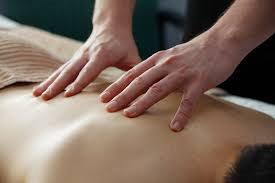
Remember, the quicker you receive massage therapy the quicker the recovery time.

To schedule a massage appointment contact Greg Howell at Forbes Bowen Therapy

& Wellness on 0427 592 771.

The Truth About Tennis Elbow

October 19, 2017 by Maggi Barnard

Tennis elbow (lateral epicondylalgia) is a general term used to describe pain on the outside of the elbow. Ironically, most people who get tennis elbow do not play tennis and whilst pain is felt at the elbow it is a degenerative problem that involves the wrist and finger extensor muscles.

Typically, those with tennis elbow will experience pain when performing gripping tasks or resisted wrist or finger extension. There will be tenderness over the bone on the outside of the elbow and the muscles of the forearm may feel very tight. Often grip strength is decreased and it is painful to grip or lift objects or to shake hands.

In the not so distant past, it was thought that this was an inflammatory condition and the common advice was to rest, and take anti-inflammatories. We now know that this is a degenerative condition of the tendon where the wrist extensors attach to the lateral epicondyle of the elbow. The cause can be due to one large/strong movement or repeated movements that stress the tendon to the point where the tendon is unable to repair as quickly as damage is occurring.

Initially treatment involves rest from the aggravating activities and gentle strengtheningexercises to stimulate the growth of new tendon cells within the tendon. Load management is important, for example instead of painting that room in one day complete it over several days to minimise aggravation. Initially isometric exercises such as tensing your forearm muscles without moving your wrist will help relieve symptoms. These are later progressed to eccentric strengthening exercises to prevent reinjury.

For the fitness of you,

Linda Reilly

Shin Splints

October 5, 2017 by Maggi Barnard

With winter sports winding up and pre-season training for summer sports commencing, it is not surprising that today I saw my first case of shin splints (Medial Tibial Stress Syndrome), for this year.

Medial Tibial Stress Syndrome (MTSS) is the medical name for lower leg pain that occurs below the knee on either the front outside part of the leg (anterior shin splints) or the inside of the leg (medial shin splints). MTTS is a common injury seen in many running or jumping based sports for example, basketball, netball, football or hockey.

Shin splints most commonly occur when repetitive or prolonged activities place strain on where the muscles attach to the outside lining of the bone (tenoperiosteum). Put simply, the cause of MTTS can be summed up in four words: too much too soon. Athletes often first experience shin pain early in the season due to deconditioning and when training surfaces are generally harder. Later in the season it can be caused by increased load or fatigue from over training and not allowing enough time for recovery between activities.

If you have shin splints stretch your calf muscles regularly through the day. Another good stretch is to kneel on a carpeted floor with your legs and feet together and toes pointed directly back then slowly sit back onto your heels, pushing your ankles onto the floor until you feel tension in the muscles in your shin. Hold for 15 seconds then relax and repeat. When you return to sport, increase your load slowly and avoid running on hills and hard surfaces until your pain goes completely.

“For the fitness of you”

Linda Reilly

  • « Previous Page
  • 1
  • …
  • 27
  • 28
  • 29
  • 30
  • 31
  • 32
  • Next Page »

Click here to download the recent issue (186) of The Forbes & Parkes Phoenix (2.1MB PDF) – 24th April 2026

SEARCH THE PHOENIX

STAY CONNECTED

The Forbes Phoenix would like to thank you, our Facebook friends, for your continued support and readership!

Recent Articles

  • Snippets… April 23, 2026
  • Mayoral Notes April 23, 2026
  • Four Days Of Double Demerits This Anzac Day Long Weekend April 23, 2026
  • Forbes Marks Anzac Day With Services And Special Town Hall Tribute April 23, 2026
  • Celebrating Our Stories, Places And People April 23, 2026

Phoenix Office 7/113-127 Rankin Street, Forbes NSW 2871

Editor 0432 337 278
editor@forbesphoenix.com.au

Sales 0432 337 278
sales@forbesphoenix.com.au

View our Privacy Policy. View our Conflict Resolution Process. View our Ethics and Complaints Policy. Want to advertise with us? Information on our Community Promotions.

We are always looking for new articles of interest to the local community.

Please feel free to submit an article for possible inclusion in a future issue.

To submit an article, click here to use our online article submission form.

Subscribe

* indicates required

Copyright © 2026 · Magazine Pro Theme On Genesis Framework · WordPress · Log in