• Home
  • Articles
    • Front Page
    • General Interest
    • Snippets
    • Letters to the Editor
    • Council Comments
  • Special Interests
  • Our Community
    • Our People
    • Question of the Week
    • Jobs in the Central West
    • Be Seen
    • What’s On
    • What’s Hot
  • Features
    • Women in Business
    • Rural Round Up
    • My Place
    • Loving Local Living
    • Wellness Wise
    • Just a Short Drive
    • Real Estate
  • Sports
    • Bowls
    • Cricket
    • Equestrian
    • Footy Tips
    • Golf
    • Netball
    • Rugby League
    • Rugby Union
    • Soccer
    • Touch Football
  • Classifieds
  • Competitions
  • Contact Us
    • Contact Page
    • Advertise with us
    • Testimonials
    • Submit an Article
    • Subscribe to the Forbes Phoenix

Forbes Phoenix

Dry Season Makes For Tough Times

June 13, 2019 by Maggi Barnard

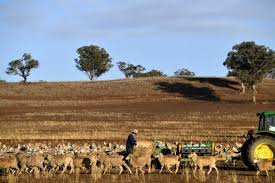
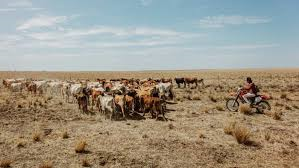
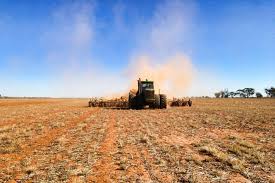
Tough is the word Lake Cargelligo grain grower Andrew McFadyen is using to describe the current seasonal conditions across much of New South Wales’ grain growing regions. He said reasonable rain was needed in the next three to four weeks to give winter crops a fighting chance after a dry summer and autumn.

“Grain growers are a resilient group, but the current situation is testing everyone in the agricultural sector, including regional communities,” Mr McFadyen said.

“In seasons like this, it is really important to remember we are all in this together and it’s always rained. It will turn around this time too.”

“In the Lake Cargelligo region, the past 18 months have been incredibly dry, and we are now at a point where we need rain in the next three to four weeks to give winter crops a chance, or in some cases to get winter crops in the ground.”

At Forbes, GRDC Northern Panel member Tony Hamilton said the season had been “very patchy” with reduced canola plantings, very little chickpea planted and some irrigation water available to carry over. “Irrigators are definitely disillusioned. But the planting decision window could extend from mid-June to July if the price outlook is good and we get some rain,” Mr Hamilton said.

At Wyalong, grower and GRDC Northern Panel member Roger Bolte said it was a similar situation despite 70mm in late March giving growers hope for a great autumn start to the season.

“We had another 50mm in early May and that helped set up some growers across this area, but the conditions vary significantly through this region,” he said.

“Wheat and barley are the main crops this season at the expense of canola and legumes. Canola could be back as much as 90% this year across this district. A small area of chickpeas and lupins will really round out what’s in the ground here.”
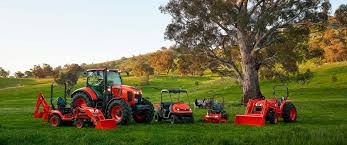
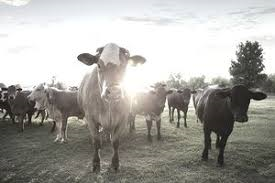
Kubota Ride And Drive Day On In Cowra

June 13, 2019 by Maggi Barnard

McClintock & Co Canowindra are your dealers for Kubota in the Central West area including Canowindra, Cowra, Grenfell, West Wyalong, Forbes and Parkes.

Join the team for a Kubota Ride and Drive Day on Friday 14th June at the Cowra Showgrounds from 9am. Take advantage of the wide range of Kubota equipment including tractors, tillage implements, mowers and RTVs.

McClintock’s have plenty of stock to meet your needs, including a range of equipment that would qualify for the instant asset write off and the team are willing to make a deal to shift stock.

McClintock & Co are a long-standing and stable business established in 1970, employing full time qualified personnel to service the local area. This enables the team to provide reliable, quick, high quality service to their clients.

Come and see the Kubota staff from head office for updated product info and then see Richard & Brett for a great deal. For more information call Richard on 0499 550 088 or Brett on 0499 115 189.

RURAL ROUNDUP

May 9, 2019 by Maggi Barnard

Investing In Farmers And Agriculture

The Government continues to support farmers facing hardship as drought and flood hit farmers in various parts of our nation, whilst aiming to boost our exports.

The Government is providing $6.3 billion in assistance and concessional loans to support those affected by drought and $3.3 billion to support those affected by flood.

This includes expanding the National Water Infrastructure Development Fund and establishing a new $5 billion Future Drought Fund to support drought resilience projects.

The Government continues to support farmers receiving Farm Household Allowance. From 1st July farmers on FHA will be able to discount or exempt the sale of livestock from the FHA income test when it’s invested in a Farm Management Deposit.

Australia’s agriculture industry has been given another boost by the Government, with $29.4 million worth of measures that target sectors with high export growth potential.

Minister for Agriculture and Water Resources, David Littleproud said the Government continues to target investment where it would bring the biggest boost to agriculture.

“We produce the best food and we need to give our farmers as many markets as possible to send it to. Free trade deals decide the tariffs but we still need to negotiate protocols to send our produce across which satisfy the importing country we won’t bring pests or disease,” said David.

“The Government is also investing $6.8 million over four years to extend the Agricultural Trade and Market Access Cooperation (ATMAC) program – an initiative of the Agricultural Competitiveness White Paper.

“The ATMAC program is there for large industries and producers. It has successfully broken down technical trade barriers and improved access to premium markets returning dividends for our farmers,” said David.

Crunching Cattle Price Grid Numbers

Cattle producers now have access to a free online tool which allows them to quickly compare the prices on offer for direct consignment to a range of processors and feedlots.

The tool, located on the new AgCentre website (www.agcentre.com.au), is compatible with smart phones and laptops and is the brainchild of two mates, Forbes Norton and Chris Hourigan.

Producers and their agents simply gain a login to the tool for free and then punch in the details of cattle they want to sell including numbers, liveweight, location, EUstatus and breed.

The tool will then quickly compare the prices on offer in real-time from the publicly- available grids of major processors and feedlots including Teys, Thomas Foods, Bindaree, Borthwicks and NH Foods.

The AgCentre tool also provides an estimate of transport costs to various abattoirs and feedlots.

Forbes Norton said the tool allowed producers and their agents, processors and feedlots to connect with each other more easily.

“There is no need for producers to seek out (individual) price grids by phone, email or fax,” said Forbes. “You put in the details and it shows you live prices for all those public grids.”

He said the tool enabled producers to discover the best price and estimated overall net returns for their cattle and then can make contact with the processor or feedlot to discuss a sale or get more information.

Forbes said the price discovery service had the potential to alleviate ACCC and Senate pressure to publish price grids and in turn mitigated the risk of regulatory intervention to force mandatory price reporting on the industry.

Greater price discovery would also lead to better competition in the market, he said.


Jemalong Wool Weekly Market Update

May 9, 2019 by Maggi Barnard

Following the one-week Easter recess, quantities increased this week with 43,053 bales on offer. With reduced volumes coming forward, combined with a 2% fall in the AUD, the larger offering did little to soften buyer demand.

Main buyer interest was in the best/good style wools, spirited bidding on these types helped push prices up by 15-30 cents, which in turn helped push the AWEX NRI up by 18 cents, to close the week at 1997. Inferior style wools were not as well supported and lost further ground and when viewed in US dollar terms the NRI was actually 23 cents cheaper.

Crossbreds again recorded healthy gains, with rises of 40-60 cents, pushing the 28 micron indicator further into record territory, and after tracking downward for the previous six weeks, merino cardings recorded positive movement, with general increases of 10-30 cents.

Next week sees quantities reduce with 33,464 bales currently rostered for sale nationally.

Source: AWEX

Rural Roundup

April 11, 2019 by Maggi Barnard


A Good Investment In Farmers

The Coalition Government is investing $5.93 million in new research, extension and adoption to boost farm productivity through well managed dams and shelterbelts deliver on-farm. The project will also measure the biodiversity benefits of farm dams and shelterbelts.

Minister for Agriculture, David Littleproud said putting native vegetation and entry points around dams meant stock grew faster on cleaner, cooler water – and this research would measure the benefits across 15,500 farms.

“Fencing, installing watering points and planting native vegetation around dams can increase farm productivity,” said David. “Stock with access to clean, cool water grows better meat.”

“Native vegetation filters out runoff from paddocks, which often contains sediment, faecal matter and other things. This keeps the dam water cleaner, cooler and with less bacteria, which reduces the risk of stock contracting water-borne parasites.”

“Trees reduce surface temperatures and evaporation rates meaning the farmer’s dam retains more water. Good dam management and shelter belt management helps with drought management.”

“Then of course there’s the biodiversity boost and as I’ve announced recently, I see a future in which farmers are paid for biodiversity and carbon absorption on their farms. I’ve put $34 million towards this already.”

“Field days and workshops will make sure we get the highest adoption rates possible. Having farmers see real productivity benefits and take this up, improving Australia’s farm output and growing agriculture, is the real goal here.”

“More than 7,500 sheep farmers and 8,000 cattle farmers will be involved, including at farm field days and workshops. This investment will also help build drought resilience by giving farmers a better understanding on what happens to water stored in dams,” said David.

Drought Retains Tight Grip Despite Rain

The State continues to experience prolonged and widespread drought conditions despite some welcome rainfall in March, particularly in the east, eastern Riverina, Central and Southern Tablelands and Central West, Minister for Agriculture and Minister for Western NSW, Adam Marshall said this week.

The NSW Department of Primary Industries State Seasonal Update for March has been released, which shows that while some isolated areas had moved into drought recovery, much of the Western region missed out altogether.

“The NSW Combined Drought Indicator shows that although there has been some shifts in the nature of the current drought, 99.5 percent of NSW is still experiencing drought conditions,” said Adam.

“It was wonderful to see farmers in some areas receive their first significant falls in a long time, but unfortunately there is no break from drought conditions.”

“Sadly drought is continuing to retain its tight grip on the State and more follow up rain is needed to ensure that any short-term improvement is sustained.”

According to the update, conditions are unchanged in the far west, north-west and parts of Central NSW, which remain in the Intense Drought and Drought categories.

“I am acutely aware of how difficult these conditions are for our farmers, which is why I am quickly assessing current drought relief measures to make sure farmers are receiving the best possible support and that this support is ongoing,” said Adam.

“The NSW Government has committed almost $1.5 billion to the drought support package, boosted the Farm Innovation Fund from $650 million to $1 billion and increased the value of low interest loans available through the fund up to $1 million.”

The latest State Seasonal Update and information on a range of services and support is available on www.droughthub.nsw.gov.au.

Jemalong Wool Weekly Market Update

April 11, 2019 by Maggi Barnard

Despite the national offering increasing slightly this week, the volume was well down when compared to the corresponding sale last year. Overall there has been 141,265 fewer bales offered this season, a reduction of 9.6%.

The large volume of lower yielding wools is continuing to put downward pressure on the market, while the higher yielding / good style wools remain highly sought after. The MPGs generally fell by 10-20 cents this week, pushing the NRI down by 7 cents to close the week at 1,986. The NRI has now fallen for six consecutive weeks, this is the longest downward run since September 2012, however the losses this time have not been as severe.

The crossbred sector has continued to defy the trend of the merinos, recording increases for the third week in a row. Strong demand helped to push prices higher, generally between 10 and 25 cents.

In a positive sign, the Western region (which sell last) sold very strongly, and managed increases across the board.

Source: AWEX

Assistance To Offset The Ravages Of Drought

March 7, 2019 by Maggi Barnard

The state’s peak business organisation, the NSW Business Chamber, says there is urgent need to help offset the devastation of the drought on the farming and regional business communities in NSW.

A report released this week by the Australian Bureau of Agricultural and Resource Economics and Sciences, shows that in NSW, broadacre farm incomes are set to fall by 51 percent in 2018-19, with farms expected to lose $69,000 on average.

“This is the worst performance of any state in the country,” said Western NSW Business Chamber Regional Manager, Vicki Seccombe.

“The effect of the drought is particularly bad in the Far West of NSW. Broadacre farm incomes are expected to be just $3,000 for the year, with the average farm set to lose a shocking $276,000 because of the impact of the drought. That follows a loss of nearly $90,000 the year prior.

“In the central west of NSW, farm income is expected to drop nearly 60 percent in 2018-19, with the average farm set to lose $81,000 for the year after losing about $30,000 the year prior”.

“This is a natural disaster on any definition, not just for the farmers themselves, but for our entire community. These types of events have a catastrophic impact on regional businesses impacting regional employment and small and local businesses.

The NSW Business Chamber is calling for immediate action to help provide relief,” said Vicki.

The NSW Business Chamber is calling on the next government of NSW to:

• Establish a Natural Disaster Recovery Fund to assist businesses and communities to mitigate the ravages of natural disasters.

• Abolish stamp duty on insurance premiums for commercial and business premises to increase insurance coverage.

• Allow flexible payroll tax payment arrangements for businesses impacted by natural disasters.

RURAL ROUNDUP

March 7, 2019 by Maggi Barnard

Agriculture A Winner Of  Indonesia Trade Deal

Australian farmers are big winners in the Indonesia-Australia Comprehensive Economic Partnership Agreement (IA-CEPA) which was signed this week. Minister for Agriculture and Water Resources, David Littleproud said once in force the deal would help farmers sell more product. “We’re giving our farmers more options and creating competition for Australian produce,” said David.

“Beef and sheep farmers are big winners – tariffs will disappear and more cattle will be exported. All tariffs on beef and sheep meat will be eliminated over five years with most eliminated immediately.

At the moment they sit at five percent. The first 575,000 head of live male cattle are now duty free, growing to 700,000 over six years.” “Sugar tariffs will be slashed from a maximum 12 percent to five percent. The first 500,000 tonnes of grain per year will also be duty free and that will grow by five percent a year. Improved duty free quotas will also be put in place for citrus and horticultural products.”

“Also we’re increasing work and holiday visas for Indonesians from 1,000 to 5,000 which makes a big difference for producers who need seasonal workers.”

“Since coming to government, the Coalition has delivered six major free trade agreements. These are key to realising our ambition of a $100 billion agricultural industry by 2030. It will help boost farm gate prices, driving regional growth and jobs,” said David.

Fast Facts:

• Indonesia is our fourth largest agricultural export market, worth $3.35 billion in 2017.

• Agriculture, fisheries and forestry totalled $54 billion in export earnings in 2017-18.

• Australia imported $833 million of agricultural commodities from Indonesia in 2017.

Combating Weeds

Central West Local Land Services, through its Regional Weeds Committee, facilitated the signing of a partnership agreement with Local Control Authorities across the region.

In a proactive approach to region-wide weed management, eight local authorities including Parkes, Bogan, Castlereagh Macquarie, Dubbo, Forbes, Lachlan, Narromine and Weddin, have committed to weed eradication at a local level. The agreement is seen as a major step forward in weed control as weeds are a major threat to our natural environment.

New Record Set For Ewe Sale

What’s understood to be a new Western Australian record for a commercial line of breeding ewes was set at an on-farm sheep sale near Hyden late last week.

The Varone family sold their mob of 4,486 sheep, and recorded a sale average of $257 a head. But the top price paid was an eye-watering $310 for 719 white tag ewes, aged around one and a half years old, mated and with about six months’ wool on them. (Source: ABC Rural)

NSW Farmers’ Tertiary Scholarships

Are you a student looking for a career in agriculture? NSW Farmers is offering five scholarships valued at $4,000 each for students committed to enhancing agriculture and rural communities. To be eligible you must be a member of NSW Farmers. Visit the NSW Farmers website for applications details. Applications close Monday, 18th March.


Jemalong Wool Weekly Market Update

March 7, 2019 by Maggi Barnard

The first weekly loss of the 2019 calendar year, saw the NRI slip 11 cents. Last week’s price rise encouraged more sellers into the market, resulting in 48,948 bales being put before the trade.

Melbourne sold in isolation on Tuesday and quickly realised the losses, experienced in Fremantle last Thursday, with prices generally falling by 25-35 cents.

When sales resumed on the second day, it was Sydney’s turn to catch up, recording losses of 15-35 cents while Melbourne and Fremantle steadied and recorded modest increases for the day. In a contrast to the previous week, there were positive signs to finish the series, with the three regional indicators all recording increases on the final day.

The crossbreds had mixed results, with 28 & 30 microns dipping slightly below last week’s records, while 26 & 32 managed to gain some more ground.

Source: AWEX

One Stop Shop For Drought Support

February 7, 2019 by Maggi Barnard

FarmHub has been launched to support drought-affected farmers. It contains details on assistance with fodder, water, transport, everyday living expenses and health in the one spot. It has been developed in partnership with the National Farmers’ Federation.

Now Farmers have a single and straightforward place to find out what drought assistance is available to them. The new online resource was launched recently bringing together information on drought support available for individual farmers.

Minister for Agriculture and Water Resources, David Littleproud said FarmHub brings together the services of the Commonwealth, states, councils and charities. “This will tell farmers what assistance is available for them without any mucking around,” said David.

“Farmers just need to go to farmhub.org.au and type in their location to find help available. It will show what fodder, water, transport and living expense assistance is available at an individual farm, as well as mental and physical health services. This has all been pulled together and verified by the National Farmers’ Federation,” said David.

David also launched a National Drought Map to help coordinate the drought response and so governments, business and communities can make informed decisions. “The National Drought Map is a clear and precise picture of conditions and the drought response across Australia,” he said. “This will help us to be flexible and responsive to the drought when conditions change. It has information such as rainfall, soil moisture, available government assistance, numbers of farm businesses, agricultural regions and employment by industries.” FarmHub and the Drought Map are dynamic sites that will continue to improve over time. The National Drought Map is available at map.drought.gov.au.

  • « Previous Page
  • 1
  • …
  • 13
  • 14
  • 15
  • 16
  • 17
  • …
  • 27
  • Next Page »

Click here to download the recent issue (176) of The Forbes & Parkes Phoenix (1.6MB PDF) – 13th February 2026

SEARCH THE PHOENIX

STAY CONNECTED

The Forbes Phoenix would like to thank you, our Facebook friends, for your continued support and readership!

Recent Articles

  • A $7.6 Million Boost For Forbes Future Water Security February 12, 2026
  • Mayoral Notes February 12, 2026
  • Snippets… February 12, 2026
  • Indigenous Storytellers Scholarship Returns February 12, 2026
  • Meet Indigenous Chef Mindy Woods At Forbes Crop Swap February 12, 2026

Phoenix Office 7/113-127 Rankin Street, Forbes NSW 2871

Editor 0432 337 278
editor@forbesphoenix.com.au

Sales 0432 337 278
sales@forbesphoenix.com.au

View our Privacy Policy. View our Conflict Resolution Process. View our Ethics and Complaints Policy. Want to advertise with us? Information on our Community Promotions.

We are always looking for new articles of interest to the local community.

Please feel free to submit an article for possible inclusion in a future issue.

To submit an article, click here to use our online article submission form.

Subscribe

* indicates required

Copyright © 2026 · Magazine Pro Theme On Genesis Framework · WordPress · Log in