• Home
  • Articles
    • Front Page
    • General Interest
    • Snippets
    • Letters to the Editor
    • Council Comments
  • Special Interests
  • Our Community
    • Our People
    • Question of the Week
    • Jobs in the Central West
    • Be Seen
    • What’s On
    • What’s Hot
  • Features
    • Women in Business
    • Rural Round Up
    • My Place
    • Loving Local Living
    • Wellness Wise
    • Just a Short Drive
    • Real Estate
  • Sports
    • Bowls
    • Cricket
    • Equestrian
    • Footy Tips
    • Golf
    • Netball
    • Rugby League
    • Rugby Union
    • Soccer
    • Touch Football
  • Classifieds
  • Competitions
  • Contact Us
    • Contact Page
    • Advertise with us
    • Testimonials
    • Submit an Article
    • Subscribe to the Forbes Phoenix

Forbes Phoenix

Watch Your Mouth This Dental Health Week

August 9, 2018 by Maggi Barnard

This year during Dental Health Week (6 to 12 August), the Australian Dental Association (ADA) is reminding everyone to #WatchYourMouth, in the light of the latest national survey conducted by the association that showed Australians are not prioritising their oral health.

It follows the launch earlier this year by the ADA of Australia’s Oral Health Tracker which was developed in response to data showing that just over 52 percent of Australians are only brushing once a day instead of the recommended twice daily and nearly two in five (38 percent) never floss or clean in between their teeth. Australians also need more regular dental check-ups, with 69 percent only going to the dentist when they have a problem.

This is especially concerning given the fact that tooth decay is Australia’s most common disease, with one in five adults having untreated tooth decay and one in five also have gum disease, with oral cancer rates also on the rise.

To help combat these figures, Dental Health Week 2018 is stressing these four key tips for good oral health:

• Brush twice a day with fluoridated toothpaste

• Clean in between your teeth with floss or interdental brushes

• Eat a healthy diet, limit sugary foods and drinks

• Visit your dentist regularly

ADA President, Dr Hugo Sachs said Dental Health Week is an opportunity for people to take a look and learn more about why a healthy mouth is so important. “Good oral health is vital to good overall health, so watching your mouth will help maintain your general wellbeing. Watching your mouth means brushing and flossing, eating a healthy diet, lowering our sugar and alcohol intake, stopping smoking and seeing your dentist for regular check-ups. These good habits will greatly reduce the risk of oral disease.”

Ask your dentist about the Child Dental Benefits Schedule to access benefits for basic dental services (capped over two years).

The benefits include check-ups, X-rays, cleaning, fissure sealing, fillings, root canals and extractions. Your child may be eligible if they are aged 2 to 17; they are eligible for Medicare, and you or your child are getting Family Tax Benefit Part A or certain other government payments.

Why Did The Cattle Cross The Road?

August 9, 2018 by Maggi Barnard

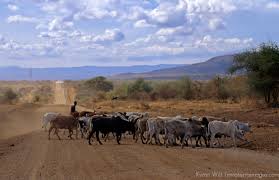
Farmers across NSW are set to receive government grants towards building cattle underpasses, to ensure livestock can safely move between paddocks separated by a state road.

The NSW Government has committed up to $3 million in grants for farmers, to build cattle underpasses and install warning signs and flashing lights, to help ensure safety for producers and motorists.

Minister for Primary Industries, Niall Blair said the investment delivers on a commitment between the NSW Liberals and Nationals as part of a Memorandum of Understanding (MoU) with the NSW Farmers’ Association to develop an underpass scheme to improve farm and road safety.

“Underpasses will remove the need for cattle to cross country roads, improving safety for livestock owners, their employees and motorists,” said Niall.

“This initiative, funded by the Department of Primary Industries (DPI), would be particularly beneficial to dairy producers who need to move stock across roads to milking facilities every day.

“In the last financial year, NSW milk production was worth $559 million to the state’s economy, reflecting the strength and resilience of the industry which is still managing the challenges of low prices for dairy products as well as facing the current drought conditions.”

Minister for Roads, Maritime and Freight, Melinda Pavey said the NSW Government will offer grants for 50 percent of the cost of installing an underpass, up to $70,000.

“Farmers can also access optional grants of up to $10,000 to help cover the cost of installing warning signs and flashing lights,” said Melinda.

Member for Lismore, Thomas George said along with the productivity boost for producers, the scheme would reduce hazards for motorists. “Underpasses will reduce the risk of road collisions, traffic delays and road surface damage,” said Thomas.

“Each underpass will be built primarily for the movement of livestock with permission from Roads and Maritime Services.”

CEO of NSW Farmers, Matt Brand said the association has advocated for an underpass scheme for NSW for a number of years and is very pleased to see this come to fruition. “We have seen a similar successful scheme run in Victoria and are delighted that NSW has followed suit,” said Matt.

“The underpass scheme acknowledges the importance of improved farm productivity, increased animal welfare and better safety for motorists.

“We encourage all cattle farmers to utilise this scheme to help improve the productivity of their business and animal welfare.”

Applications for grants close on 31st October 2018 and will be considered in the order in which they are received. Every application received will be assessed against eligibility criteria listed in the Cattle Underpass Scheme guidelines. More information about eligibility and application requirements is available from https://www.dpi.nsw.gov.au/cups.

Rabobank Offers Farm Management Deposit Offsets

August 9, 2018 by Maggi Barnard

Minister for Agriculture, David Littleproud has congratulated Rabobank for offering a Farm Management Deposit (FMD) offset to their customers.

This means farmers who bank with Rabobank, which has the second biggest slice of the farm lending market after NAB, will now be able to use the money in their FMD to offset interest on their loans. Farmers can put pre-tax income into the FMD during good years and pull it out during bad years, choosing to pay tax on it then.

Farmers are allowed to have up to $800,000 in an FMD. This means they could potentially save up to $24,000 a year if their bank offers an FMD offset (3 percent interest multiplied by $800,000).

David pushed the issue of FMD offsets during his drought round table in July. NAB and CBA have since announced they’ll give farmers FMD offsets. Rabobank had initially ruled out the idea of offering farmers an FMD offset product but last weekend announced it would give farmers that option. Only Westpac and ANZ have failed to come to the party.

“I congratulate Rabobank for doing the right thing,” said David.

“I’m glad the bank was big enough to change their mind. Australia’s farmers will be better off for it.”

“Rabobank is a foreign-owned bank showing the way for Westpac and ANZ. I hope Westpac and ANZ show they care for Australian farmers very soon, because their donations to drought causes are too small to be calculated as a percentage of their multi-billion dollar profit. What would really make a difference to our farmers is an FMD offset product.”

Australian farmers have more than $6 billion in FMD’s, so if all banks offer FMD offsets on farm loans, this could save farmers $240 million a year.

Hand And Finger Injuries

August 2, 2018 by Maggi Barnard

When you think about how much we use our hands especially when playing ball sports, it’s not hard to understand why hand and finger injuries are so common.

Most of these injuries heal spontaneously, which is why they are often neglected by athletes. Many people don’t seek help until it is too late for effective treatment. However, an early, accurate diagnosis to identify potentially serious injuries can prevent long term functional impairment and deformity.

Knowledge of the mechanism of injury or how the injury happened can also help with an accurate diagnosis. A punching injury often results in a fracture to one of the metacarpal bones, commonly the base of the fifth metacarpal. A direct blow to the point of the finger often causes a dislocation or sprain of one of the finger joints. Sometimes the finger flexor tendon can pull a plug of bone off its attachment causing an avulsion fracture. This most commonly involves the ring finger and occurs when a player grabs an opponent’s clothing during a tackle.

As a general rule of thumb, if there is any deformity present, either with the hand open or closed, persistent swelling or any of the hand or finger joints don’t move as they should, it is important to have the injury checked out by a professional. Some fractures may require surgery, some immobilisation or splinting. Sprains or dislocations may require swelling management with ice or an oedema glove and exercises to prevent loss of range of motion.

An early diagnosis and appropriate management can prevent a lifetime of deformity and loss of function.

For the fitness of you,

Linda Reilly

Prevent Poisoning At Home

July 19, 2018 by Maggi Barnard

It is important to be vigilant with children and adults alike around potential household hazards. The numbers are worrying.

Around 180,000 calls are made to Poisons Information Centres in Australia each year and around half of those incidents involve children who’ve come into contact with poisonous, or potentially toxic, substances.

From detergents and toilet cleaners to hand sanitisers and pool chemicals – many everyday household products are a hazard, particularly for younger children.

A recent report from the Australian Competition and Consumer Commission (ACCC) found almost 2,500 children are admitted to hospital each year following poisonings.

“The most serious incidents relate to carbon monoxide exposure, button batteries, caustic cleaners such as oven and BBQ cleaners, acids, pool chemicals, household bleaches and herbicides,” says Delia Rickard, ACCC Deputy Chair. “Children under five are most at risk of accidental poisoning, with the risk highest for two-year-olds.”

The ACCC report says injuries from poisons range from skin irritations and eye damage through to severe internal burns.

How to keep your home safe from poisons:

• Store cleaning products in a secure cabinet that children can’t reach.

• Check the kitchen, laundry, bathroom, toilet, garage and garden shed for potential poisons and stow them away securely.

• Keep household chemicals in their original containers – don’t transfer them to used soft drink bottles. Young children could easily mistake poison for pop!

• Read the safety instructions on product labels and follow use and storage directions.

• Always close containers properly so any child resistant features work correctly.

Written by Sarah Marinos

Corked Thigh

July 19, 2018 by Maggi Barnard

If you have ever been hit hard in the thigh with someone’s knee or shoulder, you most likely know how painful and debilitating a corked thigh can be. A cork, or a muscle contusion as was formerly known, is a common occurrence in contact sports, as well as sports like cricket and hockey when a player is hit by the ball.

Contusions result from blunt trauma to a muscle such as when two players collide and one is hit in the thigh by the knee of the other. The underlying muscle and connective tissue are crushed without breaking the skin. This causes bleeding within or between muscles resulting in a haematoma. A cork may result in immediate pain, weakness, muscle spasm and stiffness.

Most contusions are minor and heal quickly, however if you lose joint range or power in the leg, have trouble with explosive bursts or kicking, it is time to come off the ground and not return to play.

It is important that treatment of a muscle contusion starts immediately, with the first 48 hours post injury the most important.

Immediate treatment for a corked muscle should include ceasing activity, icepacks applied every two hours for 15 minutes, bandage the corked muscle with an elasticized bandage, elevate the injured limb above heart height whenever possible and avoid exercise, heat, alcohol and massage in the first 48 hours.

Range of motion is a good indicator as to the severity of the injury. Difficulty flexing the knee past 90 degrees may suggest a more severe injury that requires a physiotherapy assessment.t.

For the fitness of you,

Linda Reilly

Prevention Through Awareness

July 19, 2018 by Maggi Barnard

Flannery’s and Life Pharmacies are focusing on diabetes awareness during July and August. “We are trying to raise awareness about the importance of early detection and early treatment for all types of diabetes,” said Sarah Hazell, Pharmacist. “Unfortunately too many Australians are being diagnosed with diabetes too late,” said Sarah “and the delay in diagnosis is putting many people at risk of major health problems”.

Early diagnosis, treatment, ongoing support and management can reduce the risk of diabetes-related complications. Diabetes is the leading cause of blindness in adults, the leading cause of kidney failure, the leading cause of preventable limb amputations and increases the risk of heart attacks and stroke by up to four times.

“Around 5 percent of Australians aged 18 years or older have diabetes,” said Sarah “and the risk of diabetes increases with age, from 2.8 percent in people aged 35 to 44 to 15 percent in those aged 65 to 74”.

If you would like to know more about diabetes, please call into either Flannery’s or Life Pharmacies and speak to the registered nurse or one of the pharmacists.

They can provide you with information and advice and refer you to your GP for further investigation if necessary.

Chain Of Responsibility Threat

July 19, 2018 by Maggi Barnard

Forbes Shire Council is taking a bold step in speaking out against what it feels is unfair treatment of local government under the new Chain of Responsibility legislation.

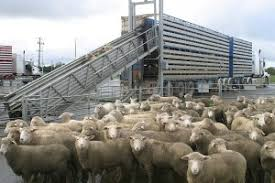
Under the legislation, Council as the loading manager of the Central West Livestock Exchange (CWLE) is responsible for any breaches that may occur at the facility, including overloading, driver safety and fatigue.

General Manager, Steve Loane said that council has just been served an improvement notice addressing some 57 breaches by transport operators leaving the CWLE.

“We have been working hard to educate transport operators to ensure the breaches do not occur by ongoing site inductions covering the requirements of Chain of Responsibility, extensive signage around the site and direct letters to all operators,” said Steve.

“The improvement notice issued would require funding in excess of $2 million worth of additional infrastructure just to comply.”

“We are concerned that Council is being made an example of despite doing our best to address the requirements of the legislation. We are determined to take our case to as many political influencers as we are able, to bring about some fairness to Chain of Responsibility laws.”

Considerations For Late Sown Barley Crops

July 12, 2018 by Maggi Barnard

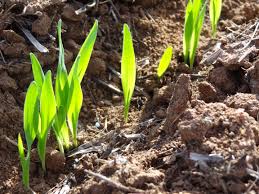
NSW producers considering late sowing barley in consideration of the dry start to winter have been advised to take paddock selection and seed quality into account.

With the lack of substantial winter rainfall, many growers have dry sown a proportion of their winter cereal crop and are now waiting on rain before committing to further plantings.

As the sowing window becomes later, growers are increasingly looking to barley as a late sowing option. In some cases this might also be to increase the level of stubble cover to reduce the risk of erosion and runoff in bare paddocks.

NSW Department of Primary Industries (DPI) Research Agronomist, Rick Graham said barley is considered a lower fertiliser input crop, which is seen as more adaptable and tolerant of short seasons, in comparison to spring wheat varieties.

“When deciding to late sow, growers need to take into account paddock selection and history as the impact of potential weed problems and any sub-soil constraints are likely to be amplified in a dry season.

“Growers will need to consider seed quality, particularly seed size and germination percentages, when looking at late sowing options and adjust seeding rates accordingly,” said Rick.

Growers currently have access to a number of late sowing/early maturing barley variety options, which are photoperiod sensitive, enabling them to speed up development when sown later.

To read the full article visit https://www.dpi.nsw.gov.au/about-us/media-centre/releases/2018/considerations-for-late-sown-barley-crops.

Jemalong Wool Weekly Market Update

July 12, 2018 by Maggi Barnard

Wool held over for the new selling season was significant this week, with 43,880 bales offered.

The softer market tone that was evident in the previous sale, was apparent from the outset and corrections were felt across the entire merino spectrum.

As is often the case in a falling market, it was off-style types, wools with poor additional measurement results and those carrying excessive VM that were most affected. By the end of the week prices had generally fallen by 50-90 cents, with some off-style types over 120 cents cheaper.

The NRI lost 62 cents for the series, closing at 2026. Many sellers were reluctant to accept the reduction in prices, lifting the national passed in rate to over 15%.

Skirtings also suffered large corrections, prices generally fell by 50-100 cents, however oddments attracted excellent support, with most types only 5-15 cents weaker.

Next week is the final sale before the annual three-week recess. Quantities have slightly reduced, currently there are 41,431 bales rostered.

Source AWEX

  • « Previous Page
  • 1
  • …
  • 94
  • 95
  • 96
  • 97
  • 98
  • …
  • 121
  • Next Page »

Click here to download the recent issue (202) of The Forbes & Parkes Phoenix (1.9MB PDF) – 14th August 2026

SEARCH THE PHOENIX

STAY CONNECTED

The Forbes Phoenix would like to thank you, our Facebook friends, for your continued support and readership!

Recent Articles

  • Disability Inclusion Matters In Central West NSW August 20, 2026
  • Mayoral Notes August 20, 2026
  • Snippets… August 20, 2026
  • Forbes Garden Club Report August 20, 2026
  • Protecting Our Environment And Agriculture August 20, 2026

Phoenix Office 7/113-127 Rankin Street, Forbes NSW 2871

Editor 0432 337 278
editor@forbesphoenix.com.au

Sales 0432 337 278
sales@forbesphoenix.com.au

View our Privacy Policy. View our Conflict Resolution Process. View our Ethics and Complaints Policy. Want to advertise with us? Information on our Community Promotions.

We are always looking for new articles of interest to the local community.

Please feel free to submit an article for possible inclusion in a future issue.

To submit an article, click here to use our online article submission form.

Subscribe

* indicates required

Copyright © 2026 · Magazine Pro Theme On Genesis Framework · WordPress · Log in

nsw government logo

The Forbes Phoenix's Digital Diversification of Free Regional Media project is proudly funded by the NSW Government Regional Media Fund