• Home
  • Articles
    • Front Page
    • General Interest
    • Snippets
    • Letters to the Editor
    • Council Comments
  • Special Interests
  • Our Community
    • Our People
    • Question of the Week
    • Jobs in the Central West
    • Be Seen
    • What’s On
    • What’s Hot
  • Features
    • Women in Business
    • Rural Round Up
    • My Place
    • Loving Local Living
    • Wellness Wise
    • Just a Short Drive
    • Real Estate
  • Sports
    • Bowls
    • Cricket
    • Equestrian
    • Footy Tips
    • Golf
    • Netball
    • Rugby League
    • Rugby Union
    • Soccer
    • Touch Football
  • Classifieds
  • Competitions
  • Contact Us
    • Contact Page
    • Advertise with us
    • Testimonials
    • Submit an Article
    • Subscribe to the Forbes Phoenix

Forbes Phoenix

The Future Of The Wool Industry

February 7, 2019 by Maggi Barnard

The Australian Wool Institute’s (AWI) $10 million project, in partnership with Ranken Research and Robo Shear, aims to develop a prototype machine for fully automated end to end wool harvesting. The project was established because there is a national shortage in shearers, despite the rising global demand for wool and record high prices per kilogram.

According to a 2016 report from the Australian Bureau of Statistics, there are about 2,800 shearers and 73 million sheep in the country.

Despite historic peaks in wool prices last year, shearers are leaving the industry to pursue generally, less labour intensive, opportunities.

The machine uses jointed mechanical arms driven by electric motors and computer programs have been built to reach the back and sides of the sheep – the most important parts of the fleece.

The process works with a camera capturing 3D imagery of sheep during the various stages of the shearing process. That data is then used to reconstruct what the sheep would look like without wool, which is fed into the robot when it begins shearing.

According to AWI, the machine is not intended to replace shearers but to be used in conjunction with traditional shearing methods.

“I think Australia’s wool industry is ready for innovation,” said National Farmers Federation (NFF) President, Fiona Simson, who is excited by the prospect of change in the wool industry.

“The romanticism of the old outback that people knew and the old farms that people knew are being replaced by lots of technology.

“I’m really confident we can embrace that in wool as well… while protecting the welfare of both animals and workers,” said Fiona.

(Source: https://farmers.org.au website).

Jemalong Wool Weekly Market Update

February 7, 2019 by Maggi Barnard

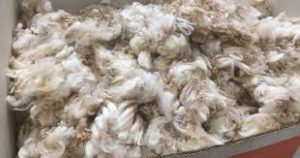
The merino fleece sector performed with mixed results this week. Better style wools, with favourable additional measurement results continue to attract excellent buyer support, resulting in very little change for these types, while off style types, carrying higher VM and those with high mid-breaks lacked the same support.

Overall the NRI added 8 cents for the series, making it the fifth consecutive week of positive movement.

In the skirtings, long low VM types continue to outperform the rest of the market and these wools recorded very little change, while the increasing supply of higher VM types eased, with lots carrying fault such as cott and colour most affected.

The crossbreds were by far the best performing sector this week, with 26 to 28 microns gaining 80-100 cents, while all other microns were generally 25-45 cents dearer, once again it was the better prepared lines that attracted the strongest competition, and posted the largest gains.

Currently, there are 40,426 bales rostered for sale next week.

Source: AWEX

Jemalong Wool Weekly Market Update

January 24, 2019 by Maggi Barnard

51,703 bales were offered this week, making it the largest national offering since April last year. However despite the larger offering, the overall quantity is still well down on the previous season, with a reduction of 175,524 bales offered (-16.8%).

The merino fleece market was mixed in its performance. The three centres behaved slightly differently, with varied positive and negative movements recorded across the board.

Although there was an inconsistent pattern, the overall trend was upward. By the close of trade the NRI had gained 12 cents, closing the week at 1,960c/kg.

Skirtings managed to record upward movements, generally by 2-40 cents, wools coarser than 19 micron attracted the most attention and as a result enjoyed the largest gains. The oddments varied between centres, the North and West recorded 20-30 cent rises, whilst the South posted a small reduction.

The crossbred sector performed the best, with large gains of 50-80 cents experienced in the 26 to 28 micron range.

Currently, there are 41,503 bales rostered for sale next week.

Source: AWEX

Walk Into A Healthy 2019!

January 24, 2019 by Maggi Barnard

Set yourself up for a healthy year ahead by starting with a health check at Flannery’s or Life Pharmacies. “High blood pressure, excess weight, smoking and physical inactivity are some of the main risk factors for preventable illness, so setting yourself up to improve one of these areas can have a significant impact on your health and wellbeing,” said Tracey Edwards, pharmacist at Flannery’s Pharmacy.

“Our registered nurse or pharmacists can check a range of indicators, including blood pressure and weight, and discuss healthy lifestyle options with you,” said Tracey.

One way to reduce weight is to increase physical activity. “The recommended amount of activity for good health is at least 2.5 to 5 hours of moderate intensity physical activity each week, which can be accumulated throughout the day,” said Life Pharmacy pharmacist, Clare Parmeter.

“Walking helps maintain a healthy weight, reduces the risk of stroke and heart attack, strengthens bones, reduces risk of developing type 2 diabetes and improves balance,” said Clare.

Ideas for increasing your step count include:

• walk to get the paper

• take the stairs instead of the elevator

• take the dog for a walk around the block (or beyond)

• park a bit further away from the shops

• take the rubbish out to the wheelie bin more often

• walk with others or form a walking group

If you’d like a health check or more information on improving your physical activity, call in to Flannery’s or Life Pharmacies and speak to one of our pharmacists.

Signs You’re Struggling With High-Functioning Anxiety

December 20, 2018 by Maggi Barnard

Despite it being the most common mental health condition in Australia, there are plenty of misconceptions around anxiety.

Sufferers are typically thought to be paralysed by panic attacks and withdrawn from the world but this isn’t always the case. While it’s not an official diagnosis, “highfunctioning” anxiety is something many people identify with.

SANE Australia Psychologist, Suzanne Leckie says that anxiety can affect different people in different ways and that high-functioning anxiety is an alternative manifestation of the condition, rather than an alternative condition.

“Sometimes people with anxiety inadvertently shrink their own world by avoiding activities that trigger their anxiety. Other times anxiety can motivate people to try harder across all aspects of their lives.”

She says that those living with high-functioning anxiety can be perceived by others as achievement-oriented, perfectionistic and highly motivated.

“Their own reality is likely to be one of racing thoughts, restless bodies and a sense that they are never doing enough.”

The usual symptoms of anxiety are present for those living with high-functioning anxiety, including catastrophic thinking, excessive worry and irritability.

“The difference with high-functioning anxiety is that people experiencing this may feel the desire to achieve more as a way to manage their fears and doubts,” Leckie says.

If this sounds like you, here are some of the other signs you might be struggling:
1. People describe you as a “Type A” perfectionist: You strive for perfection in everything you do.
2. You exhibit controlling patterns: This “perfectionism” can manifest in controlling habits and strict routines.
3. You’re constantly busy: Your to-do list is a kilometre long and your weekends are packed with plans.
4. You’re not sleeping well: All that tossing and turning during the night can be a true reflection of what’s going on in your head.
5. You have aches, pains, repetitive habits or ticks: There can often be physical manifestations of your mental state, like that constant knot in your stomach or unexplained neck pain, biting your nails, chewing your lip, tapping your foot or cracking your knuckles.
6. People have a hard time reading you: You’ve been described as stoic and unemotional but you know that couldn’t be further from the truth.
7. You have a crippling fear of letting other people down: Obsessive and intrusive negative self-talk is a big indication of high-functioning anxiety.
8. “No” isn’t part of your vocabulary: The dread of letting people down leads you to taking on more than you can handle.

If this sounds like you, contact the SANE Help Centre on 1800 187 263 or email helpline@sane.org for information, support and guidance from mental health professionals.

Source: WomensHealth by Lauren Williamson.

Flannery’s Pharmacy…Here’s To A New Year

December 20, 2018 by Maggi Barnard

The teams at Flannery’s and Life Pharmacies would like to wish all their customers a very happy, healthy and safe Christmas and New Year.

“It’s been a great year and we’ve really enjoyed providing professional services and giving health and beauty related advice to all our lovely customers,” said Debbie Prior, Business Manager at Flannery’s. “Thank you all so much for your continued support of our pharmacies,” continued Debbie.

Flannery’s Pharmacy would also like to inform their customers of a slight change in their trading hours.

“Flannery’s Pharmacy will commence trading till 5:30pm each weekday from 2nd January 2019,” said Debbie. “Recently we have found that not as many people are accessing the pharmacy between 5:30pm and 6pm,” said Debbie. “We will continue to open at 8:30am and Life Pharmacy will be open until 6:30pm each week day.”

Over the festive season the trading hours will be:
Flannery’s Pharmacy
Christmas Eve: 8:30am to 6pm
Christmas Day: Closed
Boxing Day: Closed
Thursday, 27th December: 8:30am to 6pm
Friday, 28th December: 8:30am to 6pm
Saturday, 29th December: 9am to 12:30pm
Sunday, 30th December: Closed
Monday, 31st December: 8:30am to 6pm
New Years Day: Closed
Tuesday, 2nd January: 8:30am to 5:30pm

Life Pharmacy
Christmas Eve: 8:30am to 6:30pm
Christmas Day: Closed
Boxing Day: 10am to 1pm
Thursday, 27th December: 8:30am to 6:30pm
Friday, 28th December: 8:30am to 6:30pm
Saturday, 29th January: 9am to 1pm
Sunday, 30th January: 10am to 1pm
Monday, 31st January: 8:30am to 6:30pm
New Years Day: Closed

Making Smart Farming Ideas A Reality

December 13, 2018 by Maggi Barnard

More than $9 million is available under Round two of Smart Farms Small Grants.

Grants of between $5,000 and $200,000 to assist farmers and groups to adapt to change, innovate and become more sustainable.

Part of the National Landcare Program’s $134 million Smart Farms Program. Landholders and community groups can now apply for up to $200,000 under Round two of Smart Farms Small Grants.

Landcare groups, NRM bodies, Indigenous organisations and community groups are encouraged to throw their hat in the ring.

“The future of Aussie agriculture relies on sustainable farming and land management practices,” said Minister for Agriculture and Water Resources, David Littleproud.

“Our farmers are looking for new practices and tools to stay sustainable and profitable.

These grants support new projects to improve Aussie soil, biodiversity and vegetation.

“They will also help support water security and promote climate-smart farming. Ultimately, this leads to more profitable agriculture, fishing and forestry industries. I know there are exceptional ideas out there and these grants can make them a reality.

“The first round of funding was highly competitive, attracting over 800 applications. I strongly encourage those who missed out in Round one to apply again,” said David.

More information is available online. Visit the Community Grants Hub to apply.

Grain Fed Beef Definition Expanded

December 13, 2018 by Maggi Barnard


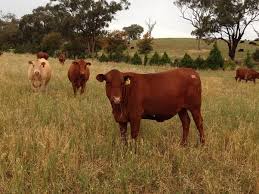
Beef farmers will now be able to market their cattle as ‘Grain Fed Finished’ after feeding them grain for 35 days before sale or export and will be able to ask a premium for these animals.

Previously, only two standards existed: ‘Grain Fed’ and ‘Grain Fed Young Beef’. ‘Grain fed’ required the cattle to be fed on grain for 80 of the past 100 days while ‘Grain Fed Young Beef’ required grain to be fed 50 of the past 60 days for females and 70 days for males.

“This new ‘Grain Fed Finished’ standard means farmers can feed the cattle grain for 35 days and reap the benefits of selling as ‘Grain Fed Finished’,” said Minister for Agriculture and Water Resources, David Littleproud.

“The science says 35 days on grain produces the fat colour attribute associated with grain-fed beef. Thirty-five days on one property means cattle are Meat Standards Australia accredited, too.

“The standard requires the cattle be fed on a specified high energy grain diet. As Australians, we refuse to compromise on quality,” said David. The standard is operational now, having been signed into regulation.

Fast facts:

• The new ‘Grain Fed Finished’ standard, or trade description, will apply both domestically and overseas.

• Grain Fed (GF) cattle must have been in a feedlot for not less than 100 days and for not less than 80 days of that, on a nutritionally balance ration of a recognised high energy feed of which grain is the highest single component.

• Grain Fed Young Beef (GFYB) cattle must have been in a feedlot for not less than 70 days (females for not less than 60 days) and for not less than 50 days of that, on a nutritionally balance ration of a recognised high energy feed of which grain is the highest single component.


Jemalong Wool Weekly Market Update

December 13, 2018 by Maggi Barnard

The quantity of wool on offer increased slightly this week, however despite the increase, the total volume of wool sold (season to date) is still 18% less than it was this time last season.

The merino sector performed solidly, recording gains across most microns, only a lack of interest in some inferior types and reduced buyer demand on wool with poor additional measurements, prevented the MPG’s from posting larger gains.

Despite the merino fleece sector recording overall gains, the NRI lost 8 cents for the week, to close at 1,897. This movement was mainly due to large losses experienced in the crossbred sector, which saw prices quickly revers after recording large gains at the previous sale.

Wools 30 micron and finer lost 70-130 cents, however the sharp reduction in price was met with firm seller resistance, with approximately 20% of the crossbred offering passed in.

After three weeks of sustained price rises the oddment market lost ground with locks, stains and crutchings generally.

Source: AWEX

Swimmer’s Shoulder Part 2

December 6, 2018 by Maggi Barnard

Shoulder impingement during swimming is largely due to dynamic muscle imbalances and biomechanical faults. Dynamic muscle imbalances can be addressed by strengthening exercises for the rotator cuff and scapular stabilisers, together with stretches for the muscles at the back of the shoulder.

One good exercise is to stand facing a wall with your arm raised to shoulder height and elbow straight. Hold a tennis ball to the wall by leaning through your shoulder and pinch your shoulder blades together. Roll the ball in small circles for 15 seconds first clockwise then counter clockwise until you become fatigued or two minutes, whichever comes first.

Biomechanical faults can be addressed by correcting your swim technique. Achieving good symmetrical body rotation through the development of an efficient bilateral breathing pattern helps to avoid shoulder impingement during the catch and pull through phase of the freestyle stroke.

If you already have shoulder pain it may be helpful to shorten your stroke and avoid the use of hand paddles. Hand placement during entry to the water should also be monitored. Instead of entering thumb first change your technique to enter with a flat hand or fingertip first. This is made easier by avoiding reaching across your midline. A thumb first entry works the shoulder internal rotators excessively and when multiplied by approximately 3200 strokes per hour contributes heavily to the muscle imbalance of strong internal rotators and weak external rotators causing shoulder impingement.

Most swimmers pull through with a straight arm or dropped elbow. This loads the shoulder muscles excessively rather than utilising the larger and stronger muscles of the chest and upper back. Making these simple changes can help you achieve many hours of pain free swimming.

For the fitness of you

Linda Reilly

  • « Previous Page
  • 1
  • …
  • 90
  • 91
  • 92
  • 93
  • 94
  • …
  • 121
  • Next Page »

Click here to download the recent issue (202) of The Forbes & Parkes Phoenix (1.9MB PDF) – 14th August 2026

SEARCH THE PHOENIX

STAY CONNECTED

The Forbes Phoenix would like to thank you, our Facebook friends, for your continued support and readership!

Recent Articles

  • Disability Inclusion Matters In Central West NSW August 20, 2026
  • Mayoral Notes August 20, 2026
  • Snippets… August 20, 2026
  • Forbes Garden Club Report August 20, 2026
  • Protecting Our Environment And Agriculture August 20, 2026

Phoenix Office 7/113-127 Rankin Street, Forbes NSW 2871

Editor 0432 337 278
editor@forbesphoenix.com.au

Sales 0432 337 278
sales@forbesphoenix.com.au

View our Privacy Policy. View our Conflict Resolution Process. View our Ethics and Complaints Policy. Want to advertise with us? Information on our Community Promotions.

We are always looking for new articles of interest to the local community.

Please feel free to submit an article for possible inclusion in a future issue.

To submit an article, click here to use our online article submission form.

Subscribe

* indicates required

Copyright © 2026 · Magazine Pro Theme On Genesis Framework · WordPress · Log in

nsw government logo

The Forbes Phoenix's Digital Diversification of Free Regional Media project is proudly funded by the NSW Government Regional Media Fund