• Home
  • Articles
    • Front Page
    • General Interest
    • Snippets
    • Letters to the Editor
    • Council Comments
  • Special Interests
  • Our Community
    • Our People
    • Question of the Week
    • Jobs in the Central West
    • Be Seen
    • What’s On
    • What’s Hot
  • Features
    • Women in Business
    • Rural Round Up
    • My Place
    • Loving Local Living
    • Wellness Wise
    • Just a Short Drive
    • Real Estate
  • Sports
    • Bowls
    • Cricket
    • Equestrian
    • Footy Tips
    • Golf
    • Netball
    • Rugby League
    • Rugby Union
    • Soccer
    • Touch Football
  • Classifieds
  • Competitions
  • Contact Us
    • Contact Page
    • Advertise with us
    • Testimonials
    • Submit an Article
    • Subscribe to the Forbes Phoenix

Forbes Phoenix

Are Your Bones Healthy?

August 16, 2018 by Maggi Barnard

Flannery’s Pharmacy will be hosting a Bone Density Clinic in-store on Wednesday, 29th August.

Your bones are living tissues that are both flexible and strong. They act to support and move your body, protect your organs, create white and red blood cells and to store essential minerals like calcium and phosphorus. Throughout your life your bones are always changing and remodelling. You can think of it like a bank account, into which you make deposits and withdrawals.

“Osteoporosis occurs when too little bone is formed, too much bone is lost, or a combination of both occurs,” said Tracey Edwards, Pharmacist at Flannery’s Pharmacy.

“When this happens your bones become more brittle and can fracture more easily,” said Tracey. “Ideally, you will have made more ‘deposits’ than ‘withdrawals’ during your early years to create the strongest bones possible”.

Risk factors for osteoporosis include increasing age, being female (especially post menopausal), a family history of osteoporosis and/or a history of fractures as an adult. Lifestyle risk factors include low dietary calcium intake, low vitamin D intake, low levels of physical activity, excessive alcohol intake, smoking and low or excessive body weight.

“The heel ultrasound test offered by the pharmacy is a screening test that gives a snapshot of your bone health,” said Tracey.

“Screening tests alone cannot accurately diagnose osteoporosis but they can be used in conjunction with your personal risk factors so that you and your GP can decide which course of action is best for you”.

If you would like an appointment for the Bone Density Clinic, please call instore or phone Flannery’s Pharmacy on 6852 1111.

Cost is $20 and bookings are essential.
Freight Changes To Support Farmers

August 16, 2018 by Maggi Barnard

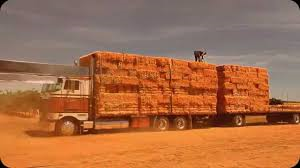
The NSW Government’s new improved access for heavy vehicles carrying supplies and stock to drought-affected areas was welcomed by Parliamentary Secretary for Western NSW, Rick Colless.

The new NSW Class 3 Drought Assistance Dimension Exemption Notice, which came into effect this week, will allow more hay to be transported per truckload, reducing costs for farmers.

Rick said with 100 percent of NSW in drought there has been a greater demand to transport hay. “We know freight is a huge cost so the more hay we can get on one load the cheaper it is for our farmers.”

“The NSW Liberals and Nationals have committed more than $1 billion in drought assistance to date. This is another step designed to help assist farmers at this difficult time,” said Rick.

Drought applications are being prioritised through the National Heavy Vehicle Regulator (NHVR) portal, by including the word DROUGHT in the reference section of the application.

For any questions transport operators or farmers may have contact the dedicated hotline 1800 952 292 or visit www.rms.nsw. gov.au/drought-freight.

How To Rediscover Your Fitness Mojo

August 16, 2018 by Maggi Barnard

Being active doesn’t just make you feel good, it is good for you. The list of benefits is long and sweeping as almost on a daily basis, scientists identify new health perks of regular physical activity.

To make exercise part of your routine you need to prioritise and commit.

Start small: Think about your current fitness level and start with something achievable, but slightly challenging.

Aim to be active for 20 to 30 minutes per day. If you want to do more, gradually increase the duration.

Make it a non-negotiable: Rather than viewing exercise as a ‘nice to have’, treat it like any other element of your daily routine.

Like having a shower, eating breakfast and going to work – you don’t really think about it, you just do it.

Set a goal: Having an exercise goal to work towards, such as a fun run, gives your training focus. Plus, you’ll enjoy a real buzz crossing the finish line of an event you’ve dedicated time working towards.

Find a buddy: Having a friend to meet regularly and train alongside keeps you accountable, provides a social aspect to your activity and means you can motivate and support each other on tougher days.

It’s too cold: There’s no such thing as bad weather if you’re prepared for it. Cooler weather actually provides the best conditions for exercise. You only get cold if you’re standing still.

It’s too hot: In really hot conditions think about taking your activity indoors, or choose to get your exercise via a refreshing swim.

By Claire Burke

Meniscus Tears -Part 1

August 16, 2018 by Maggi Barnard

Within the normal knee joint are two C shaped discs of cartilage called the medial and lateral menisci. They have a unique wedged, kidney shape and a blood supply only to their outer third which decreases as you age. Almost 70% of each meniscus is made up of water. These unique properties allow the knee to function as well as it does but they are also the reason why meniscus tears are one of the most common knee joint injuries.

The wedge shape of your meniscus assists with the rotational stability that is created by the anterior cruciate ligament especially during pivoting movements. The large water content allows them to act like a shock absorber. As you walk, jump or run the knee absorbs large forces with the amount of force increasing exponentially as the speed of movement increases. Your meniscus helps to disperse these compressive forces over the whole knee therefore minimizing the damage to the cartilage that lines the bone surfaces.

Meniscal tears are often classified as either traumatic or degenerative. In the younger population, meniscus tears are usually due to trauma by twisting on a slightly bent knee.

The traumatic type of meniscal injuries is most often sports related. Commonly there is pain and a ‘pop’ is heard. The knee joint swells and occasionally the athlete will report a locking or painful clicking sensation.

Degenerative tears occur in the older population due to natural age-related degeneration and often the person is unaware of the cause of pain and swelling.

Stay tuned for my next column which will address the management and rehabilitation for the torn meniscus.

For the fitness of you,

Linda Reilly

Making Informed Livestock Decisions

August 16, 2018 by Maggi Barnard

Conditions across the Central West continue to deteriorate with below average rainfall forecast for the next three months.

With many producers now hand feeding their remaining livestock, Central West Local Land Services staff are urging them to ensure they are constantly looking at the current and future cost of inputs to ensure they can make informed decisions around livestock management.

“Things are tight for producers. It’s important that they have a clear understanding of the cost of feeding stock so they can make an informed decision about if or when to sell,” said Central West Local Land Services Condobolin based district vet, Hanna Thomas.

To support landholders in the decision making process, Central West Local Land Services have partnered with RaynerAg and Landcare to roll out a series of workshops.

The workshops will allow producers to look at planning a cash flow budget to readjust strategies based on feeding or selling for the remainder of 2018, resource budget of feed and water based on requirements for stock and resetting key trigger points for livestock.

“Producers are under pressure at the moment and many are time poor due to their feeding schedule. These workshops are a great opportunity for them to stop and evaluate the financial impacts of feeding livestock and help them allocate limited resources effectively,” said Mel Kiel, Project Officer with Little River Landcare.

The free workshops will be held across the region throughout August. The Forbes workshop will take place on Tuesday, 21st August at the Forbes Inn Hotel from 12pm to 4pm. To attend, please contact Mel on 6846 4569 or projects@littleriverlandcare.com.au.

To find out more about these workshops or other Central West Local Land Services events, visit centralwestlls.nsw.gov.au

Watch Your Mouth This Dental Health Week

August 9, 2018 by Maggi Barnard

This year during Dental Health Week (6 to 12 August), the Australian Dental Association (ADA) is reminding everyone to #WatchYourMouth, in the light of the latest national survey conducted by the association that showed Australians are not prioritising their oral health.

It follows the launch earlier this year by the ADA of Australia’s Oral Health Tracker which was developed in response to data showing that just over 52 percent of Australians are only brushing once a day instead of the recommended twice daily and nearly two in five (38 percent) never floss or clean in between their teeth. Australians also need more regular dental check-ups, with 69 percent only going to the dentist when they have a problem.

This is especially concerning given the fact that tooth decay is Australia’s most common disease, with one in five adults having untreated tooth decay and one in five also have gum disease, with oral cancer rates also on the rise.

To help combat these figures, Dental Health Week 2018 is stressing these four key tips for good oral health:

• Brush twice a day with fluoridated toothpaste

• Clean in between your teeth with floss or interdental brushes

• Eat a healthy diet, limit sugary foods and drinks

• Visit your dentist regularly

ADA President, Dr Hugo Sachs said Dental Health Week is an opportunity for people to take a look and learn more about why a healthy mouth is so important. “Good oral health is vital to good overall health, so watching your mouth will help maintain your general wellbeing. Watching your mouth means brushing and flossing, eating a healthy diet, lowering our sugar and alcohol intake, stopping smoking and seeing your dentist for regular check-ups. These good habits will greatly reduce the risk of oral disease.”

Ask your dentist about the Child Dental Benefits Schedule to access benefits for basic dental services (capped over two years).

The benefits include check-ups, X-rays, cleaning, fissure sealing, fillings, root canals and extractions. Your child may be eligible if they are aged 2 to 17; they are eligible for Medicare, and you or your child are getting Family Tax Benefit Part A or certain other government payments.

Why Did The Cattle Cross The Road?

August 9, 2018 by Maggi Barnard

Farmers across NSW are set to receive government grants towards building cattle underpasses, to ensure livestock can safely move between paddocks separated by a state road.

The NSW Government has committed up to $3 million in grants for farmers, to build cattle underpasses and install warning signs and flashing lights, to help ensure safety for producers and motorists.

Minister for Primary Industries, Niall Blair said the investment delivers on a commitment between the NSW Liberals and Nationals as part of a Memorandum of Understanding (MoU) with the NSW Farmers’ Association to develop an underpass scheme to improve farm and road safety.

“Underpasses will remove the need for cattle to cross country roads, improving safety for livestock owners, their employees and motorists,” said Niall.

“This initiative, funded by the Department of Primary Industries (DPI), would be particularly beneficial to dairy producers who need to move stock across roads to milking facilities every day.

“In the last financial year, NSW milk production was worth $559 million to the state’s economy, reflecting the strength and resilience of the industry which is still managing the challenges of low prices for dairy products as well as facing the current drought conditions.”

Minister for Roads, Maritime and Freight, Melinda Pavey said the NSW Government will offer grants for 50 percent of the cost of installing an underpass, up to $70,000.

“Farmers can also access optional grants of up to $10,000 to help cover the cost of installing warning signs and flashing lights,” said Melinda.

Member for Lismore, Thomas George said along with the productivity boost for producers, the scheme would reduce hazards for motorists. “Underpasses will reduce the risk of road collisions, traffic delays and road surface damage,” said Thomas.

“Each underpass will be built primarily for the movement of livestock with permission from Roads and Maritime Services.”

CEO of NSW Farmers, Matt Brand said the association has advocated for an underpass scheme for NSW for a number of years and is very pleased to see this come to fruition. “We have seen a similar successful scheme run in Victoria and are delighted that NSW has followed suit,” said Matt.

“The underpass scheme acknowledges the importance of improved farm productivity, increased animal welfare and better safety for motorists.

“We encourage all cattle farmers to utilise this scheme to help improve the productivity of their business and animal welfare.”

Applications for grants close on 31st October 2018 and will be considered in the order in which they are received. Every application received will be assessed against eligibility criteria listed in the Cattle Underpass Scheme guidelines. More information about eligibility and application requirements is available from https://www.dpi.nsw.gov.au/cups.

Rabobank Offers Farm Management Deposit Offsets

August 9, 2018 by Maggi Barnard

Minister for Agriculture, David Littleproud has congratulated Rabobank for offering a Farm Management Deposit (FMD) offset to their customers.

This means farmers who bank with Rabobank, which has the second biggest slice of the farm lending market after NAB, will now be able to use the money in their FMD to offset interest on their loans. Farmers can put pre-tax income into the FMD during good years and pull it out during bad years, choosing to pay tax on it then.

Farmers are allowed to have up to $800,000 in an FMD. This means they could potentially save up to $24,000 a year if their bank offers an FMD offset (3 percent interest multiplied by $800,000).

David pushed the issue of FMD offsets during his drought round table in July. NAB and CBA have since announced they’ll give farmers FMD offsets. Rabobank had initially ruled out the idea of offering farmers an FMD offset product but last weekend announced it would give farmers that option. Only Westpac and ANZ have failed to come to the party.

“I congratulate Rabobank for doing the right thing,” said David.

“I’m glad the bank was big enough to change their mind. Australia’s farmers will be better off for it.”

“Rabobank is a foreign-owned bank showing the way for Westpac and ANZ. I hope Westpac and ANZ show they care for Australian farmers very soon, because their donations to drought causes are too small to be calculated as a percentage of their multi-billion dollar profit. What would really make a difference to our farmers is an FMD offset product.”

Australian farmers have more than $6 billion in FMD’s, so if all banks offer FMD offsets on farm loans, this could save farmers $240 million a year.

Hand And Finger Injuries

August 2, 2018 by Maggi Barnard

When you think about how much we use our hands especially when playing ball sports, it’s not hard to understand why hand and finger injuries are so common.

Most of these injuries heal spontaneously, which is why they are often neglected by athletes. Many people don’t seek help until it is too late for effective treatment. However, an early, accurate diagnosis to identify potentially serious injuries can prevent long term functional impairment and deformity.

Knowledge of the mechanism of injury or how the injury happened can also help with an accurate diagnosis. A punching injury often results in a fracture to one of the metacarpal bones, commonly the base of the fifth metacarpal. A direct blow to the point of the finger often causes a dislocation or sprain of one of the finger joints. Sometimes the finger flexor tendon can pull a plug of bone off its attachment causing an avulsion fracture. This most commonly involves the ring finger and occurs when a player grabs an opponent’s clothing during a tackle.

As a general rule of thumb, if there is any deformity present, either with the hand open or closed, persistent swelling or any of the hand or finger joints don’t move as they should, it is important to have the injury checked out by a professional. Some fractures may require surgery, some immobilisation or splinting. Sprains or dislocations may require swelling management with ice or an oedema glove and exercises to prevent loss of range of motion.

An early diagnosis and appropriate management can prevent a lifetime of deformity and loss of function.

For the fitness of you,

Linda Reilly

Prevent Poisoning At Home

July 19, 2018 by Maggi Barnard

It is important to be vigilant with children and adults alike around potential household hazards. The numbers are worrying.

Around 180,000 calls are made to Poisons Information Centres in Australia each year and around half of those incidents involve children who’ve come into contact with poisonous, or potentially toxic, substances.

From detergents and toilet cleaners to hand sanitisers and pool chemicals – many everyday household products are a hazard, particularly for younger children.

A recent report from the Australian Competition and Consumer Commission (ACCC) found almost 2,500 children are admitted to hospital each year following poisonings.

“The most serious incidents relate to carbon monoxide exposure, button batteries, caustic cleaners such as oven and BBQ cleaners, acids, pool chemicals, household bleaches and herbicides,” says Delia Rickard, ACCC Deputy Chair. “Children under five are most at risk of accidental poisoning, with the risk highest for two-year-olds.”

The ACCC report says injuries from poisons range from skin irritations and eye damage through to severe internal burns.

How to keep your home safe from poisons:

• Store cleaning products in a secure cabinet that children can’t reach.

• Check the kitchen, laundry, bathroom, toilet, garage and garden shed for potential poisons and stow them away securely.

• Keep household chemicals in their original containers – don’t transfer them to used soft drink bottles. Young children could easily mistake poison for pop!

• Read the safety instructions on product labels and follow use and storage directions.

• Always close containers properly so any child resistant features work correctly.

Written by Sarah Marinos

  • « Previous Page
  • 1
  • …
  • 90
  • 91
  • 92
  • 93
  • 94
  • …
  • 118
  • Next Page »

Click here to download the recent issue (176) of The Forbes & Parkes Phoenix (1.6MB PDF) – 13th February 2026

SEARCH THE PHOENIX

STAY CONNECTED

The Forbes Phoenix would like to thank you, our Facebook friends, for your continued support and readership!

Recent Articles

  • A $7.6 Million Boost For Forbes Future Water Security February 12, 2026
  • Mayoral Notes February 12, 2026
  • Snippets… February 12, 2026
  • Indigenous Storytellers Scholarship Returns February 12, 2026
  • Meet Indigenous Chef Mindy Woods At Forbes Crop Swap February 12, 2026

Phoenix Office 7/113-127 Rankin Street, Forbes NSW 2871

Editor 0432 337 278
editor@forbesphoenix.com.au

Sales 0432 337 278
sales@forbesphoenix.com.au

View our Privacy Policy. View our Conflict Resolution Process. View our Ethics and Complaints Policy. Want to advertise with us? Information on our Community Promotions.

We are always looking for new articles of interest to the local community.

Please feel free to submit an article for possible inclusion in a future issue.

To submit an article, click here to use our online article submission form.

Subscribe

* indicates required

Copyright © 2026 · Magazine Pro Theme On Genesis Framework · WordPress · Log in