• Home
  • Articles
    • Front Page
    • General Interest
    • Snippets
    • Letters to the Editor
    • Council Comments
  • Special Interests
  • Our Community
    • Our People
    • Question of the Week
    • Jobs in the Central West
    • Be Seen
    • What’s On
    • What’s Hot
  • Features
    • Women in Business
    • Rural Round Up
    • My Place
    • Loving Local Living
    • Wellness Wise
    • Just a Short Drive
    • Real Estate
  • Sports
    • Bowls
    • Cricket
    • Equestrian
    • Footy Tips
    • Golf
    • Netball
    • Rugby League
    • Rugby Union
    • Soccer
    • Touch Football
  • Classifieds
  • Competitions
  • Contact Us
    • Contact Page
    • Advertise with us
    • Testimonials
    • Submit an Article
    • Subscribe to the Forbes Phoenix

Forbes Phoenix

Scholarships For Young Farmers

December 7, 2017 by Maggi Barnard

Would you benefit from additional training to boost your future? Future Farmers is offering scholarships to help you take charge of your future.

Future Farmers Network (FFN), the national organisation that aim to empower, support and retain young people in Australian agriculture, is offering three $1,000 scholarships to study a course of the applicants’ choice with RuralBiz Training. RuralBiz Training offer nationally accredited, flexible online training designed especially for farmers, and have a range of agriculture related courses on offer.

Toby Locke, FFN Executive Officer is excited to be offering more education opportunities to young agriculture professionals. “We are thrilled to be partnering with RuralBiz Training to offer such a wonderful opportunity. Education was one of the key priorities for FFN members in the 2017 Survey and this is a great start to improving young aggies futures, especially with RuralBiz’s focus on rural and remote areas,” said Toby.

“Online training means that students can study from home, and can arrange their times to fit around their farm schedules. RuralBiz Trainers are usually degree qualified farmers themselves who can offer very practical feedback to their students. It’s a great use of technology to improve the lives of people everywhere.”

Future Farmers Network aim to empower, support and retain young people in Australian agriculture. Application forms can be found online at www.futurefarmers.com.au
A Property That Has It All

December 7, 2017 by Maggi Barnard

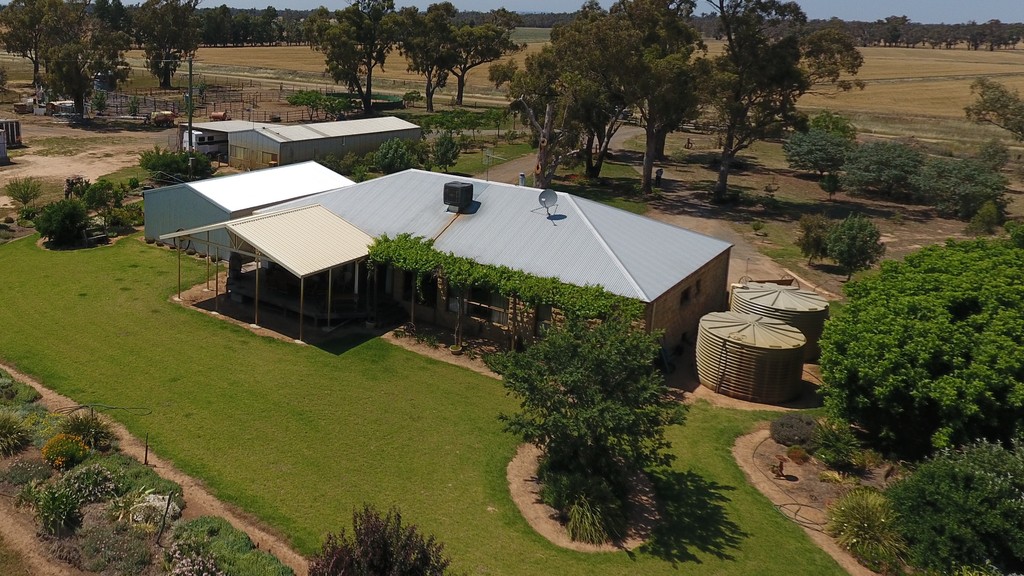
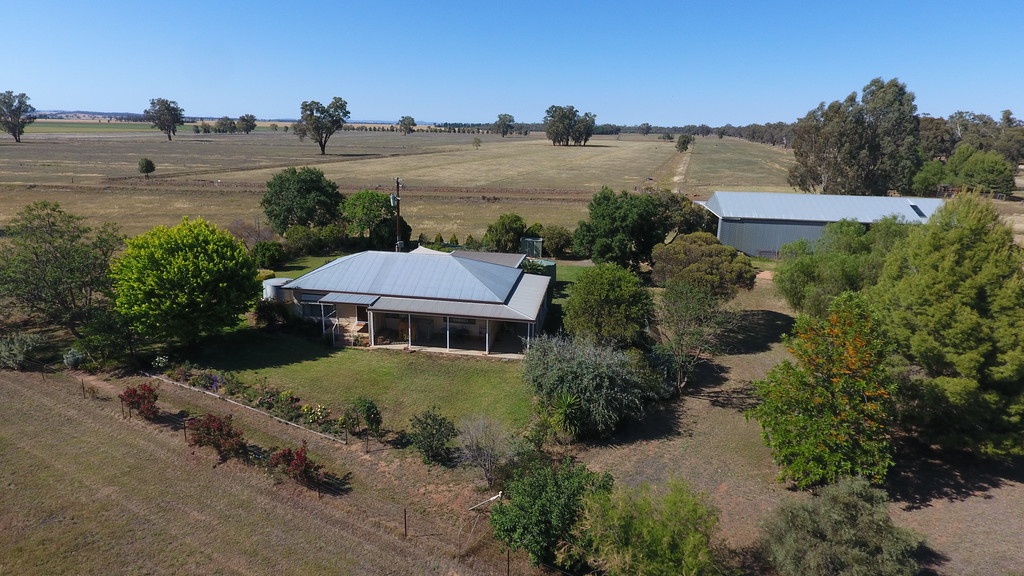
“River Dell” is undoubtedly one of those keenly sought after Forbes district properties. It is difficult to decide just which are its best features.

Is it the five bedroom homestead with its contemporary design, set in established gardens surrounded by mature trees and scrubs?

Or the quality of the associated infrastructure,

sheds, yards and fencing? Or could it be the productiveness of the alluvial soils?

Perhaps, that there is just over 4km of Lachlan River frontage with a beach for launching a boat, fishing, picnicking or swimming?

Or that “River Dell” is only 10km from Forbes?

Or is it that the property is on two separate titles one with the homestead and the other with dwelling approval?

If any or all of these features appeal to you please don’t hesitate to contact us for information or come on one of our three Saturday open farm tours or arrange a private inspection at your convenience.

Exceptional Opportunity

December 7, 2017 by Maggi Barnard

A 113.48ha (280 acre*) irrigation property with a 500ml water entitlement and only 10km* from Forbes is a pretty special find these days. It could be yours to move in on 25th January 2018. “Rodwell” will be auctioned on 14th December unless it is sold prior.

The home has been sited on this property with great care. From the dining room table you look out over the majority of the farm. The house is oriented with a north-easterly aspect to capture the best winter sunshine and relief from the summer heat.

There is no shortage of water to look after the garden and its trees as there is a domestic bore at the house. In addition to the bore there are several rainwater tanks.

Shelter for livestock is provided by a centrally located stand of pine trees accessible by 4 of the 9 main paddocks. The other paddocks have established tree plantings.

Jemalong Wool Weekly Market Update

December 7, 2017 by Maggi Barnard

This week saw buyers keen to secure more volume before the looming recess. Price increases in the merino sector were gradual rather than extreme, as buyers slowly increased their limits. By the close of trade, the market was generally 10-20 cents dearer.

The skirting market experienced similar movement to the fleece, gradual increases rather than dramatic rises, with the main buyer interest focused on wools carrying less than 2.0% vegetable matter or those exhibiting excellent additional measurement results.

The crossbred market defied the other sectors and continued its downward trend. Prices were generally discounted by 10 to 25 cents. Buyers were very selective with their purchases, focusing on the well prepared lots.

The oddment market rose slightly leaving the NR carding indicator 1 cent dearer, while washing lambs were extreme as buyers attempted to purchase them before the small buying window closes for the year.

Source AWEX.

Tips To Avoid Harvester Fires

December 7, 2017 by Maggi Barnard

There are a number of elements that add to the risk of fire on harvesting machinery.

Most of these can be monitored, maintained and addressed to avoid fires.

According to Kondinin Group research, dust and trash build-up on the machine and bearing failures account for around half of harvester fires.

Mechanical failures are implicated for one in 12 harvester fires. While static electricity is regularly blamed for starting fires, static discharge does not have sufficient energy to ignite crop dust.

Reducing harvester fires requires minimisation of the fuel and the ignition source with regular clean downs of the machine, particularly in dusty crops and those that have suffered mould and disease. In extreme cases a blow-down every boxful may be required.

Bearing failure is the cause of one in four harvester fires. Buy an infra-red thermometer (around $50) and monitor bearing temperatures, keeping a log of discrepancies.

Some pulse crop plant material can ignite at temperatures as low as 130°C. While this can vary by seasonal conditions, there are plenty of components on a harvester that exceed this.

(Source: GRDC.com.au)

Swimmer’s Shoulder Part 2

November 30, 2017 by Maggi Barnard

Shoulder impingement during swimming is largely due to dynamic muscle imbalance and biomechanical faults.

Dynamic muscle imbalances can be addressed by strengthening exercises for the rotator cuff and scapular stabilisers together with stretches for the muscles at the back of the shoulder. One good exercise is to stand facing a wall with your arm raised to shoulder height and elbow straight. Hold a tennis ball to the wall by leaning through your shoulder and pinch your shoulder blades together. Roll the ball in small circles for 15 seconds first clockwise then counter clockwise until you become fatigued or for two minutes.

Biomechanical faults can be addressed by correcting your swim technique. Achieving good symmetrical body rotation through an efficient bilateral breathing pattern helps to avoid shoulder impingement during the catch and pull through phase of the freestyle stroke.

Instead of entering thumb first change your technique to enter with a flat hand or fingertip first. This is made easier by avoiding reaching across your midline. A thumb first entry works the shoulder internal rotators excessively and when multiplied by approximately 3,200 strokes per hour contributes heavily to the muscle imbalance of strong internal rotators and weak external rotators causing shoulder impingement.

Most swimmers pull through with a straight arm or dropped elbow. This loads the shoulder muscles excessively rather than utilising the larger and stronger muscles of the chest and upper back.

Making these simple changes can help you achieve many hours of pain free swimming.

For the fitness of you.

Linda Reilly

A Property That Has It All “River Dell”

November 30, 2017 by Maggi Barnard

“River Dell” is undoubtedly one of those keenly sought after Forbes district properties. It is difficult to decide just which are its best features.

Is it the five bedroom homestead with its contemporary design, set in established gardens surrounded by mature trees and scrubs?

Or the quality of the associated infrastructure, sheds, yards and fencing? Or could it be the productiveness of the alluvial soils?

Perhaps, that there is just over 4km of Lachlan River frontage with a beach for launching a boat, fishing, picnicking or swimming? Or that “River Dell” is only 10km from Forbes?

Or is it that the property is on two separate titles one with the homestead and the other with dwelling approval?

If any or all of these features appeal to you please don’t hesitate to contact us for information or come on one of our three Saturday open farm tours or arrange a private inspection at your convenience.

Exceptional Opportunity “Rodwell”

November 30, 2017 by Maggi Barnard

A 113.48ha (280 acre*) irrigation property with a 500ml water entitlement and only 10km* from Forbes is a pretty special find these days. It could be yours to move in on 25th January 2018. “Rodwell” will be auctioned on 14th December unless it is sold prior.

The home has been sited on this property with great care. From the dining room table you look out over the majority of the farm.

The house is oriented with a north-easterly aspect to capture the best winter sunshine and relief from the summer heat.

There is no shortage of water to look after the garden and its trees as there is a domestic bore at the house. In addition to the bore there are several rainwater tanks.

Shelter for livestock is provided by a centrally located stand of pine trees accessible by 4 of the 9 main paddocks. The other paddocks have established tree plantings.

Want To Eat More Veggies?

November 16, 2017 by Maggi Barnard

Scientists have come up with an innovative approach to tackling Australia’s poor vegetable intake, with the launch of a new app that challenges people to eat more veggies.

Using a gamified approach, CSIRO’s new VegEze app aims to motivate Australians to add extra vegetables to their daily diets and form long-term, healthier habits through a 21-day ‘Do 3 at Dinner’ challenge.

CSIRO nutritionists will also study how effective the app’s game-like nature is at helping transform people’s eating patterns, as part of a broader research study.

“We need a fresh approach to improve Australia’s vegetable consumption and overall diet quality,” CSIRO Senior Principal Research Scientist Professor Manny Noakes said.

“Our research found two out of three Australian adults are not eating enough vegetables, especially as part of their evening meal. It’s time to find more engaging, effective

approaches to help break these entrenched diet habits.”

Challenging users to eat three different vegetables at dinner every day for 21 days, the VegEze app helps people track their intake and tally up vegetable serves, with daily reminders and rewards to help people stay motivated and on-track.

“Committing to eating more vegetables every day is one of the most important ways we can improve our health today. Boosting your intake can be as easy as having three types of vegetables taking up half of your dinner plate,” said Manny.

“After just a few weeks using the app every day, users should feel more confident in adding more vegetables to their menu and notice some positive changes to their health and wellbeing.

“The beneficial nutrients and fibre from vegetables can help improve digestion, and fill you up – which can help reduce eating too much unhealthy junk food.”

Since May 2015, CSIRO has studied the dietary habits of more than 191,000 adults for its Healthy Diet Score research.

Eating three types of vegetables as part of the evening meal was found to be a key marker in having a better diet, but further research of 1,068 adults showed some Australians were being held back from eating more vegetables by low awareness, lack of time and low confidence.

To help people overcome these barriers, the VegEze app features educational resources such as a visual guide to specific vegetable serve sizes, vegetable recipes, nutritional information and motivational rewards.

Information from app users will feed back into CSIRO’s study of Australians’ vegetable consumption, while helping to analyse the app’s effectiveness as an education initiative to improve Australia’s poor vegetable score card.

The technology was developed in Australia in collaboration with digital health solution provider SP Health.

To try the 21-day Do 3 at Dinner challenge and participate in the research study, download the free VegEze app via the Apple App Store: https://itunes.apple.com/au/app/vegeze/id1268951104

Swimmer’s Shoulder Part 1

November 16, 2017 by Maggi Barnard

With the weather finally warming up swimming is an ideal way to get a full body workout. Due to the repetitive nature of swimming, overuse injuries in the shoulder and neck are common.

The shoulder is a ball and socket joint with a ring of cartilage around the socket to make the joint more stable. Around this is a loose joint capsule that is reinforced with ligaments and muscles. Because the shoulder is a very mobile joint it relies on the action of these muscles and ligaments to maintain stability. These muscles are called the rotator cuff and consist of four muscles that work together to keep your shoulder centred in its socket.

So if swimming strengthens the shoulder muscles why do so many swimmers have shoulder problems?

The simple answer is due to the repetitive nature of swimming. The more complex answer lies in the fact that many swimmers don’t have good stroke technique, while those that do, can still have problems because the swim stroke (in particular freestyle) mainly strengthens the shoulder internal rotators and adductors. This causes muscle imbalance, leaving the scapular stabilisers and external rotators relatively weak and joint laxity increases. The rotator cuff must work harder to keep the shoulder centred in the socket. When the already relatively weakened external rotators fatigue, the ball of the shoulder joint moves forward and the tendon of the rotator cuff muscles is pinched between the bones as the hand is raised above shoulder height.

Next column I will cover some practical ways to prevent this from happening and what to do if you already have problems. For the fitness of you.

Linda Reilly

  • « Previous Page
  • 1
  • …
  • 100
  • 101
  • 102
  • 103
  • 104
  • …
  • 121
  • Next Page »

Click here to download the recent issue (202) of The Forbes & Parkes Phoenix (1.9MB PDF) – 14th August 2026

SEARCH THE PHOENIX

STAY CONNECTED

The Forbes Phoenix would like to thank you, our Facebook friends, for your continued support and readership!

Recent Articles

  • Disability Inclusion Matters In Central West NSW August 20, 2026
  • Mayoral Notes August 20, 2026
  • Snippets… August 20, 2026
  • Forbes Garden Club Report August 20, 2026
  • Protecting Our Environment And Agriculture August 20, 2026

Phoenix Office 7/113-127 Rankin Street, Forbes NSW 2871

Editor 0432 337 278
editor@forbesphoenix.com.au

Sales 0432 337 278
sales@forbesphoenix.com.au

View our Privacy Policy. View our Conflict Resolution Process. View our Ethics and Complaints Policy. Want to advertise with us? Information on our Community Promotions.

We are always looking for new articles of interest to the local community.

Please feel free to submit an article for possible inclusion in a future issue.

To submit an article, click here to use our online article submission form.

Subscribe

* indicates required

Copyright © 2026 · Magazine Pro Theme On Genesis Framework · WordPress · Log in

nsw government logo

The Forbes Phoenix's Digital Diversification of Free Regional Media project is proudly funded by the NSW Government Regional Media Fund