• Home
  • Articles
    • Front Page
    • General Interest
    • Snippets
    • Letters to the Editor
    • Council Comments
  • Special Interests
  • Our Community
    • Our People
    • Question of the Week
    • Jobs in the Central West
    • Be Seen
    • What’s On
    • What’s Hot
  • Features
    • Women in Business
    • Rural Round Up
    • My Place
    • Loving Local Living
    • Wellness Wise
    • Just a Short Drive
    • Real Estate
  • Sports
    • Bowls
    • Cricket
    • Equestrian
    • Footy Tips
    • Golf
    • Netball
    • Rugby League
    • Rugby Union
    • Soccer
    • Touch Football
  • Classifieds
  • Competitions
  • Contact Us
    • Contact Page
    • Advertise with us
    • Testimonials
    • Submit an Article
    • Subscribe to the Forbes Phoenix

Forbes Phoenix

Is Your ITB Tight?

October 25, 2018 by Maggi Barnard

Do you sometimes feel a pain in your hip or the outside of your knee after sitting for a while? Maybe when you stand up or when you run? It could be that you have a tight Iliotibial Band (ITB).

The ITB is a thick band of fascia that runs down the outside thigh. It starts at the top of your pelvis, runs over the hip and attaches to the outside of the knee. It also attaches to some of the buttock and hip muscles allowing it to co-ordinate how these muscles work to stabilise the hip and knee. Fluid sacs, called bursae, located at the hip and knee, provide cushioning between the ITB and the bones beneath. If the ITB is tight it can irritate the bursae causing inflammation and pain.

An inflamed bursa at the hip is called a Greater Trochanteric Bursitis and at the knee it is known as ITB Friction syndrome or runner’s knee.

The ITB shortens when sitting for prolonged periods. It can also tighten if the muscle is overworked. This occurs with sudden increases in exercise load or volume, or if pelvic control is poor due to weak hip and glute muscles.

Because the ITB is a thick, fibrous band rather than an elastic muscle it requires a longer lighter stretch than most muscles.

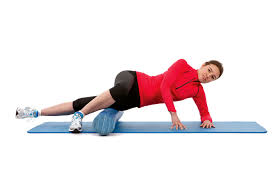
The use of a foam roller can also be quite helpful in increasing the flexibility in the ITB. A youtube search of “foam roller + ITB” will yield videos of how this can be done.

For the fitness of you

Linda Reilly

Tiny Earbuds For Better Sleep

October 18, 2018 by Maggi Barnard

Bose® noise-masking sleepbuds™ are designed for sleep. They don’t stream music but instead use pre-loaded, soothing masking sounds to cover up unwanted nighttime noises so you can get to sleep and stay asleep.

With three eartip size options, Bose sleepbuds™ give you an extremely comfortable fit and stay in place – even if you sleep on your side. The rechargeable batteries provide up to 16 hours of use. Plus, the convenient charging/storage case lets you recharge at any time and protects your sleepbuds™ when they’re not in use.

With the Bose Sleep app, you can customize your experience with personal settings.

Choose which soothing sound you want to hear, how long it plays, and its volume. You can even set wake-up alarms that won’t disturb anyone else.

Talk to the friendly staff at Flannery’s Pharmacy today about the new Bose® noisemasking sleepbuds™.

Does Golf Make Your Back Hurt?

October 11, 2018 by Maggi Barnard

Injuries to the lower back are one of the most common golf related problems. The incidence of lower back pain in the male golfer is between 25% to 36% and 22% to 27 % in the female golfer. It has been reported to account for up to 52% of all injuries in recreational golfers and 24% of injuries in professional golfers. The injury mechanism of nearly half of all lower back injuries in golf is due to the swing.

The modern golf swing has been shown to produce large forces on the lower back which change directions rapidly during the swing. Because golf is played in a slightly forward flexed position, along with the asymmetrical, rotational nature of the swing the forces the joints in the lower back are subject to are quite high. The compression force on the spine during the swing has been shown to be up to 8 times body weight.

So what can you do to prevent getting back pain when you play? Maintenance of good mobility in the hips and thoracic and lumbar spine is important.

This may require a regular exercise programme at home along with a good warm up before you play whilst using proper technique when lifting your bag and bending through the knees when retrieving the ball.

If you already have lower back pain consider slowing your back swing down. Make sure your weight properly shifts to your back foot and your hips rotate during the back swing. Also, avoid placing your feet too far apart during the address phase as this limits hip rotation later in the swing and increases stresses on the lower back.

A “Pulled Calf” Is A Muscle Tear

September 27, 2018 by Maggi Barnard

The calf muscles are commonly injured in sports that involve quick acceleration, deceleration or sudden changes in direction.

Many people describe a sudden sensation of being struck on the back of the leg. A calf muscle tear is often referred to as a strain or a “pulled muscle”.

The calf comprises of two large muscles, gastrocnemius and soleus. They both join to form the Achilles tendon which inserts into the heel bone. The gastrocnemius also helps to bend the knee and together they contract to point the toes.

Tears to the calf muscle can range from a small partial tear with little pain and minimal loss of function to a complete rupture which may require surgery. Recovery time and return to sport depends upon the severity of the injury.

The immediate treatment for all calf injuries consists of the RICE protocol – rest, ice compression and elevation. The No HARM protocol should also be applied – no heat, no alcohol, no running and no massage.

This is aimed at reducing bleeding and secondary tissue damage within the muscle. If you are unable to walk without a limp the use of a heel raise or wearing shoes with a small heel will decrease pain without further stressing the muscle. A compression bandage or wearing SKINS over the injured area helps limit bleeding and swelling.

As pain decreases, gentle exercise and stretching can begin in addition to treatment recommended by your friendly Sports Physio. It is important not to ignore a calf strain as return to activity too soon could make the injury worse.

For the fitness of you.

Linda Reilly

1 In 7 Australians Over 40 Have COPD!

September 20, 2018 by Maggi Barnard

If you are over 35, it’s time to think about your lungs. When it comes to COPD (Chronic Obstructive Pulmonary Disease), identifying it early is one of the most important factors to maintaining lung function. This is no cure but it is preventable, so putting the proper steps in place for people at risk can make a big difference.

COPD affects one in seven Australians over the age of 40 and is the second leading cause of avoidable hospital admissions in Australia. Cigarette smoke causes about 80 to 90 percent of all COPD cases.

If you are over 35 and relate to any of the following points, talk to our pharmacists or registered nurse. We can do a simple COPD screening to check your risk.

• Are you a smoker or ex-smoker?

• Do you or have you worked in a job that exposed you to dust, gas or fumes?

• Do you cough up phlegm or mucus most days?

• Do you cough several times most days?

• Do you feel you are out of breath more easily than others your age?

• Do you experience frequent chest infections?

If you are a smoker, the most important thing you can do to stop COPD from developing or progressing is to quit! Nicotine Replacement Therapy (NRT) products work by releasing a smaller, more slowly-absorbed amount of nicotine (compared with smoking), which can help to reduce withdrawal symptoms as you quit.

If you would like to quit smoking or find out more about your lung health, call in to Flannery’s or Life Pharmacies for a free COPD screening, information and advice.

Happiness Is… A Good Night’s Sleep

September 20, 2018 by Maggi Barnard

Getting a good night’s sleep has a greater impact on our happiness than getting a significant pay rise.

That’s according to new research, which suggests the most content people feel well-rested “most of the time”.

The Living Well Index, created by leading researchers at Oxford Economics and the National Centre for Social research, also found that health of relatives and feeling connected to the local community all impact our overall wellbeing.

However, sleep was found to have the largest impact by far, with getting enough shut-eye having a greater impact on happiness than a 50 percent raise.

Researchers asked a panel of more than 8,000 people questions relating to 18 topics, grouped into six major themes: community connections, finances, relationships, health, lifestyle and environment.

Participants were then given a “Living Well” score out of a possible 100, equating to the highest possible level of happiness and wellbeing.

The researchers concluded that the average person currently has a Living Well score of 62.2 out of a maximum of 100.

Those “living best” are defined as the 20 percent of the population with the highest scores – falling between 72 and 92.

By comparing the lifestyles and behaviours of those living best with the typical person, the index reveals the critical factors behind living well.

Income has surprisingly little impact on how we feel. For the typical person, a 50 percent rise in disposable income contributes to just a 0.5 point increase in their Living Well score.

In contrast, a good night’s sleep has the strongest association with how well we feel we are living. For the typical person, improving their sleep to the level of those who are living best would be equivalent to them having more than four times as much disposable income.

These were among the factors found to separate a typical person from those living best:

1. A Good Night’s Sleep: With a typical person only feeling rested after sleep ‘some of the time’, the research found that sleep quality can explain 3.8 points of difference between their Living Well score and those who are living best in the top 20 percent of the index.

2. Job Security: Among working people, 43 percent of those with the highest index scores experience a very high degree of job security, almost twice the national average.

3. Health of Close Relatives: For the typical person, worries about the health of close relations emerges as a significant barrier to living very well.

4. Community Connectedness: Stronger connections with the people we share a community with is an important factor for those who experience the highest quality of life.

(source: www.huffingtonpost.com.au)

Ankle Sprains

September 13, 2018 by Maggi Barnard

Lateral ligament sprains of the ankle are one of the most common sports injuries, and because they are so common they are often managed too casually and many go untreated. From a clinical point of view the problem with a lateral ligament sprain of the ankle is that they have a very high incidence of recurrence. Gribble et al, 2016, Attenborough et al, 2015 and Tanen et al, 2014 (references can be supplied upon request), found 30-50% of the athletic population and 20% of the general population will go on to suffer from chronic ankle symptoms. These symptoms are often referred to as chronic ankle instability and include pain, swelling, laxity and instability.

The contributing factors to the development of chronic ankle instability include:

not seeking medical attention for the primary lateral ankle sprain; and returning to sport when pain has decreased but function has not been fully restored. The absence of pain does not mean that you are ready to return to sport. Decreases in strength, range of movement, proprioception and balance need to be restored.

Doherty et al, 2016 found that exercise therapy when performed in high doses (5 x 30 mins per week for six weeks) reduced the chances of recurrent lateral ligament sprains in the ankle by 42% and bracing/taping reduced the risk by 62%. It is currently recommended that you brace or tape your ankle for every game and training session for at least six weeks.

The decision to return to sport after a lateral ligament sprain should be based on strength, balance and hop tests rather than time or absence of pain.

For the fitness of you

Linda Reilly
Meniscus Tears Part 2

August 30, 2018 by Maggi Barnard

Whether due to trauma or degenerative changes, a torn meniscus will often present with pain and swelling in the knee joint and difficulty straightening the knee. Sometimes there may also be a history of painful clicking or locking. Manual testing and MRI can confirm the diagnosis of a meniscus tear.

Whenever possible, physiotherapy is considered the first line of treatment when there are symptoms of a meniscal tear. This involves strengthening exercises, icing to reduce swelling and avoiding activities that put pressure on the joint such as pivoting, squatting or repetitive bending of the knee.

One of the main functions of the knee joint meniscus is to absorb shock. Luckily, the muscles around the knee also function as shock absorbers. Research has shown that as muscle strength around the knee increases bone stress decreases and therefore pain and dynamic stability improve.

If, after a few weeks of conservative management, pain and dysfunction are still present your doctor may recommend surgery.

This is usually day surgery and involves arthroscopic repair or removal of the torn piece of cartilage. As part of the recovery process the muscles around the knee must be strengthened in order to minimise secondary degenerative changes.

If osteoarthritis is also present in the affected knee, as is often the case with degenerative meniscus tears, surgical treatment may not provide the pain relief or return to optimal function normally expected of arthroscopic repair. In fact, the research indicates that arthroscopic surgery for this population offers no advantage over physiotherapy for relief of symptoms or improvement in function.

For the fitness of you.

Linda Reilly

Are Your Bones Healthy?

August 16, 2018 by Maggi Barnard

Flannery’s Pharmacy will be hosting a Bone Density Clinic in-store on Wednesday, 29th August.

Your bones are living tissues that are both flexible and strong. They act to support and move your body, protect your organs, create white and red blood cells and to store essential minerals like calcium and phosphorus. Throughout your life your bones are always changing and remodelling. You can think of it like a bank account, into which you make deposits and withdrawals.

“Osteoporosis occurs when too little bone is formed, too much bone is lost, or a combination of both occurs,” said Tracey Edwards, Pharmacist at Flannery’s Pharmacy.

“When this happens your bones become more brittle and can fracture more easily,” said Tracey. “Ideally, you will have made more ‘deposits’ than ‘withdrawals’ during your early years to create the strongest bones possible”.

Risk factors for osteoporosis include increasing age, being female (especially post menopausal), a family history of osteoporosis and/or a history of fractures as an adult. Lifestyle risk factors include low dietary calcium intake, low vitamin D intake, low levels of physical activity, excessive alcohol intake, smoking and low or excessive body weight.

“The heel ultrasound test offered by the pharmacy is a screening test that gives a snapshot of your bone health,” said Tracey.

“Screening tests alone cannot accurately diagnose osteoporosis but they can be used in conjunction with your personal risk factors so that you and your GP can decide which course of action is best for you”.

If you would like an appointment for the Bone Density Clinic, please call instore or phone Flannery’s Pharmacy on 6852 1111.

Cost is $20 and bookings are essential.

How To Rediscover Your Fitness Mojo

August 16, 2018 by Maggi Barnard

Being active doesn’t just make you feel good, it is good for you. The list of benefits is long and sweeping as almost on a daily basis, scientists identify new health perks of regular physical activity.

To make exercise part of your routine you need to prioritise and commit.

Start small: Think about your current fitness level and start with something achievable, but slightly challenging.

Aim to be active for 20 to 30 minutes per day. If you want to do more, gradually increase the duration.

Make it a non-negotiable: Rather than viewing exercise as a ‘nice to have’, treat it like any other element of your daily routine.

Like having a shower, eating breakfast and going to work – you don’t really think about it, you just do it.

Set a goal: Having an exercise goal to work towards, such as a fun run, gives your training focus. Plus, you’ll enjoy a real buzz crossing the finish line of an event you’ve dedicated time working towards.

Find a buddy: Having a friend to meet regularly and train alongside keeps you accountable, provides a social aspect to your activity and means you can motivate and support each other on tougher days.

It’s too cold: There’s no such thing as bad weather if you’re prepared for it. Cooler weather actually provides the best conditions for exercise. You only get cold if you’re standing still.

It’s too hot: In really hot conditions think about taking your activity indoors, or choose to get your exercise via a refreshing swim.

By Claire Burke

  • « Previous Page
  • 1
  • …
  • 23
  • 24
  • 25
  • 26
  • 27
  • …
  • 31
  • Next Page »

Click here to download the recent issue (176) of The Forbes & Parkes Phoenix (1.6MB PDF) – 13th February 2026

SEARCH THE PHOENIX

STAY CONNECTED

The Forbes Phoenix would like to thank you, our Facebook friends, for your continued support and readership!

Recent Articles

  • A $7.6 Million Boost For Forbes Future Water Security February 12, 2026
  • Mayoral Notes February 12, 2026
  • Snippets… February 12, 2026
  • Indigenous Storytellers Scholarship Returns February 12, 2026
  • Meet Indigenous Chef Mindy Woods At Forbes Crop Swap February 12, 2026

Phoenix Office 7/113-127 Rankin Street, Forbes NSW 2871

Editor 0432 337 278
editor@forbesphoenix.com.au

Sales 0432 337 278
sales@forbesphoenix.com.au

View our Privacy Policy. View our Conflict Resolution Process. View our Ethics and Complaints Policy. Want to advertise with us? Information on our Community Promotions.

We are always looking for new articles of interest to the local community.

Please feel free to submit an article for possible inclusion in a future issue.

To submit an article, click here to use our online article submission form.

Subscribe

* indicates required

Copyright © 2026 · Magazine Pro Theme On Genesis Framework · WordPress · Log in