• Home
  • Articles
    • Front Page
    • General Interest
    • Snippets
    • Letters to the Editor
    • Council Comments
  • Special Interests
  • Our Community
    • Our People
    • Question of the Week
    • Jobs in the Central West
    • Be Seen
    • What’s On
    • What’s Hot
  • Features
    • Women in Business
    • Rural Round Up
    • My Place
    • Loving Local Living
    • Wellness Wise
    • Just a Short Drive
    • Real Estate
  • Sports
    • Bowls
    • Cricket
    • Equestrian
    • Footy Tips
    • Golf
    • Netball
    • Rugby League
    • Rugby Union
    • Soccer
    • Touch Football
  • Classifieds
  • Competitions
  • Contact Us
    • Contact Page
    • Advertise with us
    • Testimonials
    • Submit an Article
    • Subscribe to the Forbes Phoenix

Forbes Phoenix

RDA Central West Doubles Down On Drought Focus

March 6, 2020 by Maggi Barnard

Sheep finding food on travelling stock route east of Grenfell.

Regional Development Australia (RDA) Central West is calling on all levels of government, business and the community to remain focused on the ongoing impacts of the drought across the Central West. This position was formally reiterated at the most recent RDA Central West board meeting.

Convening in Bathurst last month, the board of RDA moved a motion to ensure supporting the communities impacted by drought and supporting the provision of key services was the priority focus of the organisation for 2020.

RDA Central West Chair, Christine Weston said that recent rains in some regions have been most welcome, but the recovery from the drought is a long and ongoing process.

“As a farmer I have directly been impacted by this debilitating drought on a daily basis. It hammers output, productivity and confidence.”

“The recent rain has provided a temporary boost for some communities, but we are nowhere close to the road to recovery. This is why drought support and recovery is the key priority for RDA Central West in 2020,” said Christine.

There continues to be sad drought-affected consequences, such as the closure of the Trundle grocery store and farmers across the region still spending thousands a day on stock feed, the economic and social impact on our communities has been immense.”

Christine took the opportunity to remind residents to shop local and support their community when they can, and encourage family and friends to stay, shop and visit in the Central West.

“Backing local communities and local businesses drives jobs, boosts confidence, and by visiting our region it is a simple way to show your support, and say we are here and we want to help,” said Christine.

RDA Central West acknowledges the efforts and drought response measures already announced by both the State and Federal Government.


Felix Rams Sale Results

September 12, 2019 by Maggi Barnard

It was an outstanding day at Felix Rams sale last week, with 51 registered bidders and 191 rams on offer. The older Poll Dorset rams sold to a top of $3,050 and averaged $1,419, with a clearance of 96%. The spring drop Poll Dorset rams sold to a top of $6,200 and averaged $1,532, with a clearance of 77.7%. The White Suffolk rams sold to a top of $5,000 and averaged $1,144 and had a clearance of 81.8%. Credit must go to Rodney, Liz and Isaac Watt for their breeding and preparation of these rams, each one was exceptional.

Jemalong Wool Weekly Market Update

September 12, 2019 by Maggi Barnard

After a month of severe losses, this week’s market showed signs of a recovery, with exporters reporting that sales had been made, which finally gave the market a base.

The first day of selling saw further losses, resulting in the NRI shedding a further 27 cents, however during the last hour of selling (in the West) there was a noticeable change of tone, and fierce competition started to push prices back in a positive direction. The positive sentiment carried into the second selling day, and prices finally started to increase.

The MPGs generally rose by 30-40 cents, pushing the NRI up by 30 cents, closing the week 3 cents in the green at 1408.

The carding market also recorded a positive result for the series, as the limited lots on offer came under strong demand pushing them up by 10-30 cents.

The crossbred market was not forgotten with 26 to 28 microns rising by 5-10 cents.

27,923 bales are currently rostered for sale next week.

Source: AWEX

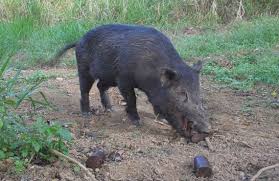
Warning For Feral Pigs

September 12, 2019 by Maggi Barnard

With many farmers across the Central West hand-feeding livestock, Local Land Services is reminding landholders that feral pigs will also help themselves to stock feed.

Invasive Species Team Leader Nigel Boyce said landholders are seeing an increase in feral pigs around feeding and water points, which can undermine hand-feeding programs and spread disease.

“The current drought conditions are seeing feral pigs seeking out feed and water from places they would normally avoid,“ Mr Boyce said. “They are proving quite resourceful in accessing feeders and other feeding points, and cohabitating with livestock to do so.”

Feral pigs joining livestock at feed and water points also greatly increases the chance of spreading disease. “Feral pigs can carry diseases such as leptospirosis and brucellosis, which can be spread to both livestock and humans with significant health implications,” Mr Boyce said.

While the situation is not ideal, it presents an opportunity to carry out trapping, baiting or a combination of both to effectively reduce the impact caused on agricultural production and the environment.

Felix Rams Efficient And Profitable

August 22, 2019 by Maggi Barnard

Felix Rams has a singular focus on producing efficient and profitable prime lambs by breeding high performance, structurally sound meat sheep rams. The commitment to collecting good accurate performance data is in the DNA and is embedded as the fundamental approach to the way Felix Rams breed sheep.

However you look at it, 25,800 lambs weighed within 12 hours of birth, 20,900 weaning weights, 17,500 scans with weights for postweaning fat and muscle, 4,400 individual worm egg counts is a lot of data, and it all contributes to the accuracy of the asbvs on the rams you buy.

At Felix Rams, sheep are selected for quick early growth, and maturity, grown in the paddock, not maximum adult ram size. Almost all of the selection is done at 6.5 to 7 months of age, reflecting the age most lambs are sold. Felix Rams will efficiently produce a 22-28kg lamb. Early maturity also means the suckers have the best chance of hitting the target year in year out, while the attention to the “right” amount of fat means that you will almost always have finish on your lambs at market weights.

As usual this year’s sale rams are paddock grown and finished, not pumped up or grown out on a grain feeder.

Felix Rams will offer 140 Poll Dorset and 50 White Suffolk rams at their 21st annual on-property sale at Greenethorpe on September 3rd at 1pm.

Catalogues are available at www.felixrams. com.au from August 25th, or call Rodney 0417 499 204, Isaac 0437 493 407 or the selling agents, Allan Gray and Co Cowra 6342 2377.

Q Fever Risk

August 8, 2019 by Maggi Barnard

The Western NSW Local Health District (WNSWLHD) is warning people to get vaccinated and take other steps to guard against Q fever, as drought and high winds may increase the risk of the disease spreading. WNSWLHD Health Protection Manager, Priscilla Stanley, said so far this year there have been 47 confirmed cases of Q fever in the WNSWLHD area. In 2018, there were 41 confirmed cases of the disease in the area.
“Q fever is a serious bacterial infection caused by inhaling dust particles contaminated by infected animal secretions that does not just affect farmers or people who deal with livestock,” Priscilla said.

Nine-year-old Seth Whiteman, from a property near Yeoval contracted Q fever in May this year. Seth’s Mum, Brooke Ryan, said, “Seth had been helping on the farm, which included being exposed to animal fluids. Some of the other kids were sick too, but Seth wasn’t getting better. He had high temperatures, but was shivering and freezing cold to touch”.

“A single dose vaccine is recommended for people who work in high risk occupations and anyone over 15 years who has the potential to be exposed to Q fever,” added Priscilla.

The following steps can protect against Q fever:

• washing hands and arms thoroughly in soapy water after any contact with animals

• wearing a properly fitting mask when handling or disposing of animal products

• wearing protective clothing and thick gloves when working with high risk animals

• removing and washing dirty clothing, coveralls, boots and equipment in outdoor wash areas to prevent exposing other household residents

• washing animal urine, faeces, blood and other body fluids from equipment and surfaces.


RDA Central West Welcomes New CEO

July 11, 2019 by Maggi Barnard

Regional Development Australia in Central West New South Wales has welcomed a new voice with the appointment of Sam Harma as its new CEO. Mr Harma has been working at a senior level of executive government in both Canberra and Sydney for the last decade, working for Cabinet Ministers in both State and Federal Government. Mr Harma brings strong policy experience in regional development, job creation and economic development.

RDA Central West Chair, Ms Christine Weston welcomed the recent appointment and said this was an exciting change for the local RDA team. “RDA Central West is advocating for the nearly 200,000 people who call the 11 local government areas of the Central West home, and Sam will be a fierce advocate on their behalf,” said Ms Weston.

“The Central West is a showcase of successful regional development, but there is always more to do. I can’t wait to build partnerships,
fight for projects and drive job opportunities across the region,” said Mr Harma.

“The Central West is a diverse region with farming, mining, tourism and the health sector all major employers. From Orange to Oberon and Cowra to Condobolin the future is bright, and our role at RDA is to drive greater opportunities,” said Mr Harma.

Regional Development Australia Central West is a regional certifying body for the Regional Sponsored Migration Scheme (RSMS) visa (subclass 187) and working in partnership with the NSW Department of Industry to deliver the NSW Skilled Regional nominated visa (subclass 489) in the Central West region.

The RDA Central West has also been a driving force behind the STEM Industry School Partnerships Program (SISP) which has been made available to 20 schools across the region. RDA Central West has also launched a ‘Farm to Organisation’ project a first of its kind in Australia.

Increase Feed Quantity In Cold And Wet Conditions

July 11, 2019 by Maggi Barnard

Although it was nice to see a bit of rain around this week, wet conditions coupled with cold conditions can cause issues for stock.

In cold and wet conditions, stock will use energy to keep warm. In drought conditions, where stock may have experienced under nutrition, they do not have the fat reserves to handle the increased energy requirements.

Pregnant stock are particularly at risk. Pregnancy Toxaemia is caused by low levels of glucose in the blood which adversely affects brain and nervous system function. It most commonly occurs in ewes and cows during the last month of pregnancy, when there is a high demand for glucose (energy) from the rapidly growing foetuses.

In cold conditions it is advisable to increase feed by 20%. For example, a twin bearing ewe should be receiving 1.6kg of cereal grain per day (in combination with a roughage source) to meet its nutritional requirements in late pregnancy. It is difficult to get them to physically eat more grain while heavily pregnant, especially without inducing grain poisoning. The simplest and most effective way to increase their energy intake is to put more good quality hay out into the paddocks during the wet and cold weather.

Hay is also good to feed to cattle in cold weather as the rumination of fibrous, bulky feed produces heat as a by-product that helps to keep the animal warm. However, it is worth remembering that some hay is very poor quality, meaning it is high in fibre but low in energy and protein which are the most important factors when supplementary feeding stock.

By Dr Jillian Kelly, District Veterinarian, Central West Local Land Services

Jemalong Wool Weekly Market Update

July 11, 2019 by Maggi Barnard

The market started the new season with a much-welcomed turn-around. With only 30,994 bales offered, it was the smallest start to the selling season in AWEX history (since ’95).

Although the NRI recorded a small 2 cent loss on the first day of selling, the overall tone of the market was positive, with the market showing strong signs of improvement as the day progressed. The rises experienced late on day one, were quickly realised on day two with the NRI gaining 9 cents, to close at 1738. The individual MPG’s across the three regions, generally rose by 10-40 cents for the week.

Although the increase in the NRI was small, the importance of the rise was large, as the long run of losses was finally brought to a halt. Next week is the last sale before the three-week mid-year recess. Currently, there are 34,831 bales rostered for sale next week.

Source: AWEX

Jemalong Wool Weekly Market Update

June 13, 2019 by Maggi Barnard

21,787 bales were on offer this week, the lowest weekly quantity in 12 months. The small offering may have had a negative impact, as some exporters may not have been confident about being able to fill orders. The limited number of good style wools with favourable additional measurements were highly sought after, these wools recorded minimal change for the series. Lesser style lots and those carrying poor additional measurements lost 30- 50 cents, pushing the MPGs down by 20-40 cents.

The NRI lost 26 cents, closing the week at 1,883. The crossbred sector also tracked downward but not as steeply as the merinos, prices generally fell by 5-10 cents. 30.0 micron however managed a small increase for the week, the only quoted MPG to record positive movement for the series.

The cardings also lost further ground this week and are now 571 cents, from the record high set in September last year.

Next week will see 29,989 bales put before the trade, with Fremantle back-in after a week’s recess.

Source: AWEX

  • « Previous Page
  • 1
  • …
  • 12
  • 13
  • 14
  • 15
  • 16
  • …
  • 27
  • Next Page »

Click here to download the recent issue (176) of The Forbes & Parkes Phoenix (1.6MB PDF) – 13th February 2026

SEARCH THE PHOENIX

STAY CONNECTED

The Forbes Phoenix would like to thank you, our Facebook friends, for your continued support and readership!

Recent Articles

  • A $7.6 Million Boost For Forbes Future Water Security February 12, 2026
  • Mayoral Notes February 12, 2026
  • Snippets… February 12, 2026
  • Indigenous Storytellers Scholarship Returns February 12, 2026
  • Meet Indigenous Chef Mindy Woods At Forbes Crop Swap February 12, 2026

Phoenix Office 7/113-127 Rankin Street, Forbes NSW 2871

Editor 0432 337 278
editor@forbesphoenix.com.au

Sales 0432 337 278
sales@forbesphoenix.com.au

View our Privacy Policy. View our Conflict Resolution Process. View our Ethics and Complaints Policy. Want to advertise with us? Information on our Community Promotions.

We are always looking for new articles of interest to the local community.

Please feel free to submit an article for possible inclusion in a future issue.

To submit an article, click here to use our online article submission form.

Subscribe

* indicates required

Copyright © 2026 · Magazine Pro Theme On Genesis Framework · WordPress · Log in