• Home
  • Articles
    • Front Page
    • General Interest
    • Snippets
    • Letters to the Editor
    • Council Comments
  • Special Interests
  • Our Community
    • Our People
    • Question of the Week
    • Jobs in the Central West
    • Be Seen
    • What’s On
    • What’s Hot
  • Features
    • Women in Business
    • Rural Round Up
    • My Place
    • Loving Local Living
    • Wellness Wise
    • Just a Short Drive
    • Real Estate
  • Sports
    • Bowls
    • Cricket
    • Equestrian
    • Footy Tips
    • Golf
    • Netball
    • Rugby League
    • Rugby Union
    • Soccer
    • Touch Football
  • Classifieds
  • Competitions
  • Contact Us
    • Contact Page
    • Advertise with us
    • Testimonials
    • Submit an Article
    • Subscribe to the Forbes Phoenix

Forbes Phoenix

Flannery’s Pharmacy…Here’s To A New Year

December 20, 2018 by Maggi Barnard

The teams at Flannery’s and Life Pharmacies would like to wish all their customers a very happy, healthy and safe Christmas and New Year.

“It’s been a great year and we’ve really enjoyed providing professional services and giving health and beauty related advice to all our lovely customers,” said Debbie Prior, Business Manager at Flannery’s. “Thank you all so much for your continued support of our pharmacies,” continued Debbie.

Flannery’s Pharmacy would also like to inform their customers of a slight change in their trading hours.

“Flannery’s Pharmacy will commence trading till 5:30pm each weekday from 2nd January 2019,” said Debbie. “Recently we have found that not as many people are accessing the pharmacy between 5:30pm and 6pm,” said Debbie. “We will continue to open at 8:30am and Life Pharmacy will be open until 6:30pm each week day.”

Over the festive season the trading hours will be:
Flannery’s Pharmacy
Christmas Eve: 8:30am to 6pm
Christmas Day: Closed
Boxing Day: Closed
Thursday, 27th December: 8:30am to 6pm
Friday, 28th December: 8:30am to 6pm
Saturday, 29th December: 9am to 12:30pm
Sunday, 30th December: Closed
Monday, 31st December: 8:30am to 6pm
New Years Day: Closed
Tuesday, 2nd January: 8:30am to 5:30pm

Life Pharmacy
Christmas Eve: 8:30am to 6:30pm
Christmas Day: Closed
Boxing Day: 10am to 1pm
Thursday, 27th December: 8:30am to 6:30pm
Friday, 28th December: 8:30am to 6:30pm
Saturday, 29th January: 9am to 1pm
Sunday, 30th January: 10am to 1pm
Monday, 31st January: 8:30am to 6:30pm
New Years Day: Closed

Making Smart Farming Ideas A Reality

December 13, 2018 by Maggi Barnard

More than $9 million is available under Round two of Smart Farms Small Grants.

Grants of between $5,000 and $200,000 to assist farmers and groups to adapt to change, innovate and become more sustainable.

Part of the National Landcare Program’s $134 million Smart Farms Program. Landholders and community groups can now apply for up to $200,000 under Round two of Smart Farms Small Grants.

Landcare groups, NRM bodies, Indigenous organisations and community groups are encouraged to throw their hat in the ring.

“The future of Aussie agriculture relies on sustainable farming and land management practices,” said Minister for Agriculture and Water Resources, David Littleproud.

“Our farmers are looking for new practices and tools to stay sustainable and profitable.

These grants support new projects to improve Aussie soil, biodiversity and vegetation.

“They will also help support water security and promote climate-smart farming. Ultimately, this leads to more profitable agriculture, fishing and forestry industries. I know there are exceptional ideas out there and these grants can make them a reality.

“The first round of funding was highly competitive, attracting over 800 applications. I strongly encourage those who missed out in Round one to apply again,” said David.

More information is available online. Visit the Community Grants Hub to apply.

Grain Fed Beef Definition Expanded

December 13, 2018 by Maggi Barnard


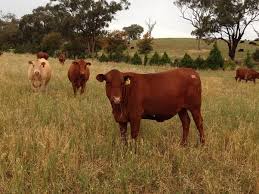
Beef farmers will now be able to market their cattle as ‘Grain Fed Finished’ after feeding them grain for 35 days before sale or export and will be able to ask a premium for these animals.

Previously, only two standards existed: ‘Grain Fed’ and ‘Grain Fed Young Beef’. ‘Grain fed’ required the cattle to be fed on grain for 80 of the past 100 days while ‘Grain Fed Young Beef’ required grain to be fed 50 of the past 60 days for females and 70 days for males.

“This new ‘Grain Fed Finished’ standard means farmers can feed the cattle grain for 35 days and reap the benefits of selling as ‘Grain Fed Finished’,” said Minister for Agriculture and Water Resources, David Littleproud.

“The science says 35 days on grain produces the fat colour attribute associated with grain-fed beef. Thirty-five days on one property means cattle are Meat Standards Australia accredited, too.

“The standard requires the cattle be fed on a specified high energy grain diet. As Australians, we refuse to compromise on quality,” said David. The standard is operational now, having been signed into regulation.

Fast facts:

• The new ‘Grain Fed Finished’ standard, or trade description, will apply both domestically and overseas.

• Grain Fed (GF) cattle must have been in a feedlot for not less than 100 days and for not less than 80 days of that, on a nutritionally balance ration of a recognised high energy feed of which grain is the highest single component.

• Grain Fed Young Beef (GFYB) cattle must have been in a feedlot for not less than 70 days (females for not less than 60 days) and for not less than 50 days of that, on a nutritionally balance ration of a recognised high energy feed of which grain is the highest single component.


Jemalong Wool Weekly Market Update

December 13, 2018 by Maggi Barnard

The quantity of wool on offer increased slightly this week, however despite the increase, the total volume of wool sold (season to date) is still 18% less than it was this time last season.

The merino sector performed solidly, recording gains across most microns, only a lack of interest in some inferior types and reduced buyer demand on wool with poor additional measurements, prevented the MPG’s from posting larger gains.

Despite the merino fleece sector recording overall gains, the NRI lost 8 cents for the week, to close at 1,897. This movement was mainly due to large losses experienced in the crossbred sector, which saw prices quickly revers after recording large gains at the previous sale.

Wools 30 micron and finer lost 70-130 cents, however the sharp reduction in price was met with firm seller resistance, with approximately 20% of the crossbred offering passed in.

After three weeks of sustained price rises the oddment market lost ground with locks, stains and crutchings generally.

Source: AWEX

Swimmer’s Shoulder Part 2

December 6, 2018 by Maggi Barnard

Shoulder impingement during swimming is largely due to dynamic muscle imbalances and biomechanical faults. Dynamic muscle imbalances can be addressed by strengthening exercises for the rotator cuff and scapular stabilisers, together with stretches for the muscles at the back of the shoulder.

One good exercise is to stand facing a wall with your arm raised to shoulder height and elbow straight. Hold a tennis ball to the wall by leaning through your shoulder and pinch your shoulder blades together. Roll the ball in small circles for 15 seconds first clockwise then counter clockwise until you become fatigued or two minutes, whichever comes first.

Biomechanical faults can be addressed by correcting your swim technique. Achieving good symmetrical body rotation through the development of an efficient bilateral breathing pattern helps to avoid shoulder impingement during the catch and pull through phase of the freestyle stroke.

If you already have shoulder pain it may be helpful to shorten your stroke and avoid the use of hand paddles. Hand placement during entry to the water should also be monitored. Instead of entering thumb first change your technique to enter with a flat hand or fingertip first. This is made easier by avoiding reaching across your midline. A thumb first entry works the shoulder internal rotators excessively and when multiplied by approximately 3200 strokes per hour contributes heavily to the muscle imbalance of strong internal rotators and weak external rotators causing shoulder impingement.

Most swimmers pull through with a straight arm or dropped elbow. This loads the shoulder muscles excessively rather than utilising the larger and stronger muscles of the chest and upper back. Making these simple changes can help you achieve many hours of pain free swimming.

For the fitness of you

Linda Reilly

Swimmer’s Shoulder Part 1

November 22, 2018 by Maggi Barnard

With the weather warming up swimming is an ideal way to get a full body workout.

Overuse injuries in the shoulder and neck are common though, due to the repetitive nature of swimming.

The shoulder is a ball and socket joint with a ring of cartilage around the socket to make the joint more stable. Around this is a loose joint capsule that is reinforced with ligaments and muscles. Because the shoulder is a very mobile joint it relies on the action of these muscles and ligaments to maintain stability. These muscles are called the rotator cuff and consist of four muscles that work together to keep your shoulder centred in its socket.

So, if swimming strengthens the shoulder muscles why do so many swimmers have shoulder problems?

The simple answer is due to the repetitive nature of swimming. The more complex answer lies in the fact that many swimmers don’t have good stroke technique and those that do can still have problems because the swim stroke (in particular freestyle), mainly strengthens the shoulder internal rotators and adductors. This causes muscle imbalance, leaving the scapular stabilisers and external rotators relatively weak and joint laxity increases. The rotator cuff then must work harder to keep the shoulder centred in the socket. When the already relatively weakened external rotators fatigue, the ball of the shoulder joint moves forward and the tendon of the rotator cuff muscles is pinched between the bones as the hand is raised above shoulder height.

Next column I will cover some practical ways to prevent this happening and what to do if you already have impingement problems.

For the fitness of you.

Linda Reilly

Effects Of The Sun

November 15, 2018 by Maggi Barnard

Did you know that 90 percent of ageing and wrinkles are caused by sun damage? Sun exposure causes most of the skin changes that we think of as a normal part of ageing.

Over time, the sun’s ultraviolet (UV) light damages the fibres in the skin called elastin. When these fibres break down, the skin begins to sag, stretch and lose its ability to go back into place after stretching.

Australia is the skin cancer capital of the world. More than 11,500 Australian men and women are diagnosed with a melanoma each year, and an estimated 434,000 people are treated for one or more non-melanomaskin cancers. Skin cancer accounts for over 80 percent of all new cases of cancer diagnosed in Australia each year.

If you’d like to know about skin damage to your complexion (face), why not book an appointment at Flannery’s Pharmacy Sun Awareness Clinic. The clinic nurse will conduct a VISIA Complexion Analysis using specialised UV light technology to identify the effects of sun exposure on the face. You will also receive a personalised skin analysis print out.

Our clinic nurse will discuss your analysis and make specific recommendations to help you manage and protect your skin to achieve your best skin possible.

The Sun Awareness Clinic is being held on Wednesday, 5th December and appointments are available between 10am and 3pm.

Talk to our friendly staff today to book an appointment or call Flannery’s Pharmacy on 6852 1111.

Stress Fractures

November 8, 2018 by Maggi Barnard

The stress fracture is a common overuse injury seen in athletes who participate in endurance and high load bearing activities. Stress fractures in the lower limb account for between 80to 90% of all stress fractures and in runners contributes to almost 16% of all injuries.

During periods of relative inactivity or with osteoporosis or eating disorders, the density of bone decreases. If loads on the bone become repetitive or abnormally high and the bone is not given enough rest to allow for adaptation, the rate of stress-induced microfractures in the bone exceeds the rate at which the bone can repair and stress fractures develop.

The typical complaint with stress fractures is of a gradual onset of pain. Initially there is just pain with activity that subsides with rest but returns when the aggravating activity is resumed. Local tenderness and swelling are often found at the fracture site and pain is easily localised as opposed to shin splints which produce a more diffused pain.

Treatment initially involves rest from the aggravating activity for approximately four to six weeks. It may also require bracing or the use of a cam boot. In some cases, surgery may even be required.

Return to sport should be gradual to allow time for adaptation within the bone and it is important that all biomechanical and nutritional causes be addressed to prevent recurrence. Cross training and participating in a variety of different sporting activities can help minimise the risk of stress fractures.

It is important to remember that if you recognise the symptoms early and treat them appropriately, you can return to sports at your normal playing level.

For the fitness of you.

Linda Reilly

Jemalong Wool Weekly Market Update

November 8, 2018 by Maggi Barnard

The lack of buyer confidence combined with an ever-increasing quantity of lower spec wools, has resulted in losses across the board. Reductions of 15-40 were common this week, leaving the NRI 23 cents lower. The NRI has now fallen 272 cents (13%) from its mid-September peak. The fall in prices was again met with firm seller resistance, with a weekly clearance rate of only 74.7%.

The skirtings were the best performing sector this week, managing to record modest gains for the week of 5-10 cents, wool carrying less than 2% VM attracted the most competition and the largest gains. The crossbreds had a week of mixed results, prices rose slightly in the South and fell slightly in North, while the oddments continued their steep downward path. Locks, stains and crutchings generally fell by a further 40 to 100 cents, pushing the three carding indicators down by an average 71 cents.

Quantities remain similar next week, currently there are 35,696 bales on offer Nationally.

Source: AWEX

Extension Of The CWLE Clouded By Chain Of Responsibility Notice

November 8, 2018 by Maggi Barnard

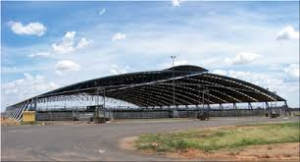
Work has begun at the Forbes Central West Livestock Exchange (CWLE) to expand on the existing cattle selling complex.

The estimated $3.4m expansion consists of improvements to truck parking areas, electrical works to increase lighting and security CCTV, expansion of the current covered yard area and installation of additional state of the art cattle yards. This will lift yarding from 1,800 to 2,600 head of cattle per week, an increase of 41,600 per annum to a total of 105,000 head of cattle per year.

“The added advantage of the additional delivery pens will facilitate more efficient turnaround time for cattle, spending less time in the selling centre. This will have a positive impact on animal welfare and transport operations,” said Forbes Mayor Phyllis Miller.

“The project will drive economic growth and productivity into the local community, creating jobs and new opportunities for Forbes,” she explained.

This expansion phase will greatly enhance the efficiency of operations and animal welfare standards to industry best practice levels. The high profile facility has however been the subject of recent controversy with Forbes Shire Council being served with an improvement notice this year by the RMS.

This is as a result of 57 breaches of Chain of Responsibility legislation by livestock transport operators leaving the saleyards.

Forbes Shire Council General Manager, Steve Loane states that Council is not the loading manager and merely provides the facility.

“It’s just callous to whack the livestock industry with this now,” he said. “The weighbridge would need to be remotely operated because trucks come and go at all hours.

The weighbridge would have to be capable of taking photos of the back, front and sides of a truck and identifying the truck driver. If  a truck is overloaded, there would need to be extra yards to hold offloaded animals, another expense the Council doesn’t have reserves for,” he said.

To further press Council’s case, the CWLE hosted on Tuesday executives from the National Heavy Vehicle Regulator and administrators of the Chain of Responsibility legislation, including CEO, Sal Petroccitto.

The hosting was done during an active sale at the CWLE to better develop their understanding of the complexity of the issue faced by saleyard owners.

  • « Previous Page
  • 1
  • …
  • 87
  • 88
  • 89
  • 90
  • 91
  • …
  • 118
  • Next Page »

Click here to download the recent issue (176) of The Forbes & Parkes Phoenix (1.6MB PDF) – 13th February 2026

SEARCH THE PHOENIX

STAY CONNECTED

The Forbes Phoenix would like to thank you, our Facebook friends, for your continued support and readership!

Recent Articles

  • A $7.6 Million Boost For Forbes Future Water Security February 12, 2026
  • Mayoral Notes February 12, 2026
  • Snippets… February 12, 2026
  • Indigenous Storytellers Scholarship Returns February 12, 2026
  • Meet Indigenous Chef Mindy Woods At Forbes Crop Swap February 12, 2026

Phoenix Office 7/113-127 Rankin Street, Forbes NSW 2871

Editor 0432 337 278
editor@forbesphoenix.com.au

Sales 0432 337 278
sales@forbesphoenix.com.au

View our Privacy Policy. View our Conflict Resolution Process. View our Ethics and Complaints Policy. Want to advertise with us? Information on our Community Promotions.

We are always looking for new articles of interest to the local community.

Please feel free to submit an article for possible inclusion in a future issue.

To submit an article, click here to use our online article submission form.

Subscribe

* indicates required

Copyright © 2026 · Magazine Pro Theme On Genesis Framework · WordPress · Log in