• Home
  • Articles
    • Front Page
    • General Interest
    • Snippets
    • Letters to the Editor
    • Council Comments
  • Special Interests
  • Our Community
    • Our People
    • Question of the Week
    • Jobs in the Central West
    • Be Seen
    • What’s On
    • What’s Hot
  • Features
    • Women in Business
    • Rural Round Up
    • My Place
    • Loving Local Living
    • Wellness Wise
    • Just a Short Drive
    • Real Estate
  • Sports
    • Bowls
    • Cricket
    • Equestrian
    • Footy Tips
    • Golf
    • Netball
    • Rugby League
    • Rugby Union
    • Soccer
    • Touch Football
  • Classifieds
  • Competitions
  • Contact Us
    • Contact Page
    • Advertise with us
    • Testimonials
    • Submit an Article
    • Subscribe to the Forbes Phoenix

Forbes Phoenix

Tips To Avoid Harvester Fires

December 7, 2017 by Maggi Barnard

There are a number of elements that add to the risk of fire on harvesting machinery.

Most of these can be monitored, maintained and addressed to avoid fires.

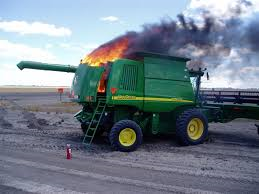
According to Kondinin Group research, dust and trash build-up on the machine and bearing failures account for around half of harvester fires.

Mechanical failures are implicated for one in 12 harvester fires. While static electricity is regularly blamed for starting fires, static discharge does not have sufficient energy to ignite crop dust.

Reducing harvester fires requires minimisation of the fuel and the ignition source with regular clean downs of the machine, particularly in dusty crops and those that have suffered mould and disease. In extreme cases a blow-down every boxful may be required.

Bearing failure is the cause of one in four harvester fires. Buy an infra-red thermometer (around $50) and monitor bearing temperatures, keeping a log of discrepancies.

Some pulse crop plant material can ignite at temperatures as low as 130°C. While this can vary by seasonal conditions, there are plenty of components on a harvester that exceed this.

(Source: GRDC.com.au)

Storm Season Prompts Safety Precaution

November 9, 2017 by Maggi Barnard

Essential Energy is encouraging residents across regional New South Wales to be prepared for storm season and aware of electrical safety during wild weather events.

Manager Community Relations Northern, David Crough said severe storms could damage homes and the electricity network, causing unplanned power outages for customers. “Traditionally, the storm season occurs from October through to March but it’s never too late to prepare your property for severe weather by removing debris and overgrown vegetation from around the home and clearing gutters,” said David.

“Residents are advised to have a battery powered torch handy, along with candles and waterproof matches, and a list of emergency contact numbers including Essential Energy’s 24-hour 13 20 80 number.”

“It’s also useful to have a portable radio with spare batteries to keep you informed of the situation, non-perishable food, a can opener, some spare clothing and fresh drinking water.”

During a storm, residents are advised to stay indoors, unplug sensitive electronic equipment like televisions and computers, and check social media via mobile phones for updates.

“Take care when walking or driving after a storm as fallen powerlines can be hidden by vegetation or other debris,” said David.

“Stay at least eight metres away from fallen powerlines or any objects in contact with them, always assume they are live and report any network faults to Essential Energy immediately on 13 20 80.”

Sharing The Road With Oversize Vehicles

November 9, 2017 by Maggi Barnard

The grain harvest is getting underway across the region and this means that there will be a lot of extra trucks and agricultural machinery travelling on our local roads.

Parkes, Forbes and Lachlan Shire Councils are reminding drivers to share the road safely this harvest.

“Many road users are unaware of the size of some of these agricultural vehicles and hey can find it confusing or daunting when aced with these vehicles on the road.

“Farmers will be driving tractors, combine harvesters, augers etc. These are slower moving, occupy more of the road and take longer to stop. This usually on roads where car drivers and other vehicles are accustomed to driving at high speeds.

“When approaching an oversize vehicle you should be patient, reduce your speed and wait for a safe opportunity to pass. Start slowing down sooner than you normally would. Give the vehicle a lot of room. Don’t drive right behind the agricultural equipment because the farmer can’t see you,” said Road Safety and Injury Prevention Officer, Melanie Suitor.

Please take care this harvest and share the road safely.

For further information please contact Parkes, Forbes and Lachlan Shire Councils’ Road Safety and Injury Prevention Officer, Melanie Suitor on (02) 6861 2364.

Senepol Bull Top Seller

October 12, 2017 by Maggi Barnard

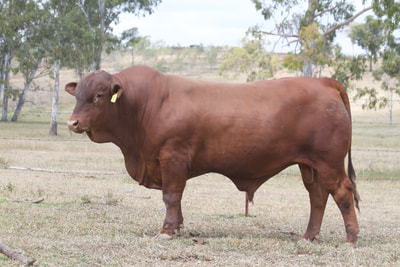
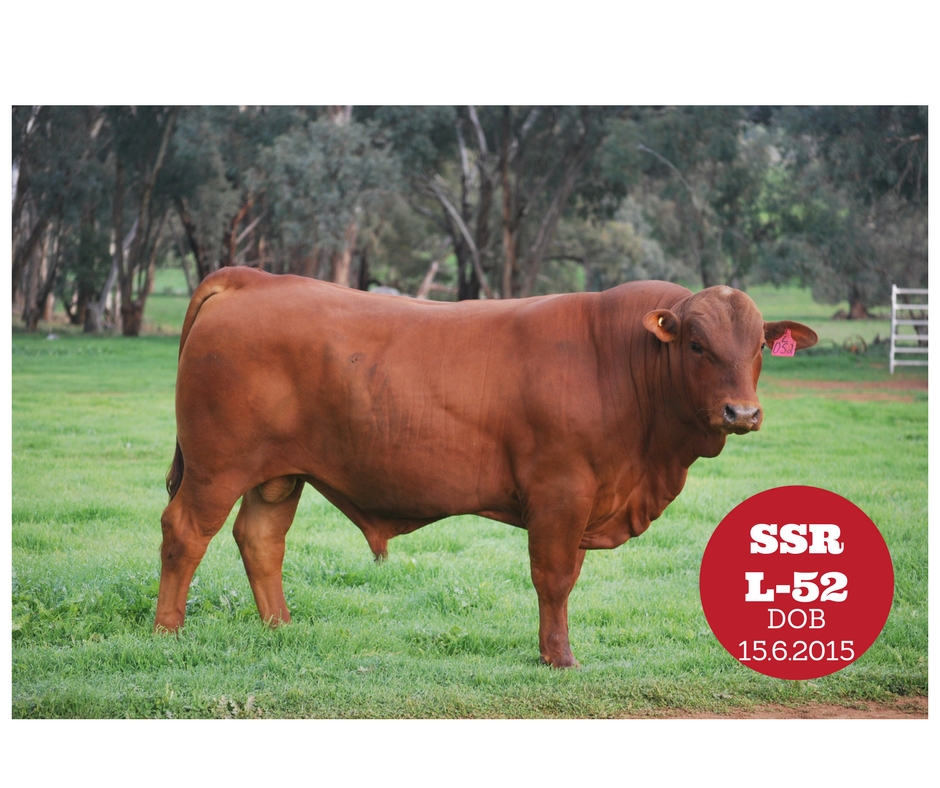
The 5 Star Senepol and African Hybrid Bull Sale was held at CQLX Gracemere in Queensland last month. The sale was a huge success for Geoff and Alison Maynard of Mt Eugene Jambin.

A total of 78 out of 80 bulls were sold on auction with the remaining two sold afterwards. The average of the sale was $6,853, with the top of the sale, Lot 25 a purebred Senepol, selling for $16,000 to the Heatley Cattle Co in Northern Queensland.

Clayton and Sarah Maynard from Southern Star Rural, Canowindra had 13 lots for auction at the sale. All lots sold with a top of $6,500. On offer at Southern Star Rural are a variety of purebred Senepol, and crossbred Senepol/Angus (Senegus) and Senepol/ Charolais (Senelais) bulls.

For more information contact Clayton Maynard on 0439 029 204 or email clayton.maynard@southernstarrural.com.au

Jemalong Wool Weekly Market Update

October 12, 2017 by Maggi Barnard

45,838 bales were put before the trade this week as Fremantle returned after a weeks recess.

On the first selling day prices were quickly discounted, with 18 to 23 microns experiencing 25-50 cent losses, with the lesser style and spec lots posting the biggest falls, while the best style and strength lots in the finer micron ranges managed to record small gains. Day two saw a reversal with price movements shifting into positive territory, with the entire merino spectrum selling at levels 10-20 cents above the previous day. The NRI managed a 16 cent rise, to finish the week at 1,636, an overall loss of 14 cents for the week.

The skirting market saw prices generally reduced by 20-30 cents, with higher VM lots most affected, as buyers favoured the FNF types. The crossbred sector also shed 15-30 cents as did the oddment market with most types and descriptions dropping 15-20 cents.

Next week’s offering reduces slightly, currently there are 42,872 bales rostered for sale.

Source AWEX.

Australia’s Hottest Winter On Record

September 7, 2017 by Maggi Barnard

winter with the average maximum temperature up nearly two degrees Celsius (C) above the long-term trend, according to ABC News.

The 2017 winter was the hottest since 1910 when national records began, according to Bureau of Meteorology figures released recently.

The average maximum daily temperature recorded across all Australian recording locations for June, July and August 2017 was 23.7 degrees C.

The warm weather was most pronounced in the north of Australia.

It was the hottest winter on record for Western Australia, Queensland and the Northern Territory (NT), while New South Wales and South Australia made the top three.

Daily minimums were also warmer than average in most of northern Australia but not as far above average as the maximums. In contrast, inland NSW and northern Victoria had notably cold nights with many areas one degrees C to two degrees C below average.

NSW had its coldest average winter nights since 1997.

Meanwhile nationally it was the ninth driest winter on record. The only large area to record rainfalls significantly above average was a pocket of central NT as a result of one rain event in mid-July.

Andrew Watkins, manager of extended and long-range forecasts at the Bureau of Meteorology, said the real reason for the warmth was the persistent high pressure seen particularly during early winter.

“But you also have to add to that the long-term warming trend,” he said.

Evaporative cooling is the same process that cools you down when you sweat, taking energy from the surrounding air to convert liquid water into gaseous water vapour, leaving the surroundings cooler.

Without a lot of water on the ground this year, large scale evaporative cooling could not happen.

The clear skies also explain the low minimum or overnight temperatures in the southern states.

Without a blanket of clouds, the heat from the day is lost to space, and temperatures drop overnight.

But that is not all, Dr Watkins said: “We’ve also seen fewer cold fronts able to penetrate inland due to the slow moving and more southerly highs acting as a barrier to their normal northward progression”.

So not only has high-pressure prevented rain in the north but it has also prevented

the cold fronts which normally bring rain in the south during winter.

According to the climate scientists at the Bureau of Meteorology, the story behind the heat in northern Australia is more about what has not been happening.

In a standard winter there would be several south-easterly surges, bringing cold air into the tropics.

This year these surges were almost completely missing — blocked by that high pressure — until very late in the season.

AGRIFUTURES AUSTRALIA HAS NEW PURPOSE HAS NEW PURPOSE

September 7, 2017 by Maggi Barnard


AgriFutures Australia is the new trading name for Rural Industries Research & Development Corporation (RIRDC).

RIRDC has made an important contribution to Australian agriculture over the past 25 years. The new identity is a culmination of hard work from past directors, employees, farmers and partners.

With new headquarters in regional NSW, the AgriFutures Australia team has come up with a ‘clear and unyielding mandate’ to grow the long-term prosperity of Australian rural industries through research and innovation.

AgriFutures Australia invests in research, leadership, innovation and learning to enhance the long-term prosperity of rural industries and communities across Australia.


Jemalong Wool Weekly Market Update

September 7, 2017 by Maggi Barnard

45,838 bales were put before the trade this week as Fremantle returned after a weeks recess.

On the first selling day prices were quickly discounted, with 18 to 23 microns experiencing 25-50 cent losses, with the lesser style and spec lots posting the biggest falls, while the best style and strength lots in the finer micron ranges managed to record small gains. Day two saw a reversal with price movements shifting into positive territory, with the entire merino spectrum selling at levels 10-20 cents above the previous day. The NRI managed a 16 cent rise, to finish the week at 1,636, an overall loss of 14 cents for the week.

The skirting market saw prices generally reduced by 20-30 cents, with higher VM lots most affected, as buyers favoured the FNF types. The crossbred sector also shed 15-30 cents as did the oddment market with most types and descriptions dropping 15-20 cents.

Next week’s offering reduces slightly, currently there are 42,872 bales rostered for sale.

Source AWEX.

LAMBING DATA NEEDED

September 7, 2017 by Maggi Barnard

The NSW Department of Primary Industries (DPI) are collecting data as part of a national lambing density project funded by AWI and MLA. The DPI are asking producers, who pregnancy scan their ewes for multiples, for their data on their farm related to lamb survival within individual mobs.

The data will help the DPI to understand the impact of lambing density on lamb survival across a range of management and environmental conditions.

Upon completion of the project, participants will be provided with a summary report including their data and any regional and national findings. If you would like to be a part of this survey or want to know more please contact Tracy Lamb via email tracy lamb@dpi.nsw.gov.au or call 0408 443 267.

STUD SALES

August 24, 2017 by Maggi Barnard

RIDGEHAVEN BREEDING EXCELLENCE

Ridgehaven Poll Dorsets is a family run stud at Cudal aiming to breed rams that sire profitable prime lambs. With a focus on combining visual traits, such as structure and muscle shape, and performance recording systems, Ridgehaven rams are consistent and balanced throughout the whole drop. This year’s sale offer an outstanding lineup of rams, showing early growth and maturity, depth of carcass and structural soundness. Inspection of the rams can be arranged prior to sale day on Thursday, 14th September.

COOTA PARK SALE

The Coota Park Blue-E 2017 annual on property production sale is on Tuesday, 5th September at 2pm in Woodstock, near Cowra. On offer are 50 bulls and 20 cows and calves. Coota Park Blue-E cattle are known for their hybrid vigour, efficient conversion of grass to meat, low methane and growth yield marbling efficiency. Blue-E’s are a line of Angus x Shorthorn cattle developed by Jon, Harvey and Barbara Wright of Coota Park. With Jon’s experience as cattle manager at the Trangie Research Centre, Coota Park built its own efficiency testing facility.


  • « Previous Page
  • 1
  • …
  • 18
  • 19
  • 20
  • 21
  • 22
  • …
  • 27
  • Next Page »

Click here to download the recent issue (176) of The Forbes & Parkes Phoenix (1.6MB PDF) – 13th February 2026

SEARCH THE PHOENIX

STAY CONNECTED

The Forbes Phoenix would like to thank you, our Facebook friends, for your continued support and readership!

Recent Articles

  • A $7.6 Million Boost For Forbes Future Water Security February 12, 2026
  • Mayoral Notes February 12, 2026
  • Snippets… February 12, 2026
  • Indigenous Storytellers Scholarship Returns February 12, 2026
  • Meet Indigenous Chef Mindy Woods At Forbes Crop Swap February 12, 2026

Phoenix Office 7/113-127 Rankin Street, Forbes NSW 2871

Editor 0432 337 278
editor@forbesphoenix.com.au

Sales 0432 337 278
sales@forbesphoenix.com.au

View our Privacy Policy. View our Conflict Resolution Process. View our Ethics and Complaints Policy. Want to advertise with us? Information on our Community Promotions.

We are always looking for new articles of interest to the local community.

Please feel free to submit an article for possible inclusion in a future issue.

To submit an article, click here to use our online article submission form.

Subscribe

* indicates required

Copyright © 2026 · Magazine Pro Theme On Genesis Framework · WordPress · Log in