• Home
  • Articles
    • Front Page
    • General Interest
    • Snippets
    • Letters to the Editor
    • Council Comments
  • Special Interests
  • Our Community
    • Our People
    • Question of the Week
    • Jobs in the Central West
    • Be Seen
    • What’s On
    • What’s Hot
  • Features
    • Women in Business
    • Rural Round Up
    • My Place
    • Loving Local Living
    • Wellness Wise
    • Just a Short Drive
    • Real Estate
  • Sports
    • Bowls
    • Cricket
    • Equestrian
    • Footy Tips
    • Golf
    • Netball
    • Rugby League
    • Rugby Union
    • Soccer
    • Touch Football
  • Classifieds
  • Competitions
  • Contact Us
    • Contact Page
    • Advertise with us
    • Testimonials
    • Submit an Article
    • Subscribe to the Forbes Phoenix

Forbes Phoenix

Baker’s Cyst

March 15, 2018 by Maggi Barnard

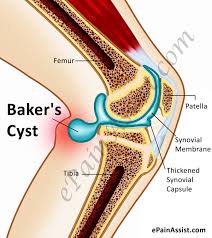
A Baker’s cyst, also known as a Popliteal cyst, is a swelling at the back of the knee joint. Baker’s cysts are fairly common and are associated with chronic swelling within the knee joint. They occur, most frequently, secondary to degenerative disease within the knee joint such as osteoarthritis or meniscal degeneration. The main sign that a Baker’s cyst is present will be a bulge and a feeling of tightness behind the knee.

This may be tender to touch with pain and stiffness often worsening as the knee is straightened after activity or when squatting or kneeling.

Just as a door hinge requires oil to reduce friction and allow smooth movement, similarly, the cartilage and tendons in the knee joint rely on a lubricating fluid called synovial fluid. Synovial fluid circulates around the knee joint and in and out of various fluid sacs called bursae that communicate with the knee joint. Sometimes when a structure within the knee joint is damaged or inflamed too much fluid is produced. If this fluid gets trapped in the popliteal bursae it is called a Baker’s cyst.

If a Baker’s cyst is suspected, the whole knee joint should be assessed thoroughly as treatment involves treatment of the underlying cause. Once the cause has been addressed the swelling generally settles down. Sometimes the bursae might be drained or surgically removed but if the underlying cause of the swelling is not corrected the swelling will just return.

Strengthening exercises for the lower limb can help to improve joint biomechanics and to decrease the load on the knee.

For the fitness of you.

Linda Reilly

Is Your ITB Tight?

February 15, 2018 by Maggi Barnard

Do you sometimes feel a pain in your hip or the outside of your knee after sitting for a while? Maybe when you stand up or when you run? It could be that you have a tight Iliotibial Band (ITB).

The ITB is a thick band of fascia that runs down the outside thigh. It starts at the top of your pelvis, runs over the hip and attaches to the outside of the knee. It also attaches to some of the buttock and hip muscles allowing it to co-ordinate how these muscles work to stabilise the hip and knee. Fluid sacs, called bursae, located at the hip and knee, provide cushioning between the ITB and the bones beneath. If the ITB is tight it can irritate the bursae causing inflammation and pain.

An inflamed bursa at the hip is called a Greater Trochanteric Bursitis and at the knee it is known as ITB Friction syndrome or Runners Knee.

The ITB shortens when sitting for prolonged periods. It can also tighten if the muscle is overworked. This occurs with sudden increases in exercise load or volume or if pelvic control is poor due to weak hip and glute muscles.

Because the ITB is a thick, fibrous band rather than an elastic muscle it requires a longer lighter stretch than most muscles.

The use of a foam roller can also be quite helpful in increasing the flexibility in the ITB. A YouTube search of “foam roller + ITB” will yield videos of how this can be done. For the fitness of you,

Linda R

Improve Your Brain Power

February 15, 2018 by Maggi Barnard

The figures are staggering and there’s little awareness that more than 413,000 people in Australia live with dementia. By 2050 that figure will rise to almost one million.

“Dementia can’t directly be prevented or cured but reducing risk is important,” Alzheimer’s Australia chief executive officer

Maree McCabe says. “Many people are not aware of what they can do to reduce the risk of getting dementia.”

Look after your heart: Look after your heart health by regularly checking your blood pressure, cholesterol and blood sugar levels.

Challenge your brain: Exercising your brain is also important. Find something that involves learning new skills – and keep on learning. Try a new sport, learn a new language, start a course, study for a new qualification at work or take up a new hobby.

Be active: “Being physically active increases blood flow to the brain and this stimulates growth of the brain cells and the connections between them,” Maree says.

Enjoy social activity: Social activity has benefits in a range of areas, including cognitive function. Make time to catch up with family and friends, join a social club or interest group, or volunteer in your community.

Follow a healthy diet: “We need a balanced diet to maintain brain health and function, and some foods may be more directly linked to dementia and reducing your risk,” Maree says.

For more information, call the National Dementia Helpline on 1800 100 500 or visit yourbrainmatters.org.au

By Sarah Marinos

Why Weight?

February 15, 2018 by Maggi Barnard

Maintaining a healthy weight is vitally important to staying healthy as you grow older.

Being overweight can increase the risk of many health problems, including diabetes, heart disease and strokes, high blood pressure, sleep apnoea, kidney disease and osteoarthritis.

Gaining a few kilos during the year may not seem like a big deal. But these kilos can add up over time.

If you are considered to be overweight, losing as little as 5 percent of your body weight may lower your risk for several diseases, including heart disease and type 2 diabetes.

Eating a balanced, nutritious diet and being physically active is the best way to stay healthy and help reduce your risk of disease. To maintain a stable weight, your energy (kilojoule) intake needs to equal the energy you use. If you use more energy than you consume, you will lose weight. On the other hand, if you eat more than you use, you will gain weight.

For some, the answer to losing excess body fat is to make small healthy changes to your eating and exercise habits.  These changes should be things that you can maintain as part of your lifestyle – that way you will lose weight and keep it off.

However, some people may need help to lose those extra kilos and the team at Flannery’s Pharmacy can help you with information, advice and a range of meal replacement and weight loss products specifically formulated to help you lose weight.

If you would like help to lose weight, call in to Flannery’s Pharmacy for information and advice and let us help you on your weight loss journey.

Quit Smoking Now

January 24, 2018 by Maggi Barnard


Want to quit smoking? Have you tried before with little or no success?

If this sounds familiar you might like to take advantage of the offer of free nicotine replacement therapy and extra support to help you quit.

Tobacco Treatment Specialist, Maria Willis, from the Forbes Health Service will be instore at Flannery’s and Life Pharmacies during February and March to help people to quit smoking. Maria is a Nurse Practitioner who assists community members who have diabetes, respiratory and heart conditions.

Community members can make an appointment to see Maria at either pharmacy.

During the appointment smoking habits will be assessed and free nicotine replacement therapy will be offered. Maria will also be able to assess the patients concerns and provide helpful information and advice on how to quit smoking.

“It is also important to remember your GP, pharmacists and QuitLine can provide support to quit,” said Maria.

“Smoking is more addictive than heroin and cocaine so understandably it is not easy to quit,” said Maria. “However, quitting smoking is one of the most important things you can do for your health and it is never too late to quit, increase your life expectancy and improve your quality of life.”

“There is no safe level of smoking. Even the occasional cigarette is doing you harm.”

To book an appointment to begin your journey to quit smoking, call Flannery’s Pharmacy on 6852 1111 or Life Pharmacy on 6852 2001.

Don’t miss this great opportunity to get all the help you need to quit for life!


Eyewear Specs Welcomes New Employees

January 24, 2018 by Maggi Barnard

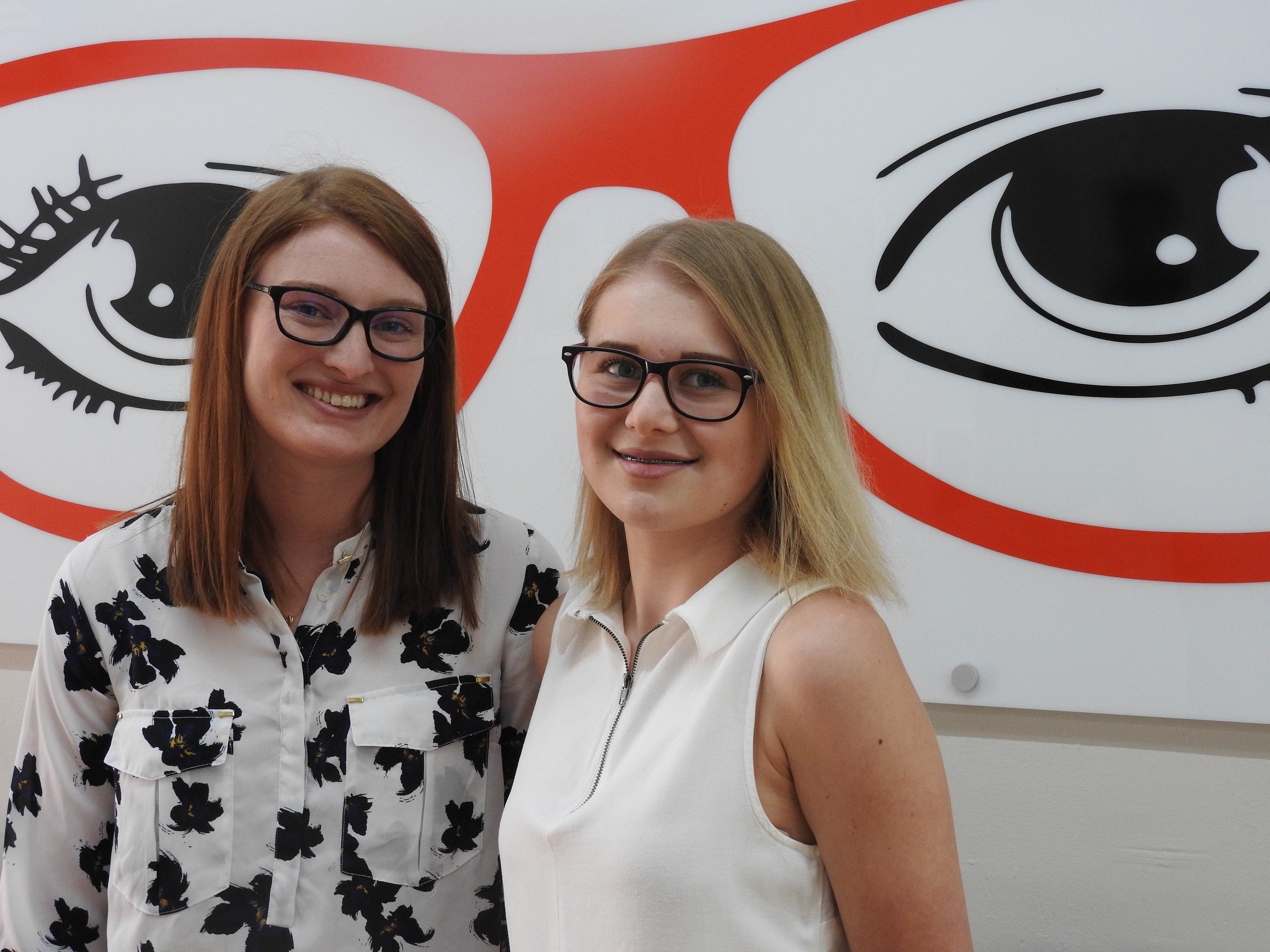
Eyewear Specs has welcomed two new staff members to their team. Lauren Hutcherson has been appointed as the new optometrist and Brodie Dukes will be undergoing her traineeship at the business.

“I am delighted that Eyewear Specs has grown enough to expand the business,” said Fiona Hayward, Owner and Manager of Eyewear Specs. “I am so happy to be working with Brodie and Lauren and look forward to the future of Eyewear Specs.”

Eyewear Specs opened its doors at 95 Rankin Street in Forbes in February 2016 and has been growing from strength to strength. The business has been so successful that they have had to expand by

employing more staff.

“I grew up in Molong and went to Queensland for six years to study. After graduating last year, I decided to come back to the country to work,” said newly appointed optometrist Lauren.

“I was born and bred in Forbes and have just recently finished school,” said Brodie. “Fiona offered me this amazing opportunity for a traineeship here. I’ve really enjoyed it so far!” Brodie’s studies will commence once schools reopen.

To have your eyes tested or to find a pair of glasses to suit your individual financial budget visit Eyewear Specs today!

You Have To Move It, Move It

December 14, 2017 by Maggi Barnard

There is an old saying amongst physios that says: ‘The best exercise is the one that gets done.’

A recent study published in the September issue of the New England Journal of Medicine has put this theory to the test. The authors studied the effect early versus delayed exercise, after an acute muscle strain, has on recovery time for recreational athletes.

Most people by now are aware that early mobilisation/walking within pain limits, after an ankle sprain reduces disability and recovery time. But is this also true for muscle tears?

This study took 50 recreational athletes with an acute injury of the thigh or calf muscles. Participants were divided into two groups. Each group performed the same four-stage exercise programme over a 12-week period. One group started this programme two days after injury and the second group started nine days post injury.

The exercise programme consisted initially of stretches then progressive isometric and dynamic loading followed by functional exercises combined with heavy strength training.

The primary outcome measure was return to full asymptomatic participation in sport after successful completion of a functional screening test.

The interval between severe muscle injury and return to sport was shorter in the early exercise group than in the delayed exercise group. The authors concluded that starting rehabilitation two days after injury rather than waiting for nine days shortened the time from injury to pain-free return to sport by three weeks without any significant increase in the risk of re-injury.

The take home message: Get to your sports physio early after a muscle injury in order to minimise recovery time. For the fitness of you,

Linda Reily

Walking To A Healthier Heart

December 14, 2017 by Maggi Barnard

Nine in 10 Australians could reduce their risk of heart disease simply by walking as little as 15 minutes more each day, the Heart Foundation said following a new report from the Australian Institute of Health and Welfare (AIHW).

The report looks at the health impact – or ‘burden’ – of a lack of physical activity in terms of years of healthy life lost through living with an illness or injury, or through dying prematurely.

Being inactive has a strong link with heart disease. One-third of the total burden due to physical inactivity in Australia was caused by heart disease.

This figure demonstrates the significance of being active and having a healthy heart.

It is estimated that if the 89 per cent of Australians who fall in the ‘at risk’ (sedentary, low and moderate activity) category did an extra 15 minutes of moderate activity such as brisk walking five days per week, 13 per cent of the potential disease burden due to physical inactivity could be avoided. And by adding 30 minutes of walking or other moderate activity, five days per week, 26 per cent of future disease burden could be avoided, the report stated.

In May, the Federal Government announced that $10 million in funding over two years would be allocated to the Heart Foundation for an initiative to support up to 300,000 Australians to adopt the easy way to better health – regular walking – by 2019.

Swimmer’s Shoulder Part 2

November 30, 2017 by Maggi Barnard

Shoulder impingement during swimming is largely due to dynamic muscle imbalance and biomechanical faults.

Dynamic muscle imbalances can be addressed by strengthening exercises for the rotator cuff and scapular stabilisers together with stretches for the muscles at the back of the shoulder. One good exercise is to stand facing a wall with your arm raised to shoulder height and elbow straight. Hold a tennis ball to the wall by leaning through your shoulder and pinch your shoulder blades together. Roll the ball in small circles for 15 seconds first clockwise then counter clockwise until you become fatigued or for two minutes.

Biomechanical faults can be addressed by correcting your swim technique. Achieving good symmetrical body rotation through an efficient bilateral breathing pattern helps to avoid shoulder impingement during the catch and pull through phase of the freestyle stroke.

Instead of entering thumb first change your technique to enter with a flat hand or fingertip first. This is made easier by avoiding reaching across your midline. A thumb first entry works the shoulder internal rotators excessively and when multiplied by approximately 3,200 strokes per hour contributes heavily to the muscle imbalance of strong internal rotators and weak external rotators causing shoulder impingement.

Most swimmers pull through with a straight arm or dropped elbow. This loads the shoulder muscles excessively rather than utilising the larger and stronger muscles of the chest and upper back.

Making these simple changes can help you achieve many hours of pain free swimming.

For the fitness of you.

Linda Reilly

Want To Eat More Veggies?

November 16, 2017 by Maggi Barnard

Scientists have come up with an innovative approach to tackling Australia’s poor vegetable intake, with the launch of a new app that challenges people to eat more veggies.

Using a gamified approach, CSIRO’s new VegEze app aims to motivate Australians to add extra vegetables to their daily diets and form long-term, healthier habits through a 21-day ‘Do 3 at Dinner’ challenge.

CSIRO nutritionists will also study how effective the app’s game-like nature is at helping transform people’s eating patterns, as part of a broader research study.

“We need a fresh approach to improve Australia’s vegetable consumption and overall diet quality,” CSIRO Senior Principal Research Scientist Professor Manny Noakes said.

“Our research found two out of three Australian adults are not eating enough vegetables, especially as part of their evening meal. It’s time to find more engaging, effective

approaches to help break these entrenched diet habits.”

Challenging users to eat three different vegetables at dinner every day for 21 days, the VegEze app helps people track their intake and tally up vegetable serves, with daily reminders and rewards to help people stay motivated and on-track.

“Committing to eating more vegetables every day is one of the most important ways we can improve our health today. Boosting your intake can be as easy as having three types of vegetables taking up half of your dinner plate,” said Manny.

“After just a few weeks using the app every day, users should feel more confident in adding more vegetables to their menu and notice some positive changes to their health and wellbeing.

“The beneficial nutrients and fibre from vegetables can help improve digestion, and fill you up – which can help reduce eating too much unhealthy junk food.”

Since May 2015, CSIRO has studied the dietary habits of more than 191,000 adults for its Healthy Diet Score research.

Eating three types of vegetables as part of the evening meal was found to be a key marker in having a better diet, but further research of 1,068 adults showed some Australians were being held back from eating more vegetables by low awareness, lack of time and low confidence.

To help people overcome these barriers, the VegEze app features educational resources such as a visual guide to specific vegetable serve sizes, vegetable recipes, nutritional information and motivational rewards.

Information from app users will feed back into CSIRO’s study of Australians’ vegetable consumption, while helping to analyse the app’s effectiveness as an education initiative to improve Australia’s poor vegetable score card.

The technology was developed in Australia in collaboration with digital health solution provider SP Health.

To try the 21-day Do 3 at Dinner challenge and participate in the research study, download the free VegEze app via the Apple App Store: https://itunes.apple.com/au/app/vegeze/id1268951104

  • « Previous Page
  • 1
  • …
  • 26
  • 27
  • 28
  • 29
  • 30
  • 31
  • Next Page »

Click here to download the recent issue (176) of The Forbes & Parkes Phoenix (1.6MB PDF) – 13th February 2026

SEARCH THE PHOENIX

STAY CONNECTED

The Forbes Phoenix would like to thank you, our Facebook friends, for your continued support and readership!

Recent Articles

  • A $7.6 Million Boost For Forbes Future Water Security February 12, 2026
  • Mayoral Notes February 12, 2026
  • Snippets… February 12, 2026
  • Indigenous Storytellers Scholarship Returns February 12, 2026
  • Meet Indigenous Chef Mindy Woods At Forbes Crop Swap February 12, 2026

Phoenix Office 7/113-127 Rankin Street, Forbes NSW 2871

Editor 0432 337 278
editor@forbesphoenix.com.au

Sales 0432 337 278
sales@forbesphoenix.com.au

View our Privacy Policy. View our Conflict Resolution Process. View our Ethics and Complaints Policy. Want to advertise with us? Information on our Community Promotions.

We are always looking for new articles of interest to the local community.

Please feel free to submit an article for possible inclusion in a future issue.

To submit an article, click here to use our online article submission form.

Subscribe

* indicates required

Copyright © 2026 · Magazine Pro Theme On Genesis Framework · WordPress · Log in