• Home
  • Articles
    • Front Page
    • General Interest
    • Snippets
    • Letters to the Editor
    • Council Comments
  • Special Interests
  • Our Community
    • Our People
    • Question of the Week
    • Jobs in the Central West
    • Be Seen
    • What’s On
    • What’s Hot
  • Features
    • Women in Business
    • Rural Round Up
    • My Place
    • Loving Local Living
    • Wellness Wise
    • Just a Short Drive
    • Real Estate
  • Sports
    • Bowls
    • Cricket
    • Equestrian
    • Footy Tips
    • Golf
    • Netball
    • Rugby League
    • Rugby Union
    • Soccer
    • Touch Football
  • Classifieds
  • Competitions
  • Contact Us
    • Contact Page
    • Advertise with us
    • Testimonials
    • Submit an Article
    • Subscribe to the Forbes Phoenix

Forbes Phoenix

Farmers Reminded To Check Wage Changes

July 4, 2024 by Roxane Manley

NSW Farmers is reminding employers that minimum award pay and superannuation rates changed from Monday, July 1.

Employers with award-reliant employees were encouraged to review their staff pay rates to ensure they met the applicable minimum rates and conditions and had the relevant documentation in place for pay arrangements that deviate from the award terms.

As part of its Workplace Relations service to members, NSW Farmers publishes Rural Wage Guides for agriculture-related awards every year, so farmers can stay up-to-date on pay rates and impending changes in employment matters.

“Running a farm is no different to running any other business, it’s important to stay up to date with these changes,” NSW Farmers Workplace Relations spokesman Chris Stillard said.

“No matter what industry you’re in, whether you’ve got one worker or 50, make sure you’re prepared.”

The 2024 NSW Farmers Rural Wage Guides are now available for members, outlining the superannuation increase to 11.5 per cent and increases to minimum wage standards, among other guidance.

For more information about the annual wage review, visit Fair Work website. To find out more about the NSW Farmers Workplace Relations service, visit nswfarmers.org.au
2024 Parkes Yard Dog Trials

June 20, 2024 by Roxane Manley

All results for the weekend are available on the NSW Yard Dog Association website.

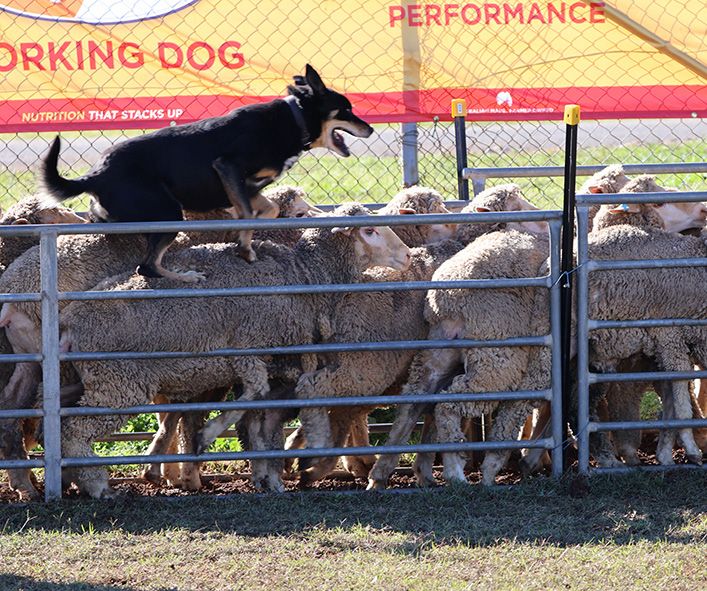
The fourth annual yard dog trials were a successful weekend, with entries up on last year. Competitors travelled from across New South Wales, Queensland and Victoria. The open section attracted handlers and dogs that have won many Australian champion­ships between them. The weekend catered for a variety of classes including Novice, Maiden, Encouragement, Junior, Local and Open. The results for the Local section were First Danail Day with South Stormy, second Bernard Dwyer and Annie, third place Don­na Lindley and Bonnie.

NFF Demands Equitable Childcare For Bush Families

May 31, 2024 by Roxane Manley

Along with more than 50 other organisations, the National Farmers Federation (NFF) is calling for the Federal Government to create bespoke options so families can overcome one of the biggest barriers to workforce participation.

NFF Chief Executive Tony Mahar said of endorsing an Early Childhood Education and Care policy earlier this month. “Childcare services in the regions are waning and, in some cases, they are non-existent, at a time when demand is growing and the agricultural sector is crying out for workers.” While better access to care could boost farm productivity and improve developmental, social and academic outcomes for regional children, Mr Mahar said it was essential to overcome this hurdle for women, who commonly bear the care burden.

“We’re proud to have a growing number of women employed in agriculture and women in leadership roles, but we need to support this trajectory through the child rearing years. Often when the patter of tiny feet arrives, leadership journeys are put on ice simply by a lack of care options.” To view the NFF’s Early Childhood Education and Care policy go to https://nff.org.au/

Five Tips For Growing High-Vigour Canola Seed

April 25, 2024 by Roxane Manley

The Five tips for growing high-vigour canola seed is available on the NSW DPI website at https://www.dpi.nsw.gov.au/agriculture/broadacre-crops/winter-crops/canola-and-safflower/five-tips-for-growing-high-vigour-canola-seed

The NSW Department of Primary Industries (NSW DPI) has released a new publication called Five tips for growing high-vigour canola seed to support producers using grower-retained seed for their canola establishment.

The publication outlines the key steps identified in a joint investment project between NSW DPI and Grains Research and Development Corporation (GRDC) to improve seed vigour.

Colin McMaster, NSW DPI Research and Development Agronomist said how growers manage this year’s seed-crop could well determine the success of next year’s establishment and financial return.

“The margin of error in establishing canola is much smaller than it used to be, as we are now sowing less seeds, it is costing growers more money, and we are placing those seeds in more hostile seed-beds due to earlier sowing.

“Canola seed has less energy reserves than larger-seeded crops and, as a result, is more sensitive to poor establishment across a range of seasonal conditions and agronomic management practices.

“Research and field surveys have identified that growers often only establish half of what is sown, and if the autumn break was less favourable its likely to be much less,” said Mr McMaster.

To reduce financial risk, some growers in the low to medium rainfall zone use open-pollinated (OP) canola varieties because the seed is cheap to buy, and it will grow true to the parent crop.

These traits allow growers to confidently retain seed which can increase flexibility and reduce financial risk within the farming system, for example, if sowing conditions are marginal then seeding rates can be increased, or in the event of a failed establishment growers can spray out for an alternative option.

The guide also covers other agronomic factors to improve canola establishment including reduced sowing speed, adequate fertiliser separation from the seed, reducing stubble loads and shallow/uniform seed placement.

Don’t Disconnect The Bush

March 21, 2024 by Roxane Manley

Farmers have called for the Federal Government to take urgent action to ensure phone companies don’t leave thousands of farmers without mobile coverage as the 3G shutdown looms.

Large parts of NSW have limited or no mobile phone reception, and many regions rely on 3G networks to communicate, especially during emergency situations.

NSW Farmers Rural Affairs Committee Chair Deb Charlton said shutdown of Telstra’s 3G service on 30 June – as well as Optus’ 3G closure in September – would spell disaster for many farmers who often work alone and a long way from help.

“As providers push ahead with this 3G network shutdown, there’s no doubt there will be farmers who run into trouble or have an accident, and will be unable to call for help,” Mrs Charlton said.

“Even with the 3G network in place, there are hundreds of horror stories of accidents occurring on farms or on isolated country roads, where people have not had the mobile coverage they need to contact emergency services for lifesaving help.

“We have absolutely no confidence that 4G coverage will be available when the 3G network is switched off, and we will only see more of these tragic situations as a result.”

“The farmers who grow the nation’s food and fibre should not be forced into using expensive satellite phones or have to resort back to pre-war radio connections as their only link to the outside world.

“Connectivity is a critical tool, and in many cases, it’s been the difference between life and death when an accident has occurred in these rural communities.”

New SPAA Manual Brings Grower Insight To Precision Ag

February 29, 2024 by Roxane Manley

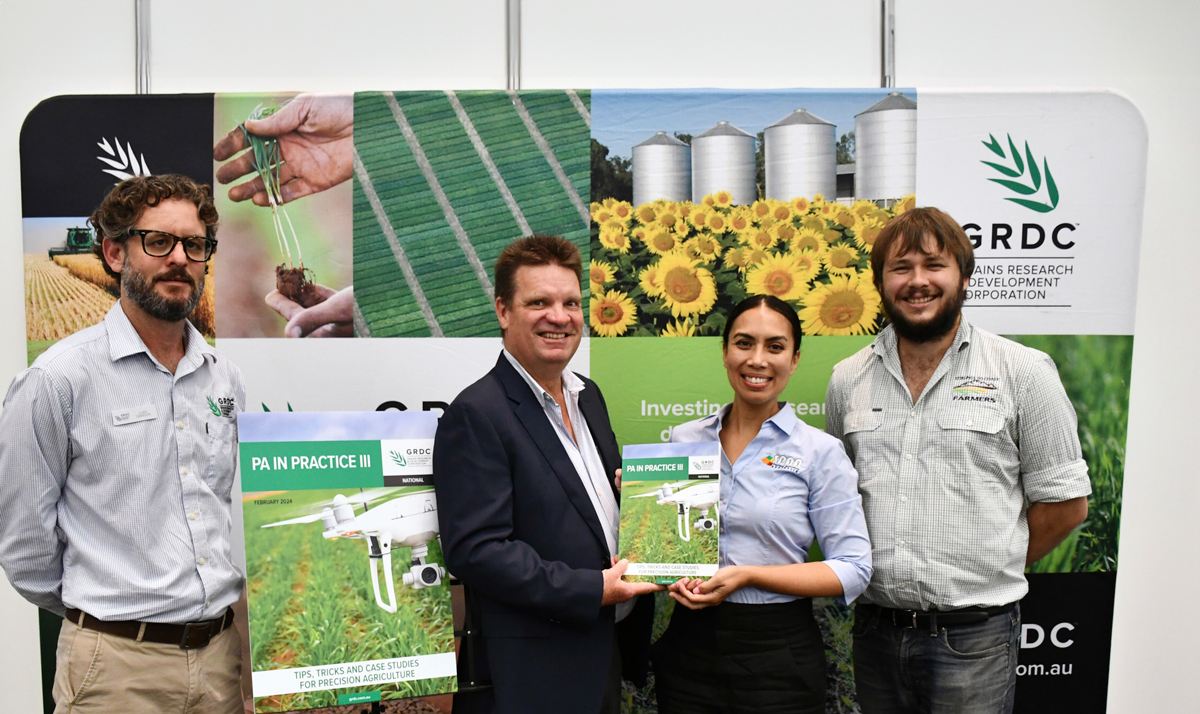
The publication was launched by Grains Research and Development Corporation (GRDC) Western Panel chair Darrin Lee at the Grains Research Update. (left to right) GRDC Grower Relations Manager West Luke Dawson, GRDC Western Panel Chair Darrin Lee, SPAA Executive Officer Angelique McAvoy and SPAA President Phil Honey at the launch of the PA in Practice III manual.

Australian grain growers will benefit from new insights into precision agriculture (PA) for the grains industry with the release of the PA in Practice III manual.

Produced by the Society of Precision Agriculture Australia (SPAA) with GRDC investment, the manual is part of the project precision fertiliser decisions in a tight economic climate.

Mr Lee said Australian growers were eager to implement PA into their farming practices, and for many the goal was limiting per hectare fertiliser usage while maintaining crop yields.

“Through our National Grower Network (NGN) and grower feedback mechanisms, GRDC has identified grower demand for education and extension to optimise the outcomes of PA adoption,” Mr Lee said.

“Growers want to know the questions they should be asking suppliers, agronomists, and consultants. They want to be aware of potential challenges and have the chance to listen to other growers’ success stories and advice.”

Mr Lee said a 2021 grower survey by SPAA and GRDC indicated that more than 50% of respondents wanted to use precision agriculture to make planting and fertilising decisions based on more data.

“Through the updated PA in Practice manual, growers have access to over 100 pages of content detailing PA throughout the season: pre-sowing, sowing, in-crop and at harvest.”

SPAA Executive Offer Angelique McAvoy said the manual catered to all grain producers, agronomists or advisers regardless of their knowledge of PA.

“PA in Practice will remain a vital SPAA educational resource that will be integrated into webinars and other learning platforms. It will play a key role in bridging knowledge gaps and addressing barriers to the adoption of PA,” Ms McAvoy said.

The manual’s release complements a national series of seven SPAA variable rate technology workshops supported by GRDC investment and delivered in 2023, which provided training to support growers’ fertiliser decision making.

Funding For Dry Times

February 15, 2024 by Roxane Manley

The Foundation for Rural & Regional Renewal or FRRR is encouraging community organisations in agriculture-dependent parts of Australia to apply for the latest round of Small Network Grants for initiatives that build community preparedness and resilience to future drought. $20,000 and $50,000 grants to strengthen networks and capabilities.

The Small Network Grants program is supported by the Australian Government’s Future Drought Fund through the Helping Regional Communities Prepare for Drought Initiative.

Grants are available through two Streams of funding for simple, one-off, or seed-type initiatives designed to strengthen local networks and capabilities of remote, rural or regional communities.

Nina O’Brien, FRRR’s Disaster Resilience and Recovery Lead, said preparing for the inevitable dry times ahead is critical for Australia.

“Our Small Network Grants program empowers local organisations to strengthen the social fabric of their town or locality by identifying and acting on their region’s drought preparedness priorities, at a grassroots level, in ways that best suit their communities.

“We look forward to seeing projects that will help community groups be better connected, informed, and resourced in the next drought,” Ms O’Brien said.

The Small Network Grants program can fund projects that fit into one of these five categories: Networks, Community Events, Training, Community Infrastructure, Development and Learning. Applications are open now, closing 26 March https://www.youtube.com/watch?v=CdeVdcjSwro

Labor Too Slow To Act On Supermarkets: Report

February 8, 2024 by Roxane Manley

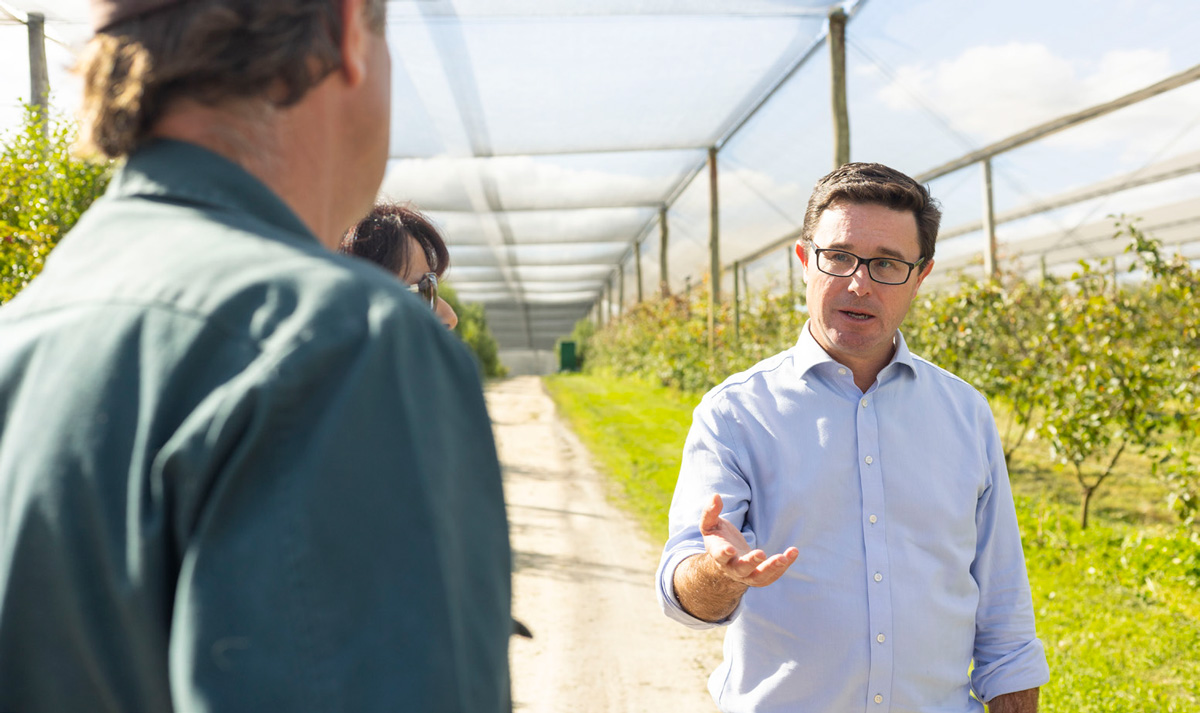
Leader of The Nationals David Littleproud pictured engaging with growers.

An inquiry into Price Gouging and Unfair Pricing Practices reinforces that the Federal Labor Government was too slow to act on supermarkets.

Leader of The Nationals David Littleproud said Professor Allan Fels’ recommendations, indicating supermarkets are taking advantage of shoppers, come after The Nationals called for the Australian Competition and Consumer Commission (ACCC) to be directed to investigate the clear evidence of meat and fresh produce price disparity between the farmgate and the checkout prices since November 2023.

The Nationals also offered the government support to introduce big stick legislation as early as December 2022.

The inquiry recommends Labor uses its powers to require the ACCC to conduct more price and market investigations, require the ACCC to undertake market studies and that the ACCC should have the power of its own to initiate price and market studies. Mr Littleproud said it was obvious for some time that an ACCC inquiry has been needed.

“The latest report into supermarket price gouging confirms what we already know government policy, or Labor, is not paying sufficient attention to high prices and it needs to,” Mr Littleproud said.

“Labor could have started the ACCC investigation before Christmas but didn’t understand the scale nor severity of their cost-of-living crisis.

“While Labor spent last year distracted on a $450 million failed Voice Referendum, price disparity between the farmgate and the supermarket checkout was allowed to escalate out of control.

“The Nationals wanted this investigation urgently before Christmas but Labor was simply too slow to take action and in fact said that the Grocery Code of Conduct Review was their solution, which took 100 days to appoint someone since its announcement. It’s unfortunate it took Labor so long to realise that these powers exist, after previously promising Australians that two other inquiries they announced would yield results.”

Rally On Renewables Rollout

February 8, 2024 by Roxane Manley

Leader of The Nationals David Littleproud is pictured with protestors.

Farmers from around Australia gathered outside Parliament House alongside small businesses and residents of impacted communities, to warn about the inevitable rising food and energy prices under Labor’s race towards renewables.

The National Rally Against Reckless Renewables is calling for the suspension of Labor’s plans to rip up agricultural land, which will destroy farming communities and reduce the supply of food.

Leader of The Nationals David Littleproud said regional Australia was being forced to bear the brunt of inner-city ideology “Labor is pursuing a reckless 82 per cent renewables target by 2030, which is driving up costs and threatening agricultural land, regional communities and native flora and fauna,” Mr Littleproud said.

“How much agricultural land is earmarked, where is it earmarked and when will the projects be forced onto local communities? We also need to know how much these projects will cost taxpayers and what are the protection rights of property owners?

“We have time to pause, to plan and to use common sense.

For Labor to meet its targets, 40 7-megawatt wind turbines will need to be installed every month until 2030, while 22,000 five hundred-watt panels need to be installed every day, or 60 million by 2030

Regional Drought Plan

February 1, 2024 by Roxane Manley

Forbes Shire Council is joining forces with Lachlan and Parkes to develop a drought resilience plan for the future. The plan acknowledges that drought events are part of the future of any area reliant on the agricultural sector.

With funding from the Australian and NSW Government under the Future Drought Fund, the project will allow Council to use the learnings from previous droughts and implement an evidence based strategy to assist the community to adapt to or mitigate future drought impacts.

“Working together with neighbouring shires makes a lot of sense for this far-reaching issue” explained Mayor Phyllis Miller OAM.

“The impacts of flood are close to mind now, but we need to be ready for inevitable drought conditions that may just be around the corner. We will again work very closely with our community to make sure that this plan is practical and relevant and grows our already strong resilience.”

The Regional Drought Resilience Planning Program is managed by the Department of Regional NSW and was started as a pilot with three groups of local governments.

Rounds one and two are supporting 59 local Councils and regional areas to prepare 22 regional drought plans. The NSW Model for regional drought resilience planning program involves neighbouring councils working together to develop regional drought resilience plans. These plans will be provided to the CSIRO for independent review and completed plans from across the country will be published on the Australian Government’s Department of Agriculture, Fisheries and Forestry website.

“Planning such as this is critical for Council to be able to access funding support for the implementation of these plans”, added Mayor Miller.

“We look forward to working with Parkes and Lachlan on a regional plan that will really make a difference”.

  • « Previous Page
  • 1
  • …
  • 4
  • 5
  • 6
  • 7
  • 8
  • …
  • 28
  • Next Page »

Click here to download the recent issue (186) of The Forbes & Parkes Phoenix (2.1MB PDF) – 24th April 2026

SEARCH THE PHOENIX

STAY CONNECTED

The Forbes Phoenix would like to thank you, our Facebook friends, for your continued support and readership!

Recent Articles

  • Snippets… April 23, 2026
  • Mayoral Notes April 23, 2026
  • Four Days Of Double Demerits This Anzac Day Long Weekend April 23, 2026
  • Forbes Marks Anzac Day With Services And Special Town Hall Tribute April 23, 2026
  • Celebrating Our Stories, Places And People April 23, 2026

Phoenix Office 7/113-127 Rankin Street, Forbes NSW 2871

Editor 0432 337 278
editor@forbesphoenix.com.au

Sales 0432 337 278
sales@forbesphoenix.com.au

View our Privacy Policy. View our Conflict Resolution Process. View our Ethics and Complaints Policy. Want to advertise with us? Information on our Community Promotions.

We are always looking for new articles of interest to the local community.

Please feel free to submit an article for possible inclusion in a future issue.

To submit an article, click here to use our online article submission form.

Subscribe

* indicates required

Copyright © 2026 · Magazine Pro Theme On Genesis Framework · WordPress · Log in