
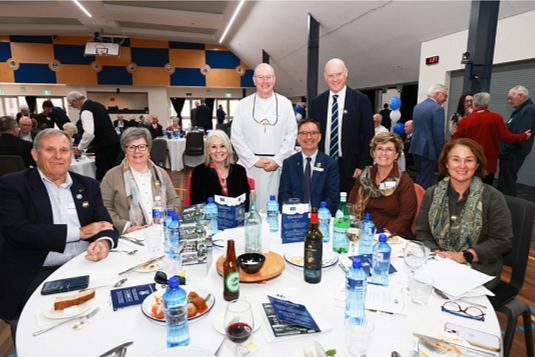

Past, present, and future students, staff, and community members joined together for a special Centenary Mass to mark 100 years of Marist education in Forbes.
Chapter 1. 1926 Foundational years: A Story of Faith, Vision and Enduring Marist Spirit
The foundations of Marist education in Forbes were laid in 1921 when Bishop Hayden instructed St Laurence’s Parish Administrator, Father Sexton, to purchase a house in Johnson Street, opposite the parish church, to become the residence from which a Brothers’ school might grow.
Early in 1925, Father Thomas Fox, then Parish Administrator, began construction of a boys’ school on the block adjacent to the Brothers’ house. Classes began on Monday 5 July 1926 with fifty-nine day scholars.
Chapter 2. 1930 Boarding begins
From the beginning, it became apparent that a day school alone could not adequately serve the needs of the diocese. In 1929–1930, Father Thomas Fox oversaw a major expansion of the Brothers’ residence, adding a second storey and spacious verandahs. These improvements allowed the school to welcome its first boarders in 1930.
With this development, the Marist Brothers’ School became Marist Brothers’ College.
Chapter 3. 1930s–’40s Growing with Faith and Vision:The Johnson Street Years
While the school had begun chiefly as a primary school, the introduction of boarding in 1930 accelerated the development of secondary education. In 1932, Bishop Fox purchased the “Riverside” property comprising 83 acres along the Lachlan River. The purchase of Riverside, later to become Red Bend, was a remarkable act of faith and vision. In 1939, the College enrolled 166 students, including 46 boarders.
Chapter 4. 1950s—New horizons: The Red Bend site
A defining moment came on Sunday 19 October 1952, when the foundation stone was laid at Red Bend. By 1955, the imposing new College stood proudly upon its rise overlooking the Lachlan River. When classes commenced at Red Bend in February 1956, the College welcomed 206 boarders and 120 day students.
Chapter 5. 1950s–’60s Golden Decades of Growth, Achievement and Marist
Spirit The two decades following the move to Red Bend in 1956 are often remembered as a golden era in the history of the College.
Looking back, the years from the late 1950s to 1975 represent a period of extraordinary growth and achievement. The College expanded its facilities, strengthened its academic programs, excelled in sport, enriched cultural life and deepened its commitment to the formation of young people. Above all, it remained faithful to the vision of St Marcellin Champagnat: to make Jesus Christ known and loved through the education of young people.
Chapter 6. 1975 A New Era Begins: Coeducation
The first step towards coeducation occurred in 1975 when girls were admitted into Year 11 at Marist Brothers’ College and the first Sisters of Mercy joined the staff. In February 1977, full coeducation from Years 7 to 12 commenced, and the traditions of the Marist Brothers and the Sisters of Mercy were formally united on the Red Bend site.
The introduction of girls’ boarding in 1981 accelerated changes already underway throughout the College.
Chapter 7. 1980s–’90s Winds of Change: Growth, Resilience and Renewal
The 1980s and ‘90s were decades of significant change, renewal and growth for Red Bend Catholic College. Having successfully embraced coeducation, the College entered a new phase of its history marked by expanding opportunities, improved facilities and a deepening commitment to the formation of young people. These years brought both challenges and achievements, yet throughout them all the Marist spirit remained the defining characteristic of the community.
Chapter 8. 2000–2020 Renewal, Vision and Transformation
As Red Bend Catholic College entered the twenty-first century, it did so with confidence, optimism and a strong sense of purpose. With building projects that reflected both practical needs and a vision for the future. As curriculum offerings expanded, student numbers increased and boarding evolved, the physical environment of the College adapted accordingly.
Chapter 9. A Future Full of Hope 2020s
As the College celebrates its centenary in 2026, enrolments continue to grow. Facilities continue to develop. New opportunities continue to emerge. Yet the essence of Red Bend remains Unchanged. We give thanks to all who have contributed to this remarkable story over the past one hundred years.
We honour the Marist Brothers, the Sisters of Mercy, staff, students, families and benefactors whose commitment has made Red Bend what it is today.
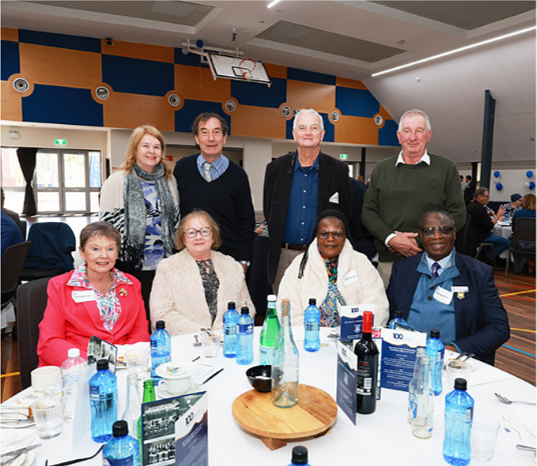

The Mass was followed by a ticketed lunch, with current students of the school on hand to serve the meals to all of the attendees.
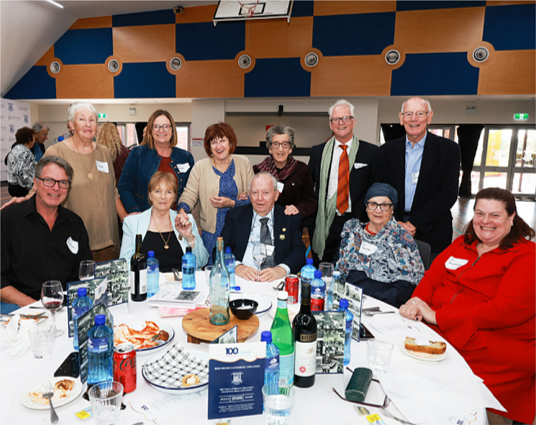

On Saturday 15 August past students are invited to attend the Red Bend Catholic College campus for guided tours of the College throughout the day.
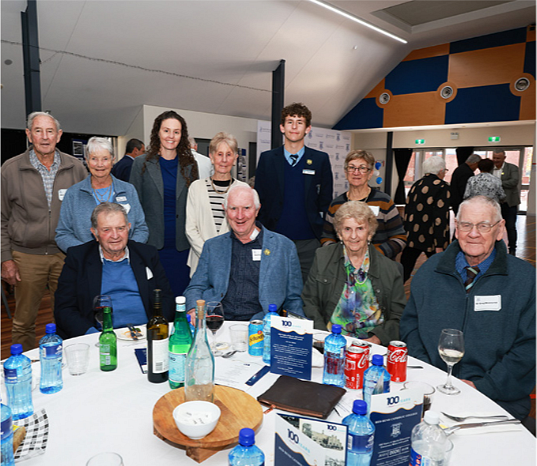
The RBCC community welcomes all College community members to join for a Gala evening on the 15th of August 2026 to celebrate 100 years of Marist Education in Forbes. 100 Year Celebration Gala Tickets are available at: www.123tix.com.au/events/52747/100-year-celebration-gala.